Soldier's crest orchid Care (Oberonia titania)

Also known as: Norfolk Island Oberonia
Soldier's crest orchid

About Soldier's crest orchid

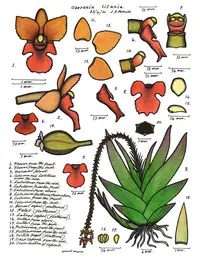
Soldier's crest orchid (Oberonia titania) is a miniature epiphytic orchid that typically grows on tree trunks and branches rather than in soil. It forms tight fans of narrow leaves and produces tiny, densely packed flowers arranged in a comb-like ring along the spike, giving it a distinctive crested look.

This species occurs mainly in tropical and subtropical forests of Asia and nearby regions, where it enjoys warm, humid, shaded conditions with constant air movement. Its small size and fine roots make it somewhat delicate, so learning how to care for Soldier's crest orchid usually suits growers with at least some prior orchid experience.

It generally prefers bright, filtered light, frequent light moisture, and a very airy mounting surface or loose orchid medium that never stays wet for long.

Main Plant Requirements

Care Difficulty

Hard Care

Light Preference

Partial Shade

Water Requirements

Keep Soil Moist

Temperature Preference

Tropical / Frost Sensitive

Hardiness Zone

Unknown

Soil Texture

Organic-rich, Peaty

Soil pH

Acidic (5.5–6.5)

Soil Drainage

Moist but well-drained

Fertilization

Light (every 4–6 weeks)

Get Personalized Care Plan

Scan your plant to receive care tips personalized for your specific plant

Available on iOS and Android

How to Care for the Soldier's crest orchid

This small epiphytic orchid prefers bright, gentle light that mimics dappled forest conditions.

  • Provide 6–8 hours of bright, filtered light daily, such as beneath shade cloth or under a lightly shaded tree, which suits the Soldier's crest orchid well.
  • Allow soft morning sun but protect from direct midday and afternoon sun, which can scorch leaves and dry the fine roots rapidly.
  • In summer increase shading slightly; in winter move to a brighter spot or supplement with artificial light if growth becomes weak and leaves lose their green color.

This orchid needs frequent moisture around its roots but cannot sit in stagnant, waterlogged conditions.

  • Water when surface roots and mounting material feel just barely dry, often every 1–3 days in warm, dry weather, using thorough soakings rather than light misting only.
  • Ensure excellent drainage and strong air movement; water should run off quickly so Oberonia titania roots re-oxygenate between soakings and do not stay submerged.
  • Reduce watering in cooler seasons, watching for wrinkled, dull leaves as a sign of underwatering and soft, dark, or foul-smelling roots as signs of overwatering.

This species prefers consistently warm, frost-free conditions similar to a lowland tropical forest.

  • Aim for 65–80°F (18–27°C) for active growth, with a slight night drop of about 5–10°F (3–5°C) to support normal physiological processes.
  • Protect from cold; growth slows below 60°F (16°C) and damage may occur below 50°F (10°C), so avoid outdoor exposure during cool nights or cold snaps.
  • Tolerates short peaks up to about 90°F (32°C) if humidity is high and air moves well, but above this range increase shade and watering frequency to prevent heat stress.

This miniature epiphytic orchid needs consistently high humidity to stay healthy.

  • Aim for 60–80% humidity, as dry indoor air quickly dehydrates the fine roots and foliage of Soldier's crest orchid.
  • Leaf tips browning, accordion-like wrinkling, and stalled growth indicate humidity stress and chronic moisture loss.
  • Increase humidity with a room humidifier, grouped plants, and a nearby open-water tray, avoiding direct misting on blooms.

This species usually grows mounted or in very loose orchid media rather than compact soil.

  • Use an airy mix of fine-grade bark, chopped sphagnum, and a little perlite to mimic the plant’s natural epiphytic habitat.
  • Ensure extremely sharp drainage so water runs through in seconds, preventing stagnant moisture around the delicate roots of Oberonia titania.
  • Keep the mix slightly moist but never waterlogged; bark should feel damp to the touch, not soggy or completely dry.
  • Avoid dense potting soil, peat-heavy mixes, or any medium that compacts, as these reduce aeration and promote root rot.

This orchid is suitable for small containers or mounted culture if drainage and airflow are excellent.

  • Choose a shallow, slotted orchid pot or basket so the fine roots receive constant air movement around the medium.
  • Secure the plant firmly with ties or mesh so the tiny fan-like growths do not wobble and damage new root tips.
  • Select plastic for slower drying or clay for faster drying, matching pot material to your environment’s typical humidity and temperature.

This miniature epiphytic orchid benefits from light, consistent feeding during active growth.

  • Use a balanced orchid fertilizer (around 20-20-20) diluted to 1/4–1/2 strength in clean, low-mineral water.
  • Feed Oberonia titania every 2–3 weeks in spring and summer when new growth appears.
  • Reduce feeding to once every 4–6 weeks in fall and winter, or pause if growth is very slow.
  • For caring for Soldier's crest orchid, avoid heavy, salt-forming fertilizers that can burn fine roots.

Pruning needs for Oberonia titania are minimal and mainly hygienic.

  • Best timing is after flowering, once spent flower spikes have clearly faded.
  • Remove only dry, dead, or diseased leaves and finished flower spikes with small sterile scissors.
  • Avoid cutting healthy green leaves, as this reduces photosynthesis and weakens the plant.
  • Light grooming improves air flow around the clump and helps limit fungal spots.

This species prefers stable conditions and only infrequent disturbance of its roots or mounting base.

  • Repot or remount every 2–3 years, or when roots circle tightly, medium decomposes, or growth slows.
  • Choose late winter to early spring, just before active growth, for the least stress.
  • Transfer gently to a small pot or mount with fresh fine-grade bark or sphagnum, spreading roots loosely.
  • Keep humidity high, light moderate, and watering slightly reduced for 1–2 weeks to let roots reattach.

Propagation of Oberonia titania is specialized and not often attempted by home growers.

This warm-growing orchid is frost sensitive and needs stable indoor or greenhouse conditions in winter.

  • Maintain temperatures around 60–75°F and avoid drops below 55°F for extended periods.
  • Move mounted or potted plants indoors before outdoor nights approach 55°F.
  • Provide bright, filtered light and good air movement to reduce fungal problems in cooler months.
  • Water slightly less often than in summer, but do not allow the fine roots to stay dry for long.

Care Tips

Mounting choice

Use a rough-textured mount such as cork bark or hardwood with a thin pad of long-fiber sphagnum to anchor roots while still allowing fast drying and abundant air movement around this miniature orchid.

Fine-mist hydration

Apply a very fine mist using a hand mister or fogger aimed above the plant so droplets fall like dew, which hydrates the dense leaf rosettes without forcing water deep into the crown where it can stagnate.

Crowding management

When clumps become overcrowded, gently divide only during active growth and remount small fans with minimal disturbance to roots, keeping divisions close together so they re-establish as a compact mat rather than scattered plants.

Airflow tuning

Position a small fan to create constant, gentle air movement across the mount, which helps thin roots dry quickly after misting and greatly reduces the risk of fungal spotting on the tiny leaves.

Bloom-safety handling

Once flower spikes start forming, avoid rotating or remounting the plant and handle only by the mount, since movement or touching the very small inflorescences often leads to bud blast or prematurely dropped flowers when growing Soldier's crest orchid.

Common Pests and Diseases

Spider mites

This pest thrives on thin-leaved miniature orchids in warm, dry air and can be hard to spot on Oberonia fans. Symptoms include fine webbing in leaf axils, dulling of leaf color, and tiny pale speckling on the foliage.

Solution

Increase humidity to 60–80%, improve air movement, and rinse the plant gently under lukewarm water, including the undersides of leaves and around the fan bases. Follow with repeated applications of a mild insecticidal soap or horticultural oil at 5–7 day intervals, taking care not to saturate the tiny roots for prolonged periods.

Soft scale

These insects settle along the narrow leaves and sheaths, sucking sap and causing yellowing, sticky honeydew, and sooty mold on the compact plant. On small Oberonia clumps, even a light infestation can slow growth and reduce flowering.

Solution

Remove affected plants from close contact with others, then wipe or dab visible scale with cotton swabs dipped in isopropyl alcohol, focusing on leaf bases and the underside of fans. Repeat mechanical removal weekly and use a systemic or oil-based treatment labeled for orchids if the infestation persists, ensuring good air circulation to keep the plant dry between waterings.

Bacterial leaf spot

This disease favors warm, stagnant, high-humidity microclimates and can spread quickly across the tight fans. Symptoms include small, water-soaked translucent spots on leaves that enlarge, turn brown or black, and may exude a sticky fluid if conditions remain wet.

Solution

Immediately isolate the plant, remove and discard heavily spotted leaves with a sterile blade, and avoid wetting the foliage late in the day. Improve airflow, reduce leaf wetness duration, and apply a bactericide or copper-based product labeled for orchids with careful dosing, monitoring closely for any phytotoxic reaction on the fine leaves typical of Oberonia titania care instructions.

Anthracnose

This disease appears on stressed plants under low air movement and repeated overhead misting. Symptoms include small tan to brown leaf lesions with darker margins that may coalesce along the leaf tip or edge, causing tip dieback and a ragged appearance.

Solution

Trim out affected leaf portions with sterile scissors, then reduce overhead watering and increase spacing and airflow around the plant. Apply a suitable fungicide labeled for anthracnose on orchids in light, repeated doses, and maintain stable temperatures and moderate humidity to limit reinfection.

Interesting Facts

Miniature epiphytic habit

This species is a tiny epiphyte, typically forming small clumps on tree trunks and branches in humid forests, rather than rooting in soil.

Fan-like leaf rosette

Its leaves arrange themselves in a flattened fan or distichous pattern, which helps channel water and debris toward the roots anchored on bark.

Dense flower spikes

It produces very slender flowering spikes crowded with dozens of minute orange to yellowish flowers that open more or less simultaneously along the inflorescence.

FAQs about Soldier's crest orchid

Lack of bloom usually comes from insufficient light, too-warm nights, or irregular watering. This species also needs a slight day–night temperature difference and stable humidity. Oberonia titania care focuses on consistent conditions rather than heavy feeding to trigger flowers.

Grow Healthy Plants with Botan Care

Keep your plants happy and healthy with plant identification, disease detection, and easy care guidance.

Botan plant care app — identify plants on mobile

Explore More Plants