


Branch wiring
Use soft aluminum bonsai wire to gently shape young branches over 4–8 weeks, checking weekly so the wire does not cut into the bark as stems thicken.


Scrambling fig (Ficus burtt-davyi) is a small-leaved fig species often grown as a trailing, climbing, or bonsai plant. It forms dense mats of fine stems with tiny oval leaves, giving a delicate, textured look.
In nature, it occurs in parts of southern Africa, where it clings to rocks and trees. This background makes it adaptable, fairly tough, and quick to respond to pruning or shaping.
It is considered moderately easy to grow if its basic needs are met. To care for Scrambling Fig, provide bright light, steady moisture without waterlogging, and a well-drained, airy potting mix.

Care Difficulty
Moderate Care

Light Preference
Bright Indirect Light

Water Requirements
Moderate Water

Temperature Preference
Tropical / Frost Sensitive

Hardiness Zone
10–11

Soil Texture
Sandy, Loamy, Organic-rich

Soil pH
Acidic (5.5–6.5), Slightly acidic (6.5–7.0)

Soil Drainage
Well-drained

Fertilization
Light (every 4–6 weeks)
Scan your plant to receive care tips personalized for your specific plant
Available on iOS and Android
This fig prefers bright, gentle light that mimics dappled woodland sun.
This species prefers slightly moist, fast-draining soil that never stays soggy.
This fig responds best to mild, stable temperatures without frost or extreme heat.
This species prefers moderate humidity and reacts if air stays too dry for long.
Ficus burtt-davyi prefers a loose, airy, fast-draining mix that still holds some moisture.
This species is well suited to container growing due to its compact, twiggy growth and manageable root system.
Ficus burtt-davyi benefits from light, consistent feeding during the active growing season for steady foliage growth.
Pruning helps Scrambling Fig stay compact, leafy, and well-shaped in containers or as a bonsai subject.
Container-grown Ficus burtt-davyi benefits from periodic repotting to refresh soil and manage root growth.
Ficus burtt-davyi is commonly propagated from stem cuttings taken during the warm growing season.
Ficus burtt-davyi is frost-sensitive and needs protection in regions with cold winters, especially in containers.

Plant Health Check
Not sure what's wrong with your plant? Check your plant's health inside the app.
In its native range in South Africa, this species often grows on rocky outcrops and cliff faces, rooting into crevices and spreading as a mat-like shrub rather than a tall tree.
It naturally develops very small, narrow leaves, which are thought to help reduce water loss and cope with intense sun and wind in exposed habitats, a trait that also makes it popular for bonsai.
The plant produces small, inconspicuous figs that are eaten by birds and other animals in its habitat, contributing to seed dispersal and supporting local food webs.
Yellowing leaves often result from excess moisture around the roots, poor drainage, or nutrient deficiency, especially nitrogen. Check the potting mix, empty saucers, and consider a balanced fertilizer. Older leaves naturally yellow and drop over time.
Keep your plants happy and healthy with plant identification, disease detection, and easy care guidance.

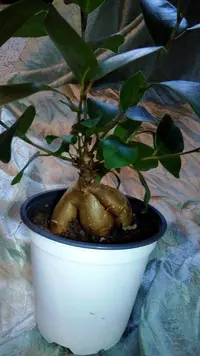
Ficus microcarpa 'Ginseng'
Ficus microcarpa 'Ginseng'

Norway spruce
Picea abies
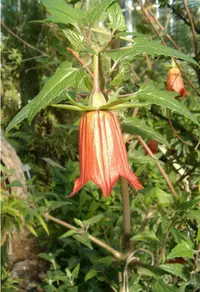
Canary Bellflower
Canarina canariensis
pagoda dogwood
Cornus alternifolia
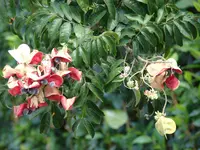
Black pearl
Majidea zanguebarica
Guzmania scherzeriana
Guzmania scherzeriana
 POPULAR
Silver squill
Ledebouria socialis
Aspasia epidendroides
Aspasia epidendroides