Establish deep roots
During the first 1–2 years, give the plant a slow, deep soak at the dripline every few weeks rather than frequent light watering to encourage a deep, drought-resilient root system.

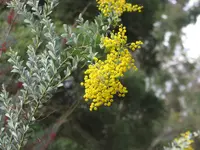
Knife acacia (Acacia cultriformis) is an evergreen shrub or small tree known for its dense, triangular blue‑green foliage and bright yellow, ball‑shaped flowers. It usually forms a compact, rounded shape that works well as a screening plant or feature in mild climates.
This species is native to eastern Australia, where it grows in dry forests and rocky hillsides. These origins make it generally tough, drought-tolerant, and suitable for low-maintenance landscapes.
Gardeners who care for knife acacia value its resilience, fast growth, and tolerance of poor, well-drained soils. It prefers full sun and does best with occasional deep watering rather than constantly wet conditions.

Care Difficulty
Easy Care

Light Preference
Full Sun

Water Requirements
Low Water

Temperature Preference
Warm Climate

Hardiness Zone
8–10

Soil Texture
Sandy, Loamy, Rocky

Soil pH
Slightly acidic (6.5–7.0), Slightly alkaline (7.0–7.5)

Soil Drainage
Well-drained

Fertilization
Minimal (feed rarely)
Scan your plant to receive care tips personalized for your specific plant
Available on iOS and Android
This Australian shrub prefers bright, direct light in most climates for dense, floriferous growth.
This drought-tolerant shrub prefers deep, infrequent watering once established.
This species prefers warm, dry conditions and does best in mild, low-frost climates.
This species tolerates a wide humidity range and does not usually need special humidity management indoors or outdoors.
This shrub prefers lean, very well-drained, sandy soil that does not stay wet after rainfall or watering.
This species can be grown in containers if the pot and substrate are chosen to manage its vigorous root system and height.
This Australian native needs only light feeding in most garden soils, but fertilizer can support container or poor-site growth.
Pruning helps Acacia cultriformis maintain a stable framework and encourages dense, tidy growth.
This species is usually grown in the ground, so focus on careful transplanting rather than frequent repotting.
Acacia cultriformis is commonly propagated from seed, with cuttings used less often but possible under controlled conditions.
This species is moderately frost tolerant but benefits from some winter protection in colder regions.

Plant Health Check
Not sure what's wrong with your plant? Check your plant's health inside the app.
This species has distinctive, flattened, triangular phyllodes that resemble small knife blades, an adaptation that replaces true leaves and reduces water loss in its native dry habitats.
It produces dense clusters of bright golden-yellow globular flowers in late winter to early spring, providing nectar and pollen for insects at a time when many other plants are not in bloom.
Like many members of Fabaceae, it forms root nodules with symbiotic bacteria that fix atmospheric nitrogen, gradually improving soil fertility around the plant.

This species has become a popular choice in Australian native floristry, where its long-lasting, silver-blue phyllodes and contrasting yellow flower sprays are used in cut arrangements and foliage work due to their durability and distinctive color.
Lack of flowers usually comes from insufficient light, heavy or waterlogged soil, or very hard pruning at the wrong time. Older wood carries most flower buds, so avoid cutting back heavily just before late-winter to spring bloom.
Keep your plants happy and healthy with plant identification, disease detection, and easy care guidance.