Deep root training
In the first 1–2 growing seasons, water less often but deeply so moisture reaches 20–30 cm down, which encourages a deep root system that makes the plant far more drought-resilient as it matures.

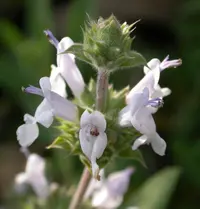
Black sage, Salvia mellifera, is a woody evergreen shrub native to coastal California and Baja California. It is a key species in coastal sage scrub habitats, supporting many pollinators. The plant forms dense mounds with small, dark green, aromatic leaves and upright flower spikes in shades of white to pale lavender. Flowers are rich in nectar and attract bees, butterflies, and hummingbirds. It is adapted to dry, sunny slopes and poor, well-drained soils, which makes it drought tolerant once established. These traits generally make it easy to grow in low-water landscapes, as long as the site is sunny and not overwatered. Understanding how to care for black sage starts with providing strong light and avoiding heavy, constantly wet soil.

Care Difficulty
Easy Care

Light Preference
Full Sun

Water Requirements
Low Water

Temperature Preference
Warm Climate

Hardiness Zone
7–10

Soil Texture
Sandy, Loamy, Rocky

Soil pH
Slightly acidic (6.5–7.0), Slightly alkaline (7.0–7.5)

Soil Drainage
Well-drained

Fertilization
Minimal (feed rarely)
Scan your plant to receive care tips personalized for your specific plant
Available on iOS and Android
This drought-adapted shrub thrives in bright, open sites with strong sun exposure.
This Mediterranean-climate shrub prefers deep, infrequent watering once established.
This coastal sage scrub species is adapted to mild, dry climates with warm days and cool nights.
This coastal shrub tolerates low humidity and rarely needs special humidity management in home gardens.
This drought-adapted shrub needs lean, very well-drained soil to live long and stay compact.
This species can grow in containers if the pot is managed to mimic dry, fast-draining native conditions.
Salvia mellifera is adapted to low-nutrient soils and usually needs little to no fertilizer once established.
Pruning supports a compact, flowering form in Salvia mellifera and keeps old wood from dominating.
This shrub is usually grown in the ground, so focus on careful outdoor transplanting rather than frequent repotting.
Salvia mellifera is commonly propagated from semi-hardwood cuttings or seeds under the right seasonal conditions.
This species is fairly cold tolerant in mild climates and usually needs minimal winter care in the ground.

Plant Health Check
Not sure what's wrong with your plant? Check your plant's health inside the app.
This species is native and largely restricted to coastal southern and central California and northern Baja California, where it dominates coastal sage scrub communities from near sea level up to lower foothills.
Its strong aroma comes from a rich mix of volatile oils in the leaves, which help reduce insect feeding and may also inhibit the germination of nearby seeds, an effect known as allelopathy.
In dry Mediterranean-type summers it often sheds part of its leaves and slows growth, relying on a deep, wide-spreading root system to access stored soil moisture and survive long rainless periods.

This shrub is considered a key indicator species of the coastal sage scrub biome, and large tracts of native stands have been used by ecologists to define and monitor the health and extent of this threatened habitat type in California.
Poor flowering usually comes from too much shade, excess watering, or rich, high-nitrogen fertilizer. Provide full sun, sharply drained soil, and avoid frequent feeding. Light pruning after flowering also encourages more buds the following season.
Keep your plants happy and healthy with plant identification, disease detection, and easy care guidance.