Annual cane renewal
Each late winter, remove about 20–30% of the oldest, thickest stems at the base to keep growth vigorous and fruiting wood young for better clusters and easier harvesting when growing Elder.

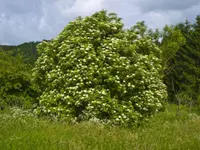
Elder, Sambucus nigra, is a fast-growing deciduous shrub or small tree, valued for its creamy spring flowers and dark late-summer berries. It typically forms a loose, multi-stemmed shape with soft green foliage that gives a natural, slightly wild look in gardens and hedgerows.
This species is native to Europe and parts of western Asia, but it is widely naturalized in North America in woodlands, roadsides, and moist, disturbed sites. It is generally easy to grow, adapting to many soils if drainage is reasonable, and it prefers sun to light shade and consistent moisture.
For gardeners learning how to care for Elder, its main needs are space to spread, regular pruning to manage shape, and avoidance of very dry, compacted sites.

Care Difficulty
Easy Care

Light Preference
Full Sun

Water Requirements
Regular Water

Temperature Preference
Cold Hardy

Hardiness Zone
4–7

Soil Texture
Loamy, Clay, Organic-rich

Soil pH
Acidic (5.5–6.5), Slightly acidic (6.5–7.0)

Soil Drainage
Moist but well-drained

Fertilization
Minimal (feed rarely)
Scan your plant to receive care tips personalized for your specific plant
Available on iOS and Android
Sambucus nigra grows best in bright sites with some protection from intense afternoon sun.
This shrub prefers consistently moist but not waterlogged soil throughout the growing season.
This species is cold-hardy and tolerates a wide range of outdoor temperatures when established.
This shrub is adaptable and humidity is rarely a limiting factor in typical outdoor conditions.
This species prefers moist, fertile, well-aerated ground with consistent structure.
This shrub can be grown in large containers, but only with careful attention to stability and moisture management.
Sambucus nigra benefits from light, thoughtful feeding but often grows acceptably in reasonably fertile soil without supplements.
Pruning helps maintain Sambucus nigra structure, flowering performance, and safety in the landscape.
Elder is usually grown in the ground, so transplanting young shrubs is more common than long-term container repotting.
New Sambucus nigra plants are most reliably produced from cuttings, with seeds used mainly for breeding or naturalized plantings.
Sambucus nigra is generally cold hardy in much of the US and needs only modest winter care once established.

Plant Health Check
Not sure what's wrong with your plant? Check your plant's health inside the app.
This species is a primary larval food plant for several European moths and butterflies, including the elderberry pearl and swallowtail-like species that rely on its leaves and flowers to complete their life cycle.
Each flat-topped cluster is made of many tiny, 5-petaled, cream-colored flowers with both male and female parts, providing abundant nectar and pollen that support a wide range of pollinating insects from late spring to early summer.
Its dark purple to black berries are highly attractive to thrushes and other birds, which spread the seeds over long distances through their droppings, helping the shrub colonize hedgerows, woodland edges, and disturbed ground.

Charcoal made specifically from the wood of this species has long been used in high-quality drawing and early gunpowder manufacture, because the young stems produce a very fine, consistent charcoal that burns evenly and leaves a uniform residue.
Lack of flowers often comes from too much shade, heavy pruning at the wrong time, or excess nitrogen fertilizer. Old, congested wood can also reduce flowering. Prune right after bloom and maintain some 2–3-year-old stems.
Keep your plants happy and healthy with plant identification, disease detection, and easy care guidance.