Control leaf orientation
Rotate container-grown plants only once to face their long edge toward the main light source, then keep that orientation fixed so the fan of leaves develops in a neat, single plane rather than twisting over time.

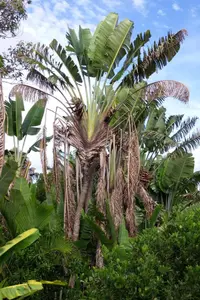
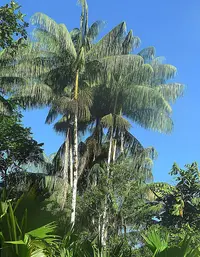
Traveller's palm, Ravenala madagascariensis, is a large, tropical plant known for its striking fan of banana-like leaves held on a single plane. Despite the name, it is not a true palm but is related to bird of paradise plants.
In nature it occurs in Madagascar, where it grows as a small tree and can form dense clumps. In suitable warm climates it is often used as an architectural focal point in gardens and large landscapes.
The plant prefers bright light, consistent moisture, and well-drained, fertile soil. It can be demanding outside tropical or subtropical conditions, so it helps to learn how to care for Traveller's palm before planting it.

Care Difficulty
Moderate Care

Light Preference
Full Sun

Water Requirements
Regular Water

Temperature Preference
Tropical / Frost Sensitive

Hardiness Zone
10–11

Soil Texture
Sandy, Loamy, Organic-rich

Soil pH
Acidic (5.5–6.5), Slightly acidic (6.5–7.0)

Soil Drainage
Moist but well-drained

Fertilization
Moderate (every 2–4 weeks)
Scan your plant to receive care tips personalized for your specific plant
Available on iOS and Android
This species develops its strongest foliage color and form in stable bright outdoor light in warm climates.
This plant prefers evenly moist but not saturated soil, with brief drying near the surface between waterings.
This species thrives in warm, frost-free climates with minimal temperature swings.
Ravenala madagascariensis prefers moderately humid air but adapts if kept within a stable range.
Ravenala madagascariensis grows best in deep, evenly moist, well-draining, organic-rich soil.
This species can be grown in large containers for some years, provided the pot supports its size and weight.
Ravenala madagascariensis benefits from moderate, consistent feeding during warm, active growth.
Pruning Ravenala madagascariensis focuses on removing old foliage and maintaining a clean, fan-like form.
This species is usually grown in the ground, but young plants in containers or nursery stock may need periodic transplanting.
Ravenala madagascariensis is usually propagated by seed or division of basal offsets, which requires patience and stable warmth.
This tropical plant has low frost tolerance and needs thoughtful winter care in climates with cool or freezing conditions.

Plant Health Check
Not sure what's wrong with your plant? Check your plant's health inside the app.
The large, cup-like leaf bases can hold rainwater, which historically provided emergency drinking water for travelers and also supports small animals and insects that use the trapped water as a microhabitat.
The leaves grow in a single flat fan that often tends to align roughly east–west, which increases light capture across the day and gave rise to its common name, traveller's palm.
This species is not a true palm but a member of the Strelitziaceae, making it a close relative of bird of paradise plants, which explains its banana-like leaves and large, bird-pollinated flowers.
In its native Madagascar, this plant can reach around 20–30 m tall and form dominant features in the landscape, providing nesting and perching sites for endemic wildlife, including lemurs and specialized birds that have coevolved with its flowers and seeds.
Brown tips usually result from low humidity, underwatering, or salt and fertilizer buildup in the soil. Flush the pot thoroughly, adjust watering, and increase humidity. Cold drafts or hot, dry air can also scorch leaf edges.
Keep your plants happy and healthy with plant identification, disease detection, and easy care guidance.