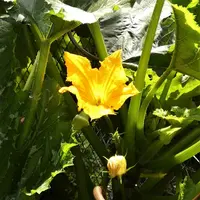
Early vine training
Once vines reach 30–40 cm, gently guide them along trellises or rows in the desired direction to improve airflow and fruit exposure, adjusting every few days before tendrils fully harden.

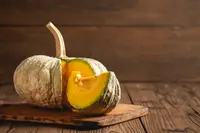
Acorn squash, Cucurbita pepo var. ovifera, is a warm-season annual vegetable plant grown for its small, ribbed winter squash with dark green or variegated skin and sweet, yellow flesh. Plants grow as vigorous vines or compact bush forms, spreading across the ground or over supports.
This squash originates from the Americas and is now widely cultivated in home gardens and small farms. It is generally easy to grow if given full sun, consistent moisture, and well-drained, fertile soil.
Stable production, good keeping quality, and a relatively short growing season make it suitable for many beginner gardeners learning how to care for acorn squash.

Care Difficulty
Moderate Care

Light Preference
Full Sun

Water Requirements
Regular Water

Temperature Preference
Tropical / Frost Sensitive

Hardiness Zone
3–10

Soil Texture
Loamy, Sandy, Organic-rich

Soil pH
Acidic (5.5–6.5), Slightly acidic (6.5–7.0)

Soil Drainage
Moist but well-drained

Fertilization
Moderate (every 2–4 weeks)
Scan your plant to receive care tips personalized for your specific plant
Available on iOS and Android
This warm-season crop needs strong, direct sun to produce healthy fruit and sturdy vines.
This plant prefers consistent, deep moisture at the root zone without waterlogged soil.
This squash thrives in warm conditions and is highly sensitive to cold and frost.
Humidity is usually not a limiting factor for Cucurbita pepo var. ovifera grown outdoors in typical US climates.
This plant performs best in deep, loose, nutrient-rich soil that drains freely yet holds moderate moisture.
This squash can be grown in containers if the pot is large and stable enough to support vigorous vines and fruit weight.
Cucurbita pepo var. ovifera is a fast-growing annual that benefits from moderate, balanced feeding in fertile soil.
Pruning for Cucurbita pepo var. ovifera is light and mostly focused on plant health and manageable growth.
This squash is usually transplanted from pots to open ground once conditions are warm and stable.
New Cucurbita pepo var. ovifera plants are produced almost entirely from seed rather than vegetative methods.
This warm-season annual squash does not survive freezing conditions and completes its life cycle before winter.

Plant Health Check
Not sure what's wrong with your plant? Check your plant's health inside the app.
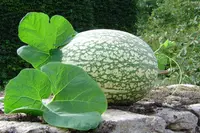
This gourd group was selectively bred from the wild Cucurbita pepo complex specifically for decorative fruits, not for high food yield, which is why it produces many small, hard-shelled gourds in diverse shapes and colors.
The fruits develop a thick, lignified rind that hardens as they mature, allowing them to dry and persist for months without rotting, a trait that makes them suitable for long-lasting displays and craft use.
Plants in this variety produce fruits ranging from warted and pear-shaped to egg-like or miniature pumpkin forms, reflecting strong human selection for visual variation rather than uniformity, which is a key feature in Cucurbita pepo var. ovifera plant care discussions.

Some archaeological and historical evidence indicates that ornamental forms within the Cucurbita pepo complex, including ovifera-type gourds, have been used for centuries as containers, utensils, and musical instruments once the fibrous, hard shell has fully dried.
Yes, it can grow in large containers, ideally 40–60 L with drainage holes. Use rich, well-drained potting mix, provide strong support for vines, and monitor watering closely because pots dry faster than garden beds.
Keep your plants happy and healthy with plant identification, disease detection, and easy care guidance.