Sturdy trellis support
Install a strong trellis or fence before vines start running, then tie young shoots loosely with soft ties to keep heavy fruit off the ground and reduce rot and slug damage.

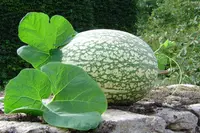
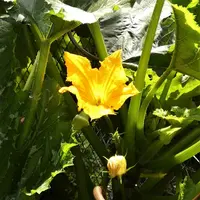
Figleaf gourd, Cucurbita ficifolia, is a vigorous vining squash species grown for its hard-shelled fruits and robust root system. It belongs to the cucurbit family, alongside pumpkins and zucchinis.
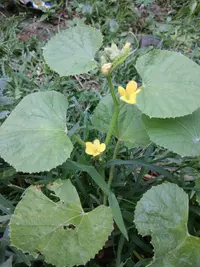
The plant produces long trailing stems, fig-shaped mottled fruits, and leaves that resemble fig foliage, which gives it its common name. It is usually grown outdoors and needs space to climb or sprawl.
Cucurbita ficifolia is native to highland regions of Central and South America and is valued both as a food crop and as a rootstock for grafting other cucurbits. It is generally hardy and long-lived for an annual vine, but requires warmth, sun, and consistent moisture. Basic knowledge of how to care for figleaf gourd makes it manageable for most home growers.

Care Difficulty
Moderate Care

Light Preference
Full Sun

Water Requirements
Regular Water

Temperature Preference
Tropical / Frost Sensitive

Hardiness Zone
8–11

Soil Texture
Loamy, Sandy, Organic-rich

Soil pH
Acidic (5.5–6.5), Slightly acidic (6.5–7.0)

Soil Drainage
Moist but well-drained

Fertilization
Moderate (every 2–4 weeks)
Scan your plant to receive care tips personalized for your specific plant
Available on iOS and Android
This vigorous vine needs strong, consistent light to produce healthy growth and fruit.
This plant prefers evenly moist, well-drained soil rather than frequent, shallow watering.
This warm-season vine grows best in stable, mild to warm conditions without frost exposure.
This species handles a wide humidity range and rarely needs special humidity management outdoors.
Cucurbita ficifolia grows best in deep, loose, well-aerated ground that drains freely but does not dry out too fast.
This species can be grown in containers if the pot is large, stable, and managed for strong vine growth.
Cucurbita ficifolia responds well to moderate feeding during its vigorous growing season.
Pruning helps manage Cucurbita ficifolia vines, direct energy to fruit, and keep plants accessible.
This species is usually transplanted outdoors rather than maintained long term in containers.
Cucurbita ficifolia is most commonly propagated by seed for each growing season.
This tender vine is not frost hardy and is usually grown as a warm-season annual in temperate climates.

Plant Health Check
Not sure what's wrong with your plant? Check your plant's health inside the app.
Unlike most domesticated squashes, which are annuals, this species behaves as a perennial vine in its native cool highland climates of Central and South America and can live and produce for several years where frost is absent.
Its large, hard-coated seeds are well known for exceptional longevity in storage and can remain viable for many years under dry, cool conditions, which is why gene banks often use it as a reference cucurbit for long-term seed conservation.
In East Asia it is widely used as a disease-resistant rootstock for other cucurbits, such as watermelon and melon, because it is generally sterile when cross-grafted and reduces the risk of unwanted reseeding or genetic mixing.

In parts of Latin America and East Asia the fruit and seeds of this species are traditionally used to make sweet preserves and confections, and in Mexico its fibrous, spaghetti-like flesh is a key ingredient in a dessert known as cabello de ángel, or angel hair.
The fruit, seeds, and young shoots are edible when properly prepared. The fruit is used in sweet preserves, candies, and savory dishes, and the seeds can be roasted. Always discard any damaged, moldy, or bitter-tasting fruits.
Keep your plants happy and healthy with plant identification, disease detection, and easy care guidance.