rhizoma peanut Care (Arachis glabrata)

Also known as: perennial peanut, creeping forage peanut, golden glory, perennial forage peanut
rhizoma peanut

About rhizoma peanut

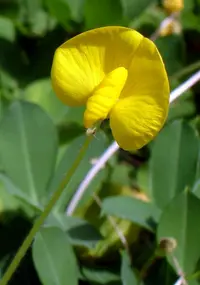
Rhizoma peanut, Arachis glabrata, is a low-growing perennial legume mainly used as a groundcover and forage crop in warm climates. It spreads by underground rhizomes, forming a dense, sod-like mat. Small yellow flowers appear above the fine, dark green foliage, giving a subtle, tidy look rather than a showy display. The plant is native to South America but is now widely grown in the southeastern United States, especially in Florida. It is valued for its durability, nitrogen-fixing ability, and good drought and heat tolerance once established, which makes it relatively easy to manage in suitable climates. Understanding how to care for rhizoma peanut starts with providing sun, well-drained soil, and protection from prolonged waterlogging or hard frost.

Main Plant Requirements

Care Difficulty

Easy Care

Light Preference

Full Sun

Water Requirements

Moderate Water

Temperature Preference

Warm Climate

Hardiness Zone

8–11

Soil Texture

Sandy, Loamy, Organic-rich

Soil pH

Acidic (5.5–6.5), Slightly acidic (6.5–7.0)

Soil Drainage

Moist but well-drained

Fertilization

Minimal (feed rarely)

Get Personalized Care Plan

Scan your plant to receive care tips personalized for your specific plant

Available on iOS and Android

How to Care for the rhizoma peanut

This warm-season perennial thrives in open, bright conditions suited to pasture and groundcover use.

  • Provide full sun for 6–8 hours daily; rhizoma peanut tolerates light afternoon shade but forms denser mats in unobstructed sun.
  • Use sites with morning sun and only light tree-filtered light in the afternoon to limit heat stress in very hot regions.
  • In cooler seasons, prioritize maximum sun exposure; in hot summers, monitor for leaf scorch on exposed slopes and reduce reflected heat from nearby hardscape.

This plant prefers consistent soil moisture during establishment but becomes drought-tolerant once rooted.

  • In the first growing season, irrigate when the top 5–7 cm of soil feels dry, then water deeply so moisture reaches the rooting zone.
  • Ensure free-draining soil; prolonged puddling, a sour smell, or yellowing, soft stems indicate overwatering and poor aeration around roots.
  • After establishment, reduce irrigation, watering mainly during extended dry periods when leaves lose some sheen and the soil is dry well below the surface.

This warm-season legume prefers stable, frost-free conditions for reliable growth and spread.

  • Optimal growth occurs around 75–90°F (24–32°C), when Arachis glabrata produces the most vigorous stolons and groundcover.
  • Growth slows below about 65°F (18°C) and largely stops near 55°F (13°C); foliage is damaged by frost and may die back after light freezes.
  • Mature stands tolerate short heat spikes up to about 100°F (38°C) if soil moisture is adequate, but repeated extremes can thin the canopy and favor weeds.

This species tolerates a wide humidity range and usually manages well in outdoor conditions.

  • Aim for 40–70% humidity, which is typical of most outdoor temperate and subtropical climates.
  • Rhizoma peanut handles short dry spells, but prolonged very dry air with heat can slow growth and cause leaf edge browning.
  • If grown in a very dry, hot microclimate, reduce humidity stress by mulching the soil surface and avoiding reflected heat from nearby hardscapes.

This plant prefers well-structured, freely draining mineral soil that does not stay waterlogged.

  • Use a sandy or sandy-loam texture with 20–30% organic matter, such as compost, to support root and rhizome development.
  • Ensure rapid drainage; on heavy clay sites, incorporate coarse sand and fine gravel or plant on a low mound or raised bed.
  • Target a slightly acidic to neutral pH of about 5.5–7.0 for reliable Arachis glabrata growth and nitrogen fixation.
  • Avoid compacted, puddling soil; improve aeration by loosening the top 15–20 cm and mixing in coarse sand and well-rotted compost.

This species can be grown in containers, but performance is usually better in the ground for long-term cover or forage use.

  • Choose a wide, shallow container to accommodate spreading rhizomes while keeping the root zone evenly aerated.
  • Select a heavy, stable pot material if the planting will be exposed to wind, since the spreading top growth can catch airflow.
  • Use a very free-draining mix and elevate the container slightly so drainage holes never sit directly on impermeable surfaces.

Arachis glabrata needs only light, strategic feeding to maintain healthy growth, especially on poorer soils.

  • Use a balanced NPK granular or slow-release fertilizer, or well-aged compost, on established plantings.
  • Feed lightly at the start of the warm growing season and once more mid-season if growth or color is weak.
  • Apply at 1/2 strength of label rates on fertile soils to avoid excessive leaf growth over root development.
  • Avoid feeding in winter or during dormancy, when growth slows and nutrients are less effectively used.

Pruning Arachis glabrata focuses on maintaining an even groundcover and removing damaged material.

  • Carry out light trimming in late winter or early spring before vigorous new growth starts.
  • Remove dead, diseased, or heavily shaded stems to reduce pest buildup and improve air movement.
  • Edge or mow high patches to maintain a uniform mat and prevent encroachment into unwanted areas.
  • Use clean, sharp shears or a mower set high, and avoid cutting into bare soil to limit stress.

This species is usually grown as a field or lawn-type cover, so care centers on transplanting rather than true repotting.

  • Transplant rhizoma peanut when patches show crowded rhizomes, thinning vigor, or need expansion to new areas.
  • Schedule transplanting for late spring to early summer when soil is warm and active growth supports quick recovery.
  • Expect to divide and reset rhizome pieces every few years if expanding coverage or rejuvenating tired sections.
  • Dig rhizomes with some attached soil, keep roots shaded and moist, replant promptly, then water deeply to reduce stress.

Arachis glabrata is commonly multiplied vegetatively because rhizomes establish faster and more reliably than seed.

  • Use rhizome pieces 5–10 cm long with several nodes, taken from vigorous, disease-free patches.
  • Plant in late spring or early summer into warm, moist, well-drained soil for best establishment.
  • Set rhizomes horizontally 2–3 cm deep, firm soil gently, and water thoroughly after planting.
  • Maintain consistent moisture and limit traffic until new shoots spread and form a stable groundcover.

In mild, frost-free climates, Arachis glabrata usually needs minimal winter care once well established.

  • In regions with light frost, expect top growth to brown while underground rhizomes often survive.
  • Apply a 5–7 cm layer of dry mulch over the root zone in marginal climates to buffer temperature swings.
  • For container-grown plants in cooler areas, move pots to a bright, frost-free spot and keep soil just slightly moist.

Care Tips

Rhizome Division

Every 2–3 years, lift a small test section at the margin, cut firm, pencil-thick rhizomes into 5–10 cm pieces with at least 2–3 nodes, and replant them horizontally 3–5 cm deep to thicken the stand or start new patches.

Sod-Smothering Setup

To suppress competing turf or weeds, scalp existing grass low, apply a thin (0.5–1 cm) layer of compost, then plant rhizoma pieces in a close grid (15–20 cm apart) so the dense mat closes quickly and shades out competitors.

Targeted Mowing Strategy

In mixed plantings, mow or string-trim competing grasses slightly shorter than the peanut canopy while leaving the peanut at 5–8 cm height, which favors its stolon and rhizome spread over upright grasses.

Inoculation With Rhizobia

In new sites without a history of legumes, dust rhizomes or seed with a compatible Bradyrhizobium inoculant before planting to improve nitrogen fixation and long-term vigor when growing rhizoma peanut.

Traffic Management

In high-use areas, concentrate foot or equipment traffic on defined paths or pavers and occasionally topdress thinned strips with 0.5–1 cm of compost and fresh rhizomes to restore an even, durable groundcover.

Common Pests and Diseases

Cylindrocladium black rot

This disease causes dark brown to black lesions on stolons and roots, leading to thinning stands and poor regrowth. Symptoms include weak plants that pull up easily and patches of dead rhizoma peanut in wetter parts of the field.

Solution

Improve drainage and avoid prolonged soil saturation, since this fungus spreads rapidly in wet, compacted soils. Remove and destroy severely affected patches if feasible, sanitize tools, and use clean planting material; in production fields, rotating with non-host grasses and reducing irrigation in problem areas are the main long-term controls.

Rhizoctonia leaf spot

This disease produces small brown spots on leaflets that can merge into larger blighted areas, especially under warm, humid conditions. Symptoms include premature leaf drop and a scorched appearance in patches of the planting.

Solution

Reduce leaf wetness by irrigating early in the day and avoiding overhead watering when possible, and improve airflow by keeping the stand from becoming excessively dense. Remove heavily infected foliage where practical, and in forage or groundcover plantings manage thatch and debris to reduce fungal survival between seasons.

Early leaf spot

This disease, caused by a Cercospora-like fungus, creates tan to brown spots with a yellow halo on older leaves, which can lead to gradual defoliation. Symptoms include lower leaves yellowing first and reduced vigor in frequently mowed or grazed stands.

Solution

Promote good air circulation and rapid leaf drying by controlling surrounding weeds and avoiding irrigation late in the day. Where disease pressure is historically high, use clean planting stock, maintain balanced fertilization to avoid plant stress, and remove or closely mow infected foliage to reduce the amount of infected leaf material left on the soil surface.

Root‑knot nematodes

These microscopic roundworms invade roots and cause galls, stunting, and uneven growth, especially in sandy soils. Symptoms include patches of weak, pale plants that do not spread or recover well after cutting or grazing.

Solution

Confirm nematode presence with a soil or root test before intervening, since symptoms can mimic nutrient stress. In affected areas, rotate with less-susceptible grasses, improve soil organic matter, and avoid moving contaminated soil or plant material to clean fields; in high-value plantings, pre-plant soil fumigation or biological nematode suppressants may be considered with local professional guidance as part of broader Arachis glabrata care instructions.

Interesting Facts

True perennial peanut

This species is a long-lived perennial legume whose rhizomes allow it to persist and spread slowly underground, forming durable sods that can survive for many years under stable management.

High-protein forage

It is widely used in subtropical agriculture as a high-quality forage crop because its leaves and stems have relatively high crude protein and digestibility for grazing cattle and other ruminants compared with many warm-season grasses.

Nitrogen-fixing groundcover

As a legume with root nodules that host symbiotic bacteria, it fixes atmospheric nitrogen and is used as a living mulch in orchards and pastures to improve soil fertility and reduce the need for synthetic nitrogen fertilizers.

Botan icon

Did you know?

Unlike the cultivated peanut grown for edible seeds, this species produces its pods and seeds mainly below the soil surface and is managed almost entirely as a vegetatively propagated forage and groundcover, not as a nut crop.

FAQs about rhizoma peanut

This species spreads steadily by underground rhizomes, forming a dense mat over time. It is not usually invasive under managed conditions but can slowly occupy open soil, so use edging or physical barriers where spreading is not desired.

Grow Healthy Plants with Botan Care

Keep your plants happy and healthy with plant identification, disease detection, and easy care guidance.

Botan plant care app — identify plants on mobile

Explore More Plants