Hollyhock Care (Alcea rosea)

Also known as: Black Hollyhock
Hollyhock

About Hollyhock

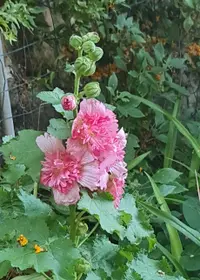
Hollyhock, Alcea rosea, is a classic flowering biennial or short-lived perennial known for its tall, upright stems lined with large, showy blooms. Flowers range from white and yellow to pink, red, and nearly black, creating a strong vertical accent at the back of borders and along fences.

The plant likely originates from parts of Asia and the eastern Mediterranean but is now widely grown in cottage-style and traditional gardens. It is generally considered easy to grow in sunny, sheltered spots with reasonably moist, well-drained soil.

Understanding how to care for Hollyhock mainly involves managing its height, staking in windy sites, and watching for common foliar diseases such as rust.

Main Plant Requirements

Care Difficulty

Moderate Care

Light Preference

Full Sun

Water Requirements

Moderate Water

Temperature Preference

Cool Climate

Hardiness Zone

3–9

Soil Texture

Sandy, Loamy, Clay

Soil pH

Slightly acidic (6.5–7.0), Neutral (7.0)

Soil Drainage

Moist but well-drained

Fertilization

Light (every 4–6 weeks)

Get Personalized Care Plan

Scan your plant to receive care tips personalized for your specific plant

Available on iOS and Android

How to Care for the Hollyhock

Tall, flowering Alcea rosea prefers strong, direct sun to bloom heavily outdoors.

  • Provide 6–8 hours of direct sun daily; morning sun with some light afternoon shade works well in hot summer regions.
  • Tolerates light partial shade (around 4–5 hours sun), but flowering will be sparser and stems may stretch and lean.
  • In very hot, dry climates, protect from intense late-afternoon sun to reduce leaf scorch and premature flower fading during midsummer.

Alcea rosea prefers evenly moist but not waterlogged soil once established in the ground.

  • Water when the top 3–5 cm of soil feels dry, applying a deep soak at the base rather than light surface sprinkles.
  • During hot, windy periods, expect more frequent watering; in cool or rainy weather, allow soil to dry more between waterings.
  • Yellowing lower leaves, limp growth, or foul-smelling soil suggest overwatering, while crisp edges and drooping at midday that persists after sunset indicate underwatering.

This hardy flowering perennial grows best in moderate, temperate outdoor conditions.

  • Optimal growth occurs around 65–80°F (18–27°C), with strong flowering in mild to warm summer weather.
  • Established plants often tolerate down to about 5–10°F (-15 to -12°C) in well-drained soil, especially with mulch over the root zone in winter.
  • In hot climates above 90°F (32°C), flowering may slow; provide mulch and consistent moisture to protect roots, and expect foliage to age faster in extended heat.

Alcea rosea handles a wide humidity range outdoors, so humidity management is usually unnecessary.

Alcea rosea performs best in moderately fertile, deep, well-drained ground that does not stay waterlogged.

  • Use a loamy or sandy-loam soil with plenty of organic matter to support tall growth and steady moisture.
  • Aim for slightly acidic to neutral pH around 6.0–7.5, avoiding highly acidic or saline sites.
  • In heavy clay, improve structure and drainage by incorporating coarse sand and compost to at least 25–30 cm depth.
  • Avoid compacted, low-lying spots where water collects, which encourages root rot and weak, disease-prone plants.

This species can be grown in containers, but large, stable pots are needed to support height and deep roots.

  • Choose a container at least 35–45 cm deep to accommodate the taproot and reduce tipping in strong wind.
  • Use a heavy, wide-based pot material such as ceramic or thick plastic to improve stability for tall flower spikes.
  • Ensure generous drainage holes and keep saucers empty so excess water does not accumulate around the root zone.

Alcea rosea benefits from modest, well-timed feeding to support tall growth and abundant blooms.

  • Use a balanced NPK fertilizer (such as 10-10-10) or well-rotted compost in spring as new growth starts.
  • Apply a light feeding every 4–6 weeks during the active growing and blooming season, depending on soil quality.
  • Dilute liquid feeds to 1/2 strength to avoid salt buildup and weak, lush foliage prone to disease.
  • Stop feeding Hollyhock in late summer and avoid fertilizing during winter dormancy to let plants harden off.

Alcea rosea responds well to simple, seasonal pruning that keeps plants tidy and flowering longer.

  • Deadhead spent flower spikes in summer by cutting them back to strong leaves to encourage additional blooms.
  • Remove dead, damaged, or diseased stems at the base using clean, sharp pruners to improve air flow and reduce rust.
  • In late fall or very early spring, cut old stalks down to a few cm above ground level to refresh growth.
  • Thin crowded seedlings at the rosette stage so remaining plants have space and grow sturdier, more upright spikes.

Alcea rosea is usually grown in the ground, so focus on correct transplanting rather than frequent repotting.

  • Transplant young plants or seedlings in early spring or early fall, when weather is mild and soil is workable.
  • Choose a sunny, well-drained site and space plants 40–60 cm apart to avoid crowding and stress on roots.
  • When moving container-grown plants, transplant before roots circle heavily; handle the taproot gently to avoid snapping.
  • Water thoroughly after transplanting, shade lightly for a few days, and keep soil evenly moist until new growth resumes.

Alcea rosea is most often propagated from seeds, which germinate reliably under the right conditions.

  • Sow seeds outdoors in late spring to early summer, or indoors 6–8 weeks before the last frost date.
  • Use a light, well-drained seed mix, press seeds gently into the surface, and cover very thinly, as light aids germination.
  • Maintain 65–75°F and lightly moist soil; seedlings usually emerge in 1–3 weeks with good ventilation to limit fungal issues.
  • Allow a few seedpods to mature and dry on the plant, then collect, label, and store seeds in a cool, dry place for future sowing.

Alcea rosea is fairly cold hardy in many regions and usually needs only minimal winter care in the ground.

  • After the first hard frost, cut back dead stems to a few cm above soil level to reduce disease carryover.
  • Apply a 5–8 cm layer of mulch around the crown to insulate roots and moderate soil temperature fluctuations.
  • In very cold zones or for container plants, move pots to a sheltered, unheated space and keep soil just barely moist.

Care Tips

Sturdy stake system

Install tall, firm stakes or a wire grid on the windward side before stems reach 30–40 cm, then loosely tie the main spikes with soft ties to prevent snapping in summer storms.

Airflow spacing

Space plants 45–60 cm apart and remove the lowest 2–3 leaves around the base in mid-season to improve air circulation and reduce rust and mildew pressure when growing Hollyhock.

Targeted rust control

Begin preventative rust management early by removing and discarding spotted leaves, watering at soil level, and using a labeled fungicide only if disease persists, rotating products to avoid resistance.

Basal shoot renewal

After flowering, cut spent stems down to just above the basal rosette and top-dress with compost so the plant can channel energy into strong new shoots for the following season.

Managed self-seeding

Allow only the best, healthiest stalks to set seed and bag a section of drying seed pods with breathable fabric so you can collect clean seed while limiting unwanted self-sown seedlings.

Common Pests and Diseases

Hollyhock rust

This disease causes orange to brown powdery pustules on the undersides of leaves, which often turn yellow, dry, and drop prematurely.

Solution

Remove and dispose of heavily infected leaves, avoid overhead watering, and space plants to improve airflow; clean up all fallen leaves at the end of the season to reduce spores. In areas with recurring problems, start preventive sprays with a labeled fungicide (such as chlorothalonil or myclobutanil) early in the season and repeat as directed when weather is warm and humid.

Hollyhock weevil

This pest punctures buds and young seed pods, causing distorted flowers and seed damage, and adults can chew small holes in leaves.

Solution

Handpick adults from plants early in the morning and drop them into soapy water, and remove and destroy damaged buds and seed pods to break the life cycle. In severe infestations, use a contact insecticide such as pyrethrin on buds and foliage just before flowering, following label directions carefully.

Japanese beetle

These insects skeletonize leaves, leaving only veins, and can chew petals, leading to ragged flowers and reduced vigor.

Solution

Shake beetles off plants into a container of soapy water in the early morning when they move slowly, and avoid placing beetle traps near hollyhocks to prevent attracting more insects to the area. Where feeding is heavy, protect key plants with a fine mesh net during peak beetle season or use a labeled insecticide targeted at beetles if hand removal is not sufficient.

Aphids

This pest clusters on new growth, buds, and stems, sucking sap and causing curled leaves, sticky honeydew, and sometimes sooty mold on foliage.

Solution

Spray plants with a strong stream of water to dislodge colonies, and prune off heavily infested shoot tips. If needed, apply insecticidal soap or horticultural oil, coating leaf undersides and buds and repeating every 5–7 days until numbers remain low, while protecting beneficial insects as much as possible.

Powdery mildew

This disease shows as white, powdery patches on leaves and stems, which can lead to yellowing and reduced flowering in crowded or humid conditions.

Solution

Improve air circulation by spacing and thinning plants, water at the base, and avoid wetting foliage, especially in the evening. Remove and discard affected leaves, and if the problem persists, use a labeled fungicide for powdery mildew, starting at the first sign of white patches and repeating as directed in these Hollyhock care instructions.

Interesting Facts

Tall garden biennial

In typical garden conditions, this species often behaves as a biennial, forming a leafy rosette in the first year and sending up tall flowering spikes that can reach 1.5–2.5 m in the second year before declining.

Strong vertical inflorescences

Its flowers are arranged along a single unbranched central stem, forming a spikelike inflorescence that creates a dense vertical display attractive to bees and other pollinators.

Long cultivation history

This species originated in southwestern China and central Asia and has been grown in European cottage gardens since at least the 16th century, leading to many traditional forms used as background plants in borders.

Botan icon

Did you know?

The petals of this species contain water-soluble pigments that were historically used as a simple pH indicator, turning different shades when exposed to acidic versus alkaline solutions, which made the plant a convenient household test material before modern indicator papers were common.

FAQs about Hollyhock

Lack of flowering often comes from insufficient sun, overly rich nitrogen fertilizer, or the plant still being in its first-year rosette stage. Ensure full sun, moderate fertility, and avoid cutting off foliage too early in the season.

Grow Healthy Plants with Botan Care

Keep your plants happy and healthy with plant identification, disease detection, and easy care guidance.

Botan plant care app — identify plants on mobile

Explore More Plants