Tidal Water Management
If grown in a controlled pond or tank, simulate gentle tidal movement 1–2 times per day by slowly exchanging part of the brackish water instead of sudden full changes, which reduces stress on roots and stabilizes salinity.

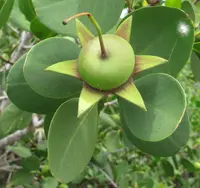
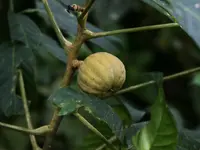
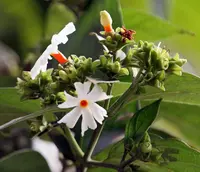
Apple mangrove (Sonneratia alba) is a true mangrove tree adapted to coastal, tidal environments. It forms dense stands along sheltered tropical and subtropical shorelines. The tree typically has a spreading crown, pencil-like breathing roots above the mud, and rounded, pale flowers that open at night. Its fruits are small, green, and apple-shaped, which gives the plant its common name.
In nature it grows in salty, waterlogged soils and copes with regular tidal flooding, so it is not a typical home garden species. Those who care for Apple Mangrove in specialized collections usually provide strong light, warm conditions, and consistently wet, saline or brackish growing media.

Care Difficulty
Hard Care

Light Preference
Full Sun

Water Requirements
Aquatic

Temperature Preference
Tropical / Frost Sensitive

Hardiness Zone
11–12

Soil Texture
Sandy, Silty, Organic-rich

Soil pH
Slightly acidic (6.5–7.0), Neutral (7.0)

Soil Drainage
Waterlogged tolerant

Fertilization
Minimal (feed rarely)
Scan your plant to receive care tips personalized for your specific plant
Available on iOS and Android
This coastal mangrove thrives in strong sun but benefits from some protection in extreme conditions.
This mangrove is adapted to waterlogged, brackish conditions and does not follow typical garden watering patterns.
This tropical mangrove prefers warm, frost-free coastal climates to grow and regenerate well.
This coastal mangrove needs very high humidity and regular root contact with brackish or marine water.
This species is specialized for waterlogged, saline mud rather than typical garden soil.
This mangrove can be grown in containers only as a specialized project that simulates tidal, waterlogged conditions.
Sonneratia alba, often called Apple Mangrove, needs only light supplemental nutrition when grown in controlled or container conditions.
Pruning Sonneratia alba focuses on safety, canopy control, and removal of weak growth rather than heavy shaping.
Sonneratia alba is usually established directly in coastal or brackish sites, so management centers on transplanting young plants rather than frequent repotting.
Propagation of Sonneratia alba is usually carried out for restoration projects or coastal planting rather than home gardening.
Sonneratia alba is a true tropical–subtropical mangrove and is not frost tolerant, so cold conditions require special handling.

Plant Health Check
Not sure what's wrong with your plant? Check your plant's health inside the app.
Its flowers open at dusk and release large amounts of nectar, providing an important night-time food source for bats and moths in tropical coastal ecosystems.
Instead of excreting salt through its leaves like many mangroves, this species mainly avoids taking up excess salt through selective ion transport in its roots.
It develops dense stands of pencil-like aerial roots called pneumatophores that protrude from the mud and act as gas-exchange surfaces in oxygen-poor, waterlogged soils.

The species is a pioneer colonizer on new mudflats, stabilizing soft sediments and creating the first structured habitat that later allows other mangrove trees and coastal organisms to establish.
In suitable coastal, tidal conditions this species is moderately fast-growing, often adding 30–100 cm in height per year. Growth is faster in warm, sunny, frost-free climates with regular tidal flooding and organically rich, silty mud.
Keep your plants happy and healthy with plant identification, disease detection, and easy care guidance.