

Encourage Bushy Shape
Pinch back soft shoot tips in early spring and just after the main flowering flush to stimulate side branching and create a denser, more floriferous shrub.

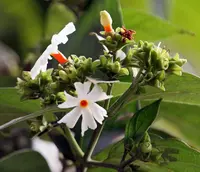
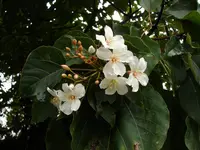
Night-flowering jasmine (Nyctanthes arbor-tristis) is a small, deciduous shrub or compact tree valued for its highly fragrant, night-blooming flowers. It typically forms a loose, somewhat open canopy with rough-textured leaves and clusters of white, star-shaped blooms with orange centers that drop by morning.
This species is native to South Asia, especially India and surrounding regions, where it grows in warm, subtropical to tropical climates. It is generally considered moderate in difficulty, as it prefers stable warmth, good light, and consistent moisture, but dislikes waterlogged soil and cold drafts.
Gardeners who learn how to care for Night-flowering Jasmine find it rewarding for evening scent and seasonal bloom displays, both in containers and in-ground plantings.

Care Difficulty
Moderate Care

Light Preference
Full Sun

Water Requirements
Moderate Water

Temperature Preference
Tropical / Frost Sensitive

Hardiness Zone
10–12

Soil Texture
Sandy, Loamy, Organic-rich

Soil pH
Acidic (5.5–6.5), Slightly acidic (6.5–7.0)

Soil Drainage
Moist but well-drained

Fertilization
Light (every 4–6 weeks)
Scan your plant to receive care tips personalized for your specific plant
Available on iOS and Android
This shrub prefers bright conditions with gentle direct sun and some protection from harsh midday exposure.
Nyctanthes arbor-tristis prefers evenly moist, well-drained soil that never stays saturated for long periods.
This species thrives in warm, frost-free conditions and reacts poorly to prolonged cold or sudden temperature drops.
This shrub handles a wide humidity range but grows best with moderately moist air.
Nyctanthes arbor-tristis prefers light, well-draining soil that does not stay waterlogged.
This species can be grown successfully in containers if the pot provides stable, well-aerated root conditions.
Nyctanthes arbor-tristis benefits from moderate feeding to support flowering without encouraging weak, sappy growth.
Nyctanthes arbor-tristis responds well to light, planned pruning that maintains shape and flower production.
This species is usually grown in the ground, so care focuses more on transplanting young plants than frequent repotting.
Nyctanthes arbor-tristis is commonly propagated by semi-hardwood cuttings or seeds under warm, stable conditions.
In warm climates this plant needs minimal winter care, but in cooler regions extra measures help it survive cold spells.

Plant Health Check
Not sure what's wrong with your plant? Check your plant's health inside the app.
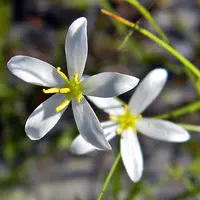
The flowers open at night with bright white, lobed petals and a deep orange tube, then fall intact at dawn, creating a distinct bicolor carpet beneath the plant each morning.
In parts of India and Nepal, the fragrant flowers are traditionally collected at dawn for use in Hindu rituals and for natural dyeing of fabrics due to their orange corolla tube.
The strong perfume peaks at night and early morning, an adaptation that helps attract nocturnal and crepuscular pollinators such as certain moths.
The orange tube of the flower contains carotenoid pigments historically used as a natural dye, including for tinting silk and sometimes as a saffron substitute, giving the plant a long-standing role in traditional textile coloring.
Poor flowering usually comes from insufficient maturity, low light, or heavy pruning at the wrong time that removes flower buds. Nutrient imbalance, especially excess nitrogen, and stress from pests, root restriction, or irregular watering can also reduce blooms.
Keep your plants happy and healthy with plant identification, disease detection, and easy care guidance.