Weeping White Pine Care (Pinus strobus 'Pendula')

Also known as: Eastern White Pine, Northern White Pine
Weeping White Pine

About Weeping White Pine

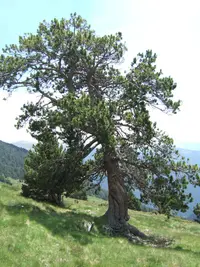
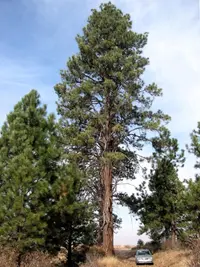
Pinus strobus 'Pendula', commonly called weeping white pine, is a small, ornamental conifer grown mainly for its flowing, cascading branches. It is a cultivated form of the eastern white pine, which is native to eastern North America.

This tree stays relatively low and wide, often needing staking or training to shape its form. Soft, blue‑green needles create a gentle texture that contrasts well with bolder plants.

It is generally considered easy to moderate to grow, as long as it has sun, well-drained soil, and protection from severe wind or heavy pollution. Understanding how to care for Weeping White Pine helps it develop a stable structure and healthy foliage.

Main Plant Requirements

Care Difficulty

Moderate Care

Light Preference

Full Sun

Water Requirements

Moderate Water

Temperature Preference

Cold Hardy

Hardiness Zone

3–8

Soil Texture

Sandy, Loamy, Rocky

Soil pH

Strongly acidic (4.5–5.5), Acidic (5.5–6.5)

Soil Drainage

Well-drained

Fertilization

Minimal (feed rarely)

Get Personalized Care Plan

Scan your plant to receive care tips personalized for your specific plant

Available on iOS and Android

How to Care for the Weeping White Pine

This conifer prefers bright outdoor conditions with several hours of direct light each day.

  • Provide 6–8 hours of sun daily, ideally with full morning sun and light afternoon shade, especially in hotter regions.
  • Weeping White Pine tolerates light to partial shade, but dense shade leads to sparse, elongated growth and reduced vigor over time.
  • In summer, protect from intense, reflected afternoon sun to prevent needle scorch; in winter, full sun is beneficial for dense, balanced branching.

This plant prefers consistently moist but not saturated soil, especially while establishing.

  • Water when the top 3–5 cm of soil feels dry, applying a slow, deep soak so moisture reaches the root zone without pooling on the surface.
  • For Pinus strobus 'Pendula', use well-drained soil; yellowing needles and soft, sour-smelling soil suggest overwatering or poor drainage.
  • Reduce watering frequency in fall and winter, watching for needle drop or browning tips as signs the soil has stayed too dry for extended periods.

This hardy conifer is adapted to cool to temperate outdoor climates with cold winters.

  • Optimal growing temperatures are about 55–75°F (13–24°C) during the active season, with cooler nights supporting strong growth.
  • Mature plants tolerate winter lows near -30°F (-34°C) when planted in the ground, but young trees benefit from mulch over the root zone.
  • In heat waves above 85–90°F (29–32°C), provide soil moisture and some afternoon shade to reduce stress and prevent needle scorch.

This pine tolerates a broad humidity range and does not need special humidity management outdoors.

  • Target ambient humidity around 30–60% for stable growth in most temperate garden conditions.
  • Dry air is usually tolerated, but extended hot, desiccating winds can brown needle tips and edges.
  • If foliage shows browning or premature needle drop, shelter the tree from wind and mulch the root zone to reduce moisture loss.

Pinus strobus 'Pendula' prefers light, well-aerated soil that drains quickly yet retains some moisture.

  • Use a sandy or sandy-loam soil with moderate organic matter to support root oxygen while holding limited moisture.
  • Aim for slightly acidic to neutral pH, roughly 5.5–7.0, which supports nutrient uptake and needle color.
  • Improve drainage and aeration by blending native soil with sharp sand plus fine bark or pine fines in the planting area.
  • Avoid heavy clay, compacted, or waterlogged sites, which promote root rot and poor anchoring of this spreading form.

This weeping pine can be grown in containers for many years if the pot is chosen to support its spreading, top-heavy habit.

  • Select a wide, low container with substantial weight so the arching branches do not tip the plant in strong winds.
  • Use a deep enough pot so the main roots sit above a thick drainage layer, preventing saturation at the base.
  • Choose a breathable, rigid material such as unglazed clay or fiber-reinforced concrete to balance moisture loss with structural stability.

This slow-growing conifer needs only light feeding in typical garden soil, so caring for Weeping White Pine focuses more on soil and water than fertilizer.

  • Apply a balanced slow-release conifer or evergreen fertilizer (around 10-10-10) once in early spring if soil is poor or growth is weak.
  • Use at 1/2 the label rate for young or recently transplanted trees to avoid root burn and overly soft growth.
  • Supplement with a thin layer of compost over the root zone each spring, keeping it away from direct trunk contact.
  • Avoid feeding in late summer and winter, since new growth stimulated too late hardens poorly and is more prone to winter injury.

Pinus strobus 'Pendula' benefits from light, deliberate pruning to maintain structure without disrupting its natural weeping form.

  • Prune in late winter to early spring before new growth begins, avoiding heavy summer cutting.
  • Use clean, sharp bypass pruners or loppers to remove dead, diseased, or storm-damaged wood back to healthy tissue.
  • Thin congested or crossing branches carefully to improve airflow and reduce shading, preserving main weeping leaders.
  • Shorten overly long, awkward shoots by cutting to a side branch, subtly guiding overall shape rather than forcing strict symmetry.

This weeping white pine is usually grown in the ground, so focus on careful site planting and rare transplanting rather than routine repotting.

  • Transplant in late fall or very early spring when the tree is dormant to reduce transplant shock and water stress.
  • Move only when necessary, such as poor location, declining vigor, or girdling roots visible at the soil surface.
  • Dig a wide root ball, disturbing roots as little as possible; replant at the same depth in well-drained, slightly acidic soil.
  • Water deeply after planting, then maintain consistent moisture and a 5–7 cm mulch ring, keeping mulch off the trunk to protect recovering roots.

Pinus strobus 'Pendula' is typically propagated by specialists, since it does not come true from seed and requires grafting for identical plants.

This cultivar is generally cold hardy in suitable climates and needs only modest winter care once established in the landscape.

  • Tolerates typical winter lows in USDA zones where eastern white pine thrives, but young trees are more vulnerable to drying winds.
  • Apply a 5–7 cm mulch layer over the root zone in late fall to moderate soil temperature and moisture swings.
  • For container plants, move pots into an unheated but sheltered area, such as a cold frame or unheated garage, to shield roots from deep freezing.

Care Tips

Stake Early Leader

Install a sturdy vertical stake when the plant is young and loosely tie one flexible stem upward if you want a taller form; remove or adjust ties yearly so they do not girdle the bark as it thickens.

Direct the Weeping Branches

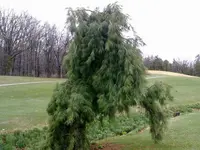
Use soft, adjustable ties to gently pull key branches in the direction you want them to drape over rocks, walls, or edges, checking and loosening ties every 6–12 months to prevent damage.

Plan Wind Exposure

Site the tree where strong prevailing winds are broken by a building or larger trees, since the long, pendulous branches can twist or break more easily in exposed, gusty locations.

Reduce Winter Burn

In colder, windy climates, apply a 5–8 cm layer of mulch over the root zone in late fall and avoid late-season nitrogen fertilization to help needles resist winter desiccation and browning.

Monitor Pine Pests

Inspect needles and shoots several times a year for pine sawfly larvae, adelgids, and scale insects, and treat early with targeted horticultural oil or appropriate insecticides if clusters of larvae or cottony/scale patches appear, which is a key part of caring for Weeping White Pine.

Common Pests and Diseases

White pine blister rust

This disease causes cankers, swelling, and sunken areas on branches and trunk, often with orange blisters that release spores, and can lead to branch dieback. Symptoms include yellowing needles beyond the canker and eventual death of affected branches.

Solution

Prune out infected branches well below visible cankers during dry weather, disinfecting tools between cuts, and destroy removed material away from pines and alternate hosts such as currants and gooseberries (Ribes spp.). Avoid planting Ribes nearby, maintain good spacing and airflow, and choose rust-resistant white pine sources where available as part of long-term Pinus strobus 'Pendula' care instructions.

White pine weevil

This pest attacks the upper leader shoots, causing wilting, bending into a shepherd’s crook shape, and eventual death of the top portion of the tree. These insects tunnel inside the leader, leading to distorted growth and multiple competing tops.

Solution

In early spring, monitor the terminal leader and remove and destroy any infested, wilting leaders before adults emerge, cutting 8–12 in below visible damage. Encourage a new single leader by staking a healthy side shoot upright and consider using trunk wraps or approved targeted insecticides on the leader only during the short adult activity window, if local guidelines support this approach.

Pine needle scale

This pest appears as small, white, elongated scales on needles, causing a dull, grayish color, premature needle drop, and overall thinning of the canopy. Heavy infestations weaken plants and reduce growth.

Solution

Prune and dispose of heavily infested branches to reduce populations, then spray needles thoroughly with horticultural oil during the crawler stage as directed on the label. Improve vigor with correct watering and avoid excess nitrogen fertilization, which can increase susceptibility to scale outbreaks.

White pine needle cast

This disease leads to yellowing, browning, and premature shedding of older needles, usually starting on the lower or inner branches. Symptoms include thin foliage and a sparse appearance, while closer inspection shows tiny dark fruiting bodies on affected needles.

Solution

Rake and remove fallen needles to lower the source of reinfection and improve airflow by maintaining adequate spacing from nearby plants. In high-pressure areas, apply a registered fungicide timed to new needle growth in spring, following local recommendations, and keep the tree healthy with proper watering and mulch to reduce stress.

Pine bark beetles

These insects bore into stressed or weakened trees, creating galleries under the bark and disrupting water movement, which leads to fading needle color, pitch tubes, and branch dieback. Severe attacks can kill sections of the tree or the entire plant.

Solution

Reduce stress by avoiding mechanical injury, drought, and soil compaction, and promptly remove and destroy severely infested trees or branches to limit beetle spread. In regions with chronic outbreaks, consult local forestry or extension services about preventive trunk sprays for high-value specimens and use them only as recommended and timed to beetle flight periods.

Interesting Facts

Naturally irregular form

This cultivar develops a strongly weeping, sometimes sprawling habit with no single predictable leader, so each specimen forms a unique outline shaped by staking and gravity rather than a fixed genetic architecture.

Inherited soft needles

Although strongly modified in shape, it retains the very soft, flexible 5-needle bundles of the eastern white pine, making its foliage notably gentler to the touch than many other conifers used in ornamental plantings.

Selected ornamental cultivar

It does not occur as a stable wild population; instead, it originated as a horticultural selection from Pinus strobus with a naturally pendulous growth mutation that has been maintained only through vegetative propagation such as grafting.

Botan icon

Did you know?

Because of its unpredictable, cascading growth, this plant is frequently used as a living sculptural element in landscape design, with growers training its main stems along stakes, arches, or horizontal supports over many years to create custom forms that cannot be exactly duplicated in another specimen.

FAQs about Weeping White Pine

Growth is moderate, typically 15–30 cm per year under good conditions. Young plants establish slowly, then speed up. Grafted forms may grow unevenly, depending on rootstock vigor and site quality. Regular monitoring helps guide pruning and training.

Grow Healthy Plants with Botan Care

Keep your plants happy and healthy with plant identification, disease detection, and easy care guidance.

Botan plant care app — identify plants on mobile

Explore More Plants