Wind-form training
In the first 3–5 years, lightly stake the young tree and gradually loosen ties each season so it develops a sturdy, slightly flexible trunk that tolerates wind once established.

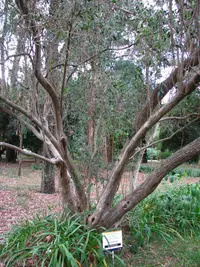
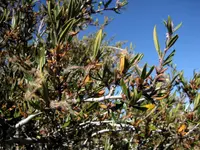
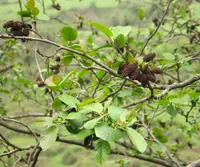
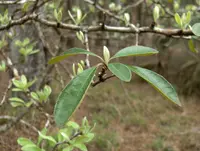
Blepharocalyx salicifolius is an evergreen shrub to small tree in the myrtle family, valued for its fine, willow-like foliage and aromatic leaves. It forms a dense, upright crown and produces small white flowers followed by decorative berries.
This species is native to South America, especially southern Brazil, Uruguay, and Argentina, where it grows in woodlands and along riverbanks. It is often used in hedges, screens, and ornamental plantings in mild climates.
The plant is moderately easy to grow when given well-drained soil, regular moisture, and a sunny to lightly shaded site. Understanding how to care for Blepharocalyx salicifolius mainly involves matching its preference for mild, frost-free conditions and avoiding prolonged drought or waterlogging.

Care Difficulty
Moderate Care

Light Preference
Full Sun

Water Requirements
Moderate Water

Temperature Preference
Warm Climate

Hardiness Zone
9–11

Soil Texture
Sandy, Loamy, Organic-rich

Soil pH
Acidic (5.5–6.5), Slightly acidic (6.5–7.0)

Soil Drainage
Moist but well-drained

Fertilization
Minimal (feed rarely)
Scan your plant to receive care tips personalized for your specific plant
Available on iOS and Android
This species prefers bright outdoor exposure with some protection from intense midday rays.
This shrub prefers evenly moist but well‑drained soil rather than constant saturation.
This species grows best in mild, frost-free climates with moderate seasonal variation.
This species benefits from moderate humidity but usually adapts to typical indoor levels.
Provide a well-draining, moderately fertile mix that stays evenly moist but never waterlogged.
This shrub can adapt well to container growing when given stable, well-drained conditions.
This species grows steadily in average garden soil but responds well to light, balanced feeding in containers or poor ground.
Pruning helps maintain structure and health without limiting the natural form of Blepharocalyx salicifolius.
This tree is usually grown in the ground, so focus on careful transplanting and only occasional container repotting.
Propagation is typically done from seeds or semi-hardwood cuttings taken in the warmer months.
Established plants show moderate cold tolerance but young or potted specimens benefit from simple winter protection.

Plant Health Check
Not sure what's wrong with your plant? Check your plant's health inside the app.
This species is a South American member of the myrtle family (Myrtaceae) that naturally occurs from southern Brazil through Uruguay into northeastern Argentina, where it often grows in riparian and moist forest habitats alongside other myrtle relatives.
Its narrow, willow-like leaves and thin bark contain aromatic essential oils typical of Myrtaceae, which release a noticeable fragrance when crushed or bruised.
The plant produces small, reddish to dark fruits that are eaten by local birds, which then disperse the seeds and help maintain populations in native riverine and forest-edge ecosystems.
This species is typically evergreen in mild, frost-free climates, holding its narrow leaves year-round. In cooler or exposed sites it may behave semi-evergreen, dropping some foliage during cold or drought stress but generally refoliating in spring.
Keep your plants happy and healthy with plant identification, disease detection, and easy care guidance.