Host tree pairing
Establish the fungus in mixed plantings with aspen or poplar, since this species forms mycorrhiza with these trees and will not fruit reliably without a compatible living host.

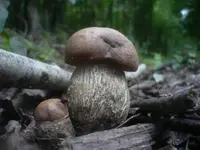
Slate bolete (Leccinum duriusculum) is a mycorrhizal mushroom-forming fungus, not a leafy houseplant. It grows in association with poplar and related trees, usually in temperate woodlands and parks. Caps are typically slate-gray to brown, with a stout stem covered in small dark scales.
This species appears from late summer to autumn, often in groups on the ground rather than on wood. Its growth depends on healthy host trees and suitable soil fungi communities, which makes it difficult to cultivate at home. Those exploring how to care for Slate Bolete should understand that it relies on a natural forest-like ecosystem, with undisturbed soil, moderate moisture, and access to tree roots.

Care Difficulty
Hard Care

Light Preference
Partial Shade

Water Requirements
Keep Soil Moist

Temperature Preference
Cool Climate

Hardiness Zone
4–8

Soil Texture
Loamy, Silty, Organic-rich

Soil pH
Acidic (5.5–6.5)

Soil Drainage
Moist but well-drained

Fertilization
Minimal (feed rarely)
Scan your plant to receive care tips personalized for your specific plant
Available on iOS and Android
This mycorrhizal mushroom prefers outdoor sites with moderate, seasonally shifting light rather than intense, all‑day sun.
This ectomycorrhizal fungus depends on consistently moist, aerated soil around its host tree rather than direct watering of the fruiting bodies.
This fungus thrives in cool to mild conditions and shows the best fruiting when soil and air temperatures stay within a moderate range.
Humidity is not a meaningful factor for Leccinum duriusculum, which grows in natural outdoor conditions without special air-moisture needs.
This ectomycorrhizal fungus needs mineral, undisturbed ground rather than potting soil conditions.
This species is not suitable for container growing because it relies on mycorrhizal partnership with tree roots in open ground.
This mycorrhizal fungus relies on its host tree for nutrition, so Slate Bolete usually needs no fertilizer in natural or semi-natural plantings.
Leccinum duriusculum does not require pruning, since the visible mushroom is only the fruiting body of an underground fungal network.
This species is almost never grown in containers; care focuses on placing and supporting its host trees rather than moving the fungus itself.
Leccinum duriusculum is not typically propagated by home growers, since it depends on complex mycorrhizal relationships with host trees.
This ectomycorrhizal fungus is naturally cold hardy in its native range and generally needs no special winter care.

Plant Health Check
Not sure what's wrong with your plant? Check your plant's health inside the app.
This bolete forms ectomycorrhizal partnerships almost exclusively with poplars, especially grey poplar and related hybrids, which is why it is usually found in pure or mixed poplar stands rather than with other broadleaf trees.
The pale pores of the fruiting body slowly turn grey and then darken when bruised or with age, a helpful field character that separates it from many other orange- or brown-capped boletes.
The stem bears very hard, dark scabers (small rough scales) that become more pronounced and darker as the mushroom matures, reflecting the species name duriusculum, meaning somewhat hard or tough.

This species often fruits in large, localized troops in established poplar plantings and shelterbelts, making it a useful indicator of well-developed ectomycorrhizal networks in managed landscapes where poplars are used for timber, windbreaks, or soil stabilization.
This species is generally considered edible when correctly identified and well cooked, but it can be confused with inedible or upsetting boletes. Only forage with expert guidance, and always cook thoroughly to reduce digestive discomfort risk.
Keep your plants happy and healthy with plant identification, disease detection, and easy care guidance.