Western Hardwood Sulphur Shelf Care (Laetiporus gilbertsonii)

Also known as: Western Chicken-of-the-Woods
Western Hardwood Sulphur Shelf

About Western Hardwood Sulphur Shelf

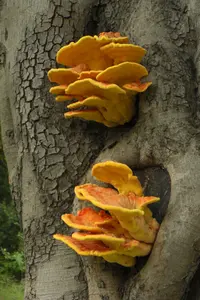
Western hardwood sulphur shelf, Laetiporus gilbertsonii, is a wood-decaying bracket fungus rather than a leafy plant. It forms thick, overlapping shelves with bright yellow to orange upper surfaces and pale undersides.

It typically appears on living or dead hardwood trees along the Pacific Coast of North America, especially in California and the Pacific Northwest. Its fast growth, dependence on specific host trees, and need for stable humidity make it challenging to cultivate at home.

Those interested in how to care for Western Hardwood Sulphur Shelf usually focus on replicating cool, shaded woodland conditions with consistent moisture and well-aerated, woody substrate.


Main Plant Requirements

Care Difficulty

Hard Care

Light Preference

Partial Shade

Water Requirements

Keep Soil Moist

Temperature Preference

Warm Climate

Hardiness Zone

Unknown

Soil Texture

Organic-rich

Soil pH

Slightly acidic (6.5–7.0)

Soil Drainage

Moist but well-drained

Fertilization

Minimal (feed rarely)

Get Personalized Care Plan

Scan your plant to receive care tips personalized for your specific plant

Available on iOS and Android

How to Care for the Western Hardwood Sulphur Shelf

This wood-decay fungus prefers bright forest conditions with partial protection from intense sun.

  • Provide 3–6 hours of dappled or filtered light, such as beneath open-canopy hardwoods; morning sun with afternoon shade is ideal for Laetiporus gilbertsonii.
  • Avoid full, exposed afternoon sun in hot climates, which can dry and toughen developing fruiting bodies before they mature.
  • In dense shade with under 2–3 hours of indirect light, fruiting may be sparse; slightly increase light exposure by thinning overhead cover if possible.

This bracket fungus relies on consistent trunk or log moisture rather than surface watering.

  • Host wood should stay moderately moist but not saturated; avoid sites where water stands around the base of the tree or log for more than 24 hours.
  • In dry seasons, fruiting bodies shrivel and edges crisp; higher ambient humidity or occasional misting of nearby surfaces can support Laetiporus gilbertsonii development.
  • Signs of excessive moisture include slimy, rapidly decaying shelves and strong sour odor, while very dry conditions cause brittle, pale, and inactive growth.

This species fruits best in mild to warm conditions typical of coastal and low-elevation hardwood forests.

  • Optimal fruiting occurs around 60–80°F (16–27°C), with mycelial growth in wood continuing over a slightly broader range.
  • Short exposures down to about 25–28°F (-4 to -2°C) may be tolerated, but repeated hard frosts damage or halt visible fruiting bodies.
  • Heat above 90°F (32°C), especially when combined with low humidity, can dry and crack the shelves; better flushes often appear during cooler spring or fall periods.

Humidity is not a primary control factor for Laetiporus gilbertsonii compared with suitable host wood and moisture in the substrate.

This fungus relies on colonizing suitable hardwood rather than traditional soil, but culture substrates can be prepared with similar principles in mind.

  • Use a high-organic, woody substrate such as chipped hardwood or sawdust supplemented with 10–20% composted agricultural byproducts for nutrition.
  • Maintain a structure that stays evenly moist but never waterlogged, allowing air pockets within the chips or fibers to support fungal respiration.
  • Aim for a slightly acidic to neutral environment, roughly pH 5.5–7.0, which favors Laetiporus gilbertsonii enzymatic activity in lignin-rich material.
  • Avoid dense, fine mineral soils or peat-only mixes that compact, exclude oxygen, and prevent the fungus from spreading through the woody substrate.
This species is not well suited to conventional container growing, as it naturally fruits from infected hardwood rather than from potting media.

This wood-decay fungus naturally extracts nutrients from host trees and usually does not benefit from added fertilizer in cultivation.

This bracket fungus is not managed with pruning in the way garden plants are, since fruiting bodies are temporary and arise from infected wood.

Transplanting focuses on moving colonized wood rather than shifting Laetiporus gilbertsonii like a potted plant.

  • Shift only when a log or stump is fully colonized and fruiting reliably, since disturbance can interrupt future flushes.
  • Transplant during cool, stable weather to reduce drying of the mycelium and exposed wood surfaces.
  • Cut and move sections of colonized wood gently, keeping internal tissue intact and shaded during handling.
  • Place the colonized wood on or against fresh, compatible hardwood to encourage spread while minimizing stress.

Propagation of this species is specialist work and not usually attempted by casual growers, since it is a wild, wood-decaying fungus rather than an ornamental plant.

In most temperate climates Laetiporus gilbertsonii needs no active winter care, as the internal mycelium in wood is fairly cold hardy.

Care Tips

Use Fresh Substrate

Prepare fresh, clean hardwood logs or large branches from oak or related hosts and avoid using wood that is rotten, heavily decayed, or chemically treated, since strong primary wood is needed for reliable colonization and fruiting.

Efficient Plug Placement

When inserting spawn plugs, drill staggered holes about 10–15 cm apart in a diamond pattern around the log, then seal each with food-grade wax to reduce contamination and moisture loss.

Moisture-Retentive Stacking

Stack inoculated logs off the ground on bricks or pallets and partially shade them with a breathable tarp or shade cloth to retain moisture while still allowing airflow.

Seasonal Fruiting Checks

Begin inspecting logs weekly during warm, moist seasons and mark the first small shelves with flagging tape, which helps track how each log performs over several years when growing Western Hardwood Sulphur Shelf.

Hygiene Around Hosts

If fruiting on landscape trees, keep tools disinfected and avoid unnecessary wounds on nearby hardwoods to limit the spread of decay to trees that are intended to remain structurally sound.

Common Pests and Diseases

Diptera larvae

This pest uses the soft fruiting bodies as a food source, creating tunnels and mushy, discolored areas in the brackets. Symptoms include small entry holes, frass, and accelerated decay of the mushroom tissue.

Solution

Harvest brackets young and cleanly, then refrigerate promptly if using for consumption. Remove and discard heavily infested clusters in the field, and avoid storing damp or damaged tissue, as this favors fly egg laying and rapid larval development.

Beetle feeding damage

These insects chew shallow pits and irregular holes across the upper and lower surfaces of the brackets. Symptoms include pocked, rough textures and localized browning where tissue has been eaten.

Solution

Physically remove visible beetles from fresh brackets and harvest at the desired stage before large numbers arrive. Collect and discard badly damaged or heavily colonized brackets away from storage or growing areas to reduce attraction and future pressure.

Desiccation cracking

This condition appears when brackets dry too quickly, leading to surface cracking, toughening, and loss of characteristic texture. Symptoms include deep fissures, hardened margins, and brittle, chalky tissue.

Solution

Harvest during cool parts of the day and store at stable, cool temperatures with moderate humidity to slow moisture loss. Avoid placing fresh brackets in direct sun, in front of fans, or in very low humidity environments, and use breathable containers instead of sealed plastic bags.

Secondary bacterial soft rot

This disease develops after mechanical injury or insect damage, producing water-soaked spots that quickly turn slimy and foul-smelling. Symptoms include soft, collapsing areas and a sour or putrid odor.

Solution

Trim away damaged or bruised portions promptly and keep remaining tissue cool and dry with good air circulation. Discard any brackets showing widespread soft rot, and avoid washing and then storing them wet, since surface moisture promotes bacterial growth.

Competitive mold colonization

This disease arises when spores of other fungi or molds colonize old or damaged brackets, creating fuzzy, colored growth on the surface. Symptoms include patches of white, green, or gray mold and a dusty spore layer on aging tissue.

Solution

Harvest brackets while still firm and brightly colored, before heavy sporulation or surface damage. Remove and discard moldy tissue immediately and avoid stacking moist brackets tightly together, as reduced airflow and prolonged surface moisture favor mold development.

Interesting Facts

Hardwood specialist

This species fruits almost exclusively on living or recently dead hardwoods such as coast live oak and tanoak in western North America, rather than on conifers that many related Laetiporus species favor.

Distinctive pore surface

Its underside has small, round pores instead of gills, and spore-bearing tissue forms a thick, soft tube layer that is pale yellow when young and deepens in color as it ages.

Molecularly defined species

It was long confused with Laetiporus sulphureus until DNA sequencing and detailed microscopic studies in the 1990s and 2000s showed it is a separate western North American lineage with distinct spore and hyphal characteristics.

Botan icon

Did you know?

This fungus can cause a brown cubical rot in the heartwood of infected oaks, producing a characteristic checkerboard pattern in the decayed wood that strongly weakens trunks and major limbs, sometimes leading to branch or tree failure in mature stands.

FAQs about Western Hardwood Sulphur Shelf

Young, tender brackets are considered edible for many people when thoroughly cooked, but some individuals experience gastrointestinal upset or allergic reactions. Correct identification, cooking, and testing a very small portion first are essential before regular consumption.

Grow Healthy Plants with Botan Care

Keep your plants happy and healthy with plant identification, disease detection, and easy care guidance.

Botan plant care app — identify plants on mobile

Explore More Plants