hen-of-the-woods Care (Grifola frondosa)

Also known as: hen of the woods
hen-of-the-woods

About hen-of-the-woods

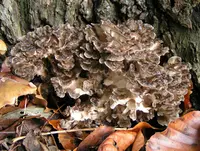
Hen-of-the-woods, Grifola frondosa, is a polypore mushroom that grows as a large, layered cluster at the base of hardwood trees, especially oaks. Its fronds are gray-brown and ruffled, giving the cluster a rosette or cauliflower-like form.

In nature it occurs in temperate forests of East Asia, Europe, and North America, often appearing in the same spot for many years. It is prized as an edible and is cultivated commercially, but home cultivation can be moderately challenging.

Successful growers focus on stable moisture, good airflow, and a clean, woody substrate. Basic knowledge of mushroom cultivation is helpful to care for hen-of-the-woods, especially in controlled indoor setups.

Main Plant Requirements

Care Difficulty

Hard Care

Light Preference

Shade

Water Requirements

Keep Soil Moist

Temperature Preference

Cool Climate

Hardiness Zone

4–9

Soil Texture

Loamy, Silty, Organic-rich

Soil pH

Strongly acidic (4.5–5.5), Acidic (5.5–6.5)

Soil Drainage

Moist but well-drained

Fertilization

Minimal (feed rarely)

Get Personalized Care Plan

Scan your plant to receive care tips personalized for your specific plant

Available on iOS and Android

How to Care for the hen-of-the-woods

This wood-decay fungus prefers cool, dappled forest light that mimics shaded woodland conditions.

  • Provide bright shade or dappled light under trees, aiming for 1–3 hours of soft morning sun and no direct afternoon sun to avoid drying the substrate surface.
  • Ensure partial to full shade; 70–90% shade cloth or dense canopy cover helps prevent desiccation and heat stress on developing clusters of hen-of-the-woods.
  • In summer, increase shading to prevent caps from yellowing or cracking, while in cooler seasons slightly more indirect light is acceptable without harming fruiting.

Moist, not waterlogged conditions are critical for sustained and healthy fruiting of this wood-rotting fungus.

  • Maintain consistently moist substrate or buried log; surface should feel damp but not soggy, with no standing water around the base.
  • Allow only the top 1–2 cm of surrounding soil to start drying before re-wetting, using gentle soaking so water penetrates slowly and drains away from the log or inoculated area.
  • Reduce supplemental watering in cool, rainy periods and increase during hot, dry spells; signs of underwatering include shriveling and tough caps, while overwatering leads to slimy, foul-smelling tissue in Grifola frondosa.

This species fruits best in cool to mild conditions and is sensitive to both hard frost and strong heat.

  • Aim for 55–70°F (13–21°C) during active growth and fruiting; stable cool temperatures support dense, well-formed clusters.
  • Tolerate brief drops to about 40°F (4°C), but protect from hard freezes below 32°F (0°C), which can damage fruiting bodies and slow mycelium activity.
  • Limit exposure to temperatures above 80°F (27°C); in hot spells, provide extra shade and moisture because sustained heat above 85°F (29°C) can halt fruiting and dry the substrate.

This species prefers consistently high humidity around 80–95% for reliable fruiting.

  • Hen-of-the-woods tolerates brief drops to 60–70% but caps become smaller and drier.
  • Low humidity causes cracked, tough fronds and pale, shrunken edges on clusters.
  • Use a humidifier, fine-mist sprayer, or tented setup with fresh air exchange to keep humidity high without stagnation.

Grifola frondosa requires a nutrient-rich, well-aerated substrate rather than standard garden soil.

  • Use a mix based on hardwood sawdust or chips with 10–20% wheat bran or similar supplement for structure and nutrition.
  • Aim for moist, springy texture that holds water but still feels airy; avoid dense, compacted material.
  • Keep pH roughly 5.5–6.5 by using mostly hardwood materials and avoiding excessive lime or wood ash.
  • Improve drainage and aeration by adding a small portion of coarse wood chips and thoroughly mixing, then sterilizing or pasteurizing before inoculation.

This fungus can be grown in containers such as bags, tubs, or buckets when moisture and stability are controlled carefully.

  • Choose a wide, low container so heavy clusters do not tip or pull the substrate away from the sides.
  • Drill or cut side openings near the base for fruiting so clusters can form without blocking surface gas exchange.
  • Use opaque or dark containers to limit light on the substrate, which helps maintain a stable moisture gradient.

Outdoor Grifola frondosa usually needs no fertilizer if grown on suitable hardwood, but controlled culture can benefit from light feeding.

  • Use a mild, balanced NPK solution at 1⁄4–1⁄2 strength only if growth slows in supplemented sawdust or wood-based substrates.
  • Apply liquid feed every 4–6 weeks during the active growing and fruiting period, avoiding direct contact with developing clusters.
  • Skip feeding in winter or dormancy when mycelium activity and moisture demand are low.
  • Avoid heavy compost or rich slow-release fertilizers, which can upset substrate balance and invite contamination.

Pruning for Grifola frondosa mainly means hygienic harvesting and sanitation rather than shaping.

  • Harvest clusters at the base with a sharp, disinfected knife when fronds are firm and edges still pale.
  • Remove and discard any water-soaked, moldy, or insect-damaged tissue to limit disease spread in the patch or bed.
  • Clean away decayed stumps and spent fruiting bodies at season’s end to reduce pests and improve future flush quality.
  • Avoid tearing or twisting clusters off the substrate, which can injure the underlying mycelium and reduce later yields.

Grifola frondosa is usually established on hardwood logs or buried blocks, so care focuses on transplanting substrate rather than classic repotting.

  • Transplant when colonized logs or blocks show dense white mycelium but limited fruiting, or when airflow and drainage are poor at the current site.
  • Choose early to mid-spring for moving material, when soil is workable and stable moisture supports new mycelial spread.
  • Shift logs or blocks gently, keeping them intact and shaded; avoid dropping or banging to limit internal mycelium damage.
  • Re-site into a cool, sheltered, consistently moist location, then water thoroughly to settle soil contact and reduce transplant shock.

Propagation of Grifola frondosa for reliable crops is usually done with spawn rather than casual garden methods.

  • Use commercial grain spawn or plug spawn inserted into fresh hardwood logs or supplemented sawdust blocks.
  • Inoculate in late winter to early spring so colonization occurs before summer heat, then maintain 60–75°F and steady moisture.
  • Drill clean holes in logs, insert plugs or spawn, then seal with cheese wax to retain humidity and block contaminants.
  • Keep inoculated wood shaded and slightly elevated from bare soil, allowing 6–18 months for full colonization and fruiting.

Outdoor hen-of-the-woods colonies are quite cold hardy and usually need minimal winter care in temperate climates.

  • Mature, colonized hardwood logs tolerate freezing, provided they have good drainage and are not sitting in standing water.
  • Apply a light mulch of leaves or straw around, not over, logs or blocks to moderate soil temperature swings.
  • Leave container-grown blocks in an unheated but frost-free shed or garage where temperatures stay above about 25°F.

Care Tips

Staggered Harvesting

Cut outer, mature fronds first with a clean knife and leave the firm inner clusters to expand for several more days, which can extend the total harvest window from a single flush.

Block Weight Management

Support heavy colonized substrate blocks on a mesh shelf or crate so air can reach all sides, reducing the risk of the base staying waterlogged and rotting under the mushroom mass.

Targeted Ventilation

Use a small fan on a low, indirect setting to gently move air across, but not directly at, the developing clusters to limit carbon dioxide buildup and promote dense, well-formed fronds.

Surface Hygiene Routine

Between flushes, wipe grow surfaces and nearby tools with 70% isopropyl alcohol and remove any spent or moldy tissue immediately to lower contamination pressure when growing hen-of-the-woods.

Flush Rest Period

After each harvest, reduce misting slightly and allow the block to rest for 3–5 days before resuming full humidity, which often encourages a stronger second flush rather than continuous light misting.

Common Pests and Diseases

Green mold

This disease appears as fast-spreading green patches of mold on the surface of the substrate or forming blocks and can quickly outcompete the mushroom mycelium. Symptoms include stalled growth of the hen-of-the-woods cluster and a dusty, green surface that spreads from a small spot outward.

Solution

Remove and discard heavily contaminated substrate or blocks as soon as green mold is seen, since spores spread quickly through the air. Disinfect tools and growing surfaces, improve air filtration, reduce excess humidity condensation, and start new cultures from clean spawn under strict sanitation to restore productive grow Grifola frondosa conditions.

Bacterial blotch

This disease causes greasy, water-soaked spots and slimy, brown or yellow lesions on the fronds, often starting where water droplets sit. Symptoms include soft, collapsed tissue with an unpleasant odor that makes the mushroom unmarketable.

Solution

Reduce or stop overhead misting so caps do not stay wet, increase fresh air exchange, and keep humidity stable without visible standing water on surfaces. Remove affected clusters promptly and disinfect trays, nozzles, and tools to reduce bacterial load before starting a new flush.

Cobweb mold

This disease shows as very fine, grayish-white, cobweb-like fungal growth that spreads rapidly over the substrate and mushroom clusters. Symptoms include dulling and collapse of fronds as the contaminant overgrows the crop.

Solution

Lower humidity slightly, increase fresh air exchange, and isolate affected blocks immediately to limit spread. Lightly misting only the contaminated surface with a dilute 3% hydrogen peroxide solution can slow or stop early cobweb mold, but badly infested blocks are best discarded and the grow area thoroughly cleaned.

Fungus gnats

These insects are small, dark flies whose larvae feed within the substrate and around developing mushroom tissue, causing deformed or reduced clusters. This pest also carries mold spores and bacteria that can trigger secondary diseases.

Solution

Use fine mesh on vents and sticky traps near the growing area to reduce adult populations, and avoid over-wet, anaerobic substrate that favors larval development. Remove heavily infested blocks, allow the surface of the substrate to dry slightly between misting cycles, and clean the grow room between cycles to break the life cycle.

Sciarid fly larvae

This pest lives in the substrate and tunnels through developing mushroom tissue, leaving pitted, scarred, or partially hollow fronds. Symptoms include small entry holes, brown tunnels, and increased contamination from opportunistic molds entering the damaged tissue.

Solution

Improve physical exclusion with tight door seals, insect screens, and air curtains where possible, and use yellow sticky cards to monitor and reduce adult numbers. Discard severely infested blocks, clean all organic debris from the grow room, and adjust watering practices to keep the substrate moist but not saturated, which makes it less attractive to egg-laying adults.

Interesting Facts

Perennial tree partner

This fungus forms long‑lived mycorrhizal relationships with hardwood trees, especially oaks, often fruiting at the same trunk base in repeated years from a persistent underground structure.

Clustered rosette form

Its fruiting body develops as a dense, multi-layered cluster of spoon-shaped caps, sometimes weighing several kilograms, which maximizes spore production while keeping a compact footprint on the forest floor.

Specialized wood decomposer

It causes a white rot in its hosts by breaking down lignin in wood, playing an important role in nutrient cycling and the natural decay of aging hardwoods.

Botan icon

Did you know?

Genetic studies indicate that what is commonly recognized as Grifola frondosa in North America and East Asia may include regionally distinct lineages, suggesting a complex evolutionary history and possible cryptic species within the traditional concept of this single fungus.

FAQs about hen-of-the-woods

Yes, this species is considered a choice edible mushroom when correctly identified and harvested young to mid-mature. Always confirm identification with a reliable field guide or expert, and cook thoroughly to reduce digestive upset risk.

Grow Healthy Plants with Botan Care

Keep your plants happy and healthy with plant identification, disease detection, and easy care guidance.

Botan plant care app — identify plants on mobile

Explore More Plants

How to Care for hen-of-the-woods (Grifola frondosa)