BotaN logo

belted panaeolus Care (Panaeolus cinctulus)

belted panaeolus

About belted panaeolus

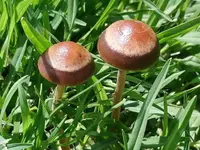
Panaeolus cinctulus, often called belted panaeolus, is a small, saprotrophic mushroom that lives on decaying organic matter rather than forming true roots or leaves. It is not a houseplant but a short-lived fungus that appears after rain. Caps are typically brown with a paler band near the edge, supported by slender stems in small clusters or scattered groups. It commonly occurs in lawns, compost-enriched soils, garden beds, and manured fields across many temperate regions. Growth depends strongly on moisture, organic-rich substrates, and mild temperatures, which makes it unpredictable and not practical to cultivate indoors. For anyone trying to care for belted panaeolus, the main focus is providing consistently moist, nutrient-rich organic material outdoors.

Main Plant Requirements

Care Difficulty

Hard Care

Light Preference

Partial Shade

Water Requirements

Keep Soil Moist

Temperature Preference

Warm Climate

Hardiness Zone

Unknown

Soil Texture

Loamy, Silty, Organic-rich

Soil pH

Acidic (5.5–6.5), Slightly acidic (6.5–7.0)

Soil Drainage

Moist but well-drained

Fertilization

Minimal (feed rarely)

Get Personalized Care Plan

Scan your plant to receive care tips personalized for your specific plant

Available on iOS and Android

How to Care for the belted panaeolus

This saprotrophic mushroom prefers moderate, indirect light rather than full, direct sun exposure.

  • Provide 2–4 hours of gentle morning sun or bright, filtered light; avoid harsh midday sun that can dry out substrates quickly.
  • Allow partial shade for most of the day, since belted panaeolus fruits well in open, dappled conditions typical of lawns and pasture edges.
  • In summer, protect from intense afternoon sun to prevent desiccation; in cooler seasons, ensure sites are not deeply shaded so caps still receive diffuse daylight.

This species needs evenly moist, not soggy, substrate to develop healthy mycelium and fruiting bodies.

  • Maintain moisture in manure-rich soil or compost so the top 2–3 cm remain slightly damp but not waterlogged, supporting Panaeolus cinctulus growth.
  • Use rainfall and surface appearance as guides; water lightly when the substrate lightens in color, cracks, or feels just starting to dry below the surface.
  • Improve drainage with coarse organic matter; standing water, sour odor, or slimy substrate indicate overwatering, while brittle, shrinking substrate signals underwatering.

This mushroom fruits best in mild, stable temperatures with no exposure to frost.

  • Aim for 60–77°F (16–25°C) as the main range for active mycelial growth and reliable fruiting in manure-rich or grassy substrates.
  • Avoid temperatures below 40°F (4°C), since prolonged cold slows or stops growth and repeated light frosts can damage developing fruiting bodies.
  • Limit heat stress by keeping substrates shaded when air temperatures rise above 86°F (30°C), as hot, dry conditions quickly halt fruiting and dry the substrate.

Humidity is a minor factor for Panaeolus cinctulus compared with temperature and substrate conditions.

This fungus requires a moist, nutrient-rich, well-aerated substrate rather than traditional potting soil.

  • Use a mix of well-aged manure and straw or grass-based compost to mimic decomposing plant material in nature.
  • Ensure loose, crumbly structure so air can move through the substrate, which helps mycelium breathe and reduces anaerobic zones.
  • Keep the substrate evenly moist but not waterlogged; free water filling air spaces promotes rot and contamination.
  • Avoid dense clay, peat-only, or heavily compacted mixes that hold standing water and restrict gas exchange.

This species can be grown in shallow containers when substrate depth and drainage are controlled carefully.

  • Choose a wide, shallow tray so the colonized substrate layer stays 5–10 cm deep, which supports fruiting without overheating the core.
  • Drill or use built-in side drainage holes and elevate the tray slightly so excess water escapes instead of pooling at the bottom.
  • Use opaque or dark-sided containers to limit light on the substrate edges, which helps maintain more stable moisture near the surface.

This wild, decomposer mushroom typically gains enough nutrients from its substrate and does not need additional fertilization in cultivation.

Panaeolus cinctulus is not a plant and does not require pruning; only basic hygiene is relevant in cultivation.

This fungus is managed by changing or relocating its growing substrate rather than classic repotting.

  • Transplant or refresh the substrate when fruiting declines, contamination appears, or the mycelium has fully colonized and exhausted nutrients.
  • Choose mild conditions, typically in spring or fall, to reduce temperature and moisture stress on the mycelium network.
  • Move colonized material gently into fresh, clean, nutrient-rich substrate with similar moisture and texture to limit shock.
  • Minimize exposure to open air, handle blocks or trays carefully, and maintain stable moisture after transfer to support recovery.

Panaeolus cinctulus is usually propagated by spores or by transferring live mycelium rather than by plant-style methods.

  • Use mature caps to obtain spores on sterile foil or paper, then introduce spores to a clean, nutrient substrate under hygienic conditions.
  • For mycelium transfer, cut a small clean piece of colonized substrate and move it into fresh sterile medium.
  • Maintain 70–75°F, high humidity, and low light during colonization, avoiding temperature swings and drying.
  • Work with disinfected tools and containers to lower the risk of bacterial or fungal contamination during all propagation steps.

This species fruits seasonally and survives as mycelium in suitable substrates, generally needing minimal targeted winter care outdoors.

  • In cold climates, outdoor mycelium usually survives typical winter lows if buried in soil or organic matter that buffers temperature swings.
  • For container or indoor culture, keep trays or bags above freezing, ideally 40–60°F, and avoid repeated freeze–thaw cycles.
  • Maintain only slight moisture in the substrate during cold periods; waterlogging in cool conditions increases rot and contamination risk.

Care Tips

Manure substrate rotation

Rotate between well-composted horse and cow manure substrates across flushes to provide a stable nutrient profile and reduce the risk of nutrient imbalances or pathogen buildup when growing belted panaeolus.

Controlled casing depth

Apply a casing layer of 0.5–1 cm and keep it uniform to promote even pin formation and reduce clusters of malformed fruiting bodies.

Targeted spore management

Harvest caps just as gills begin to darken and use a small fan or laminar airflow hood to pull spores away from the grow area, which helps protect filters, fans, and nearby cultures from heavy spore loads.

Thermal phase separation

Use a slightly warmer incubation space and a cooler fruiting chamber (a 2–4°F difference) to limit unwanted species colonization and to trigger more reliable fruiting behavior.

Selective crop hygiene

Remove spent substrates and any obviously contaminated blocks promptly in sealed bags to reduce airborne contaminants and maintain a cleaner, more stable culture environment for subsequent batches.

Common Pests and Diseases

Fungus gnat larvae

This pest often appears in very wet, nutrient-rich substrates used for cultivating this mushroom. Symptoms include slow or patchy pin development and visible small white larvae in the casing or substrate.

Solution

Reduce surface moisture between mistings, improve ventilation, and use fine mesh on vents to keep adults out. Remove heavily infested casing layers and apply a biological control such as Bacillus thuringiensis israelensis (Bti) in water to target larvae without harming the mycelium.

Green mold (Trichoderma)

This disease is one of the most frequent contaminants in Panaeolus cinctulus grow boxes or trays. Symptoms include rapidly spreading bright to dull green patches on the substrate and loss of mushroom pins in affected areas.

Solution

Isolate and promptly remove any contaminated substrate, including a small margin of apparently healthy material, and discard it sealed in a bag. Disinfect tools and containers, improve hygiene and air filtration, and for future cycles use properly pasteurized or sterilized substrate and fresh, clean spawn to support more reliable Panaeolus cinctulus plant care.

Cobweb mold

This disease shows as very fine, grayish web-like growth that spreads quickly over the casing or substrate surface and can smother developing pins. Symptoms include soft, weak mushrooms and a dull, dusty look on the surface.

Solution

Increase fresh air exchange and reduce humidity slightly to slow spread, then spot-treat early patches with a light mist of 3% hydrogen peroxide diluted 1:3 with clean water. Remove heavily colonized surface material and avoid overcrowding trays in future grows to keep air moving across the surface.

Bacterial blotch

This disease occurs under conditions of stagnant, overly humid air with frequent surface wetting. Symptoms include greasy, yellow to brown spots or patches on caps and stems and a slimy texture in severe cases.

Solution

Increase air movement and fresh air exchange, avoid water droplets sitting on caps by using finer misting and watering the substrate rather than the fruit bodies, and remove badly affected mushrooms to reduce bacterial load. Disinfect growing surfaces and tools between flushes to lower reinfection risk.

Mite infestation

These insects can arrive with contaminated straw, manure-based substrate, or casing materials. Symptoms include tiny moving specks on substrate or mushrooms, poor pin set, and malformed or stunted fruit bodies.

Solution

Discard heavily infested substrates, then thoroughly clean and heat-disinfect or replace containers and shelving if possible. For future cycles, use clean, pasteurized substrate, avoid storing materials in contact with soil or grain pests, and consider introducing biological controls such as predatory mites in larger setups to keep populations low.

Interesting Facts

Unusual habitat flexibility

This species commonly appears in fertilized lawns, compost-enriched beds, and landscaped areas, not only on dung, which is unusual for a dung-associated mushroom genus. It often fruits in urban and suburban settings where grass has been heavily amended with organic matter.

Dark mottled gills

The gills show a distinctive mottled pattern as the spores mature in patches rather than evenly, a key field character used by mycologists to separate it from many similar brown grassland mushrooms.

Variable spore chemistry

Populations from different regions vary widely in their alkaloid content, and some collections show little to no psychoactive compounds at all, which makes chemical properties of this species highly unpredictable.

Botan icon

Did you know?

This mushroom has a long and confusing taxonomic history and has been described under several different names, including Agaricus cinctulus and Panaeolus subbalteatus, before modern mycology and DNA analysis clarified that these names refer to the same species.

FAQs about belted panaeolus

This mushroom is not recommended for consumption. It can contain psychoactive compounds with variable potency and may be confused with more dangerous look-alikes. For safety, it is best treated as inedible and left unharvested.

Grow Healthy Plants with Botan Care

Keep your plants happy and healthy with plant identification, disease detection, and easy care guidance.

Botan plant care app — identify plants on mobile

Explore More Plants