Use clean substrate
Prepare the growing tray with a pasteurized straw or composted manure mix and handle it with clean tools and hands to reduce competing fungi and bacteria that can quickly overrun the mycelium.

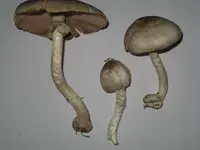
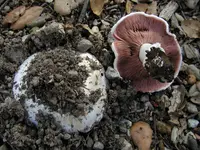
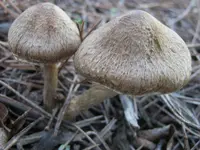
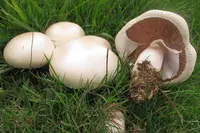
The inky mushroom, Agaricus placomyces, is a small to medium gilled fungus, not a leafy plant. It forms typical umbrella-shaped caps with pale gills that darken as spores mature. Caps are often gray-brown with darker scales, and the stem carries a fragile ring.
This species is usually found in woodland or mixed forest, growing on soil rich in decaying organic matter. It tends to appear in scattered groups rather than large clusters.
For those learning how to care for inky mushroom in cultivation, it is considered challenging because it needs very specific temperature, humidity, and sterile substrate conditions, similar to other cultivated mushrooms.

Care Difficulty
Hard Care

Light Preference
Partial Shade

Water Requirements
Keep Soil Moist

Temperature Preference
Cool Climate

Hardiness Zone
Unknown

Soil Texture
Loamy, Silty, Organic-rich

Soil pH
Acidic (5.5–6.5), Slightly acidic (6.5–7.0)

Soil Drainage
Moist but well-drained

Fertilization
Minimal (feed rarely)
Scan your plant to receive care tips personalized for your specific plant
Available on iOS and Android
This woodland fungus prefers low to moderate light that mimics a shaded forest floor.
Moist, not waterlogged, substrate is essential for reliable fruiting.
This species fruits best in cool to mild conditions typical of shaded woodland environments.
This mushroom prefers consistently moist, humid conditions around the fruiting area rather than dry household air.
This species fruits best from a loose, organic-rich substrate rather than typical garden soil.
This mushroom can be grown in wide, shallow containers if moisture and gas exchange are well managed.
This woodland fungus relies mainly on decaying organic matter and usually needs no additional fertilizer.
Agaricus placomyces does not require horticultural pruning in the usual sense.
This species is not managed like a potted plant and is rarely repotted, but transplanting mycelium-colonized substrate is possible for controlled cultivation.
Reproduction of Agaricus placomyces for study or controlled cultivation is done through spores or, more reliably, mycelial culture.
In natural settings this fungus needs no deliberate winter care, as the mycelium stays protected in soil or substrate.

Plant Health Check
Not sure what's wrong with your plant? Check your plant's health inside the app.
Fresh fruiting bodies often emit a sharp, phenolic or ink-like smell, which helps field mycologists distinguish it from similar edible Agaricus species that smell mild or pleasantly mushroomy.
When the cap or stipe is scratched or cut, the flesh of this species typically turns yellow, especially at the base of the stem, a chemical reaction that serves as a key diagnostic feature in identification.
This fungus commonly fruits on soil in coniferous or mixed forests, often near paths or clearings, indicating a preference for slightly disturbed, needle-rich substrates rather than dense, undisturbed woodland floor.
This fungus develops quickly from a well-colonized substrate, often producing fruiting bodies within a few weeks under stable moisture and temperature. Individual caps appear and mature in days, then rapidly deliquesce, leaving room for new flushes.
Keep your plants happy and healthy with plant identification, disease detection, and easy care guidance.