Choose host trees
Establish this mycorrhizal fungus only in areas already planted with compatible conifers such as pine, spruce, or fir, because the fungus depends on living tree roots for carbon and will not fruit reliably without them.

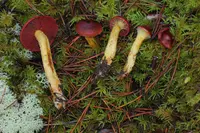
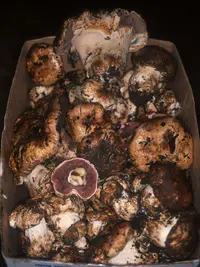
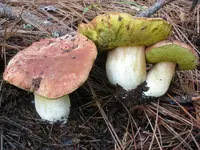
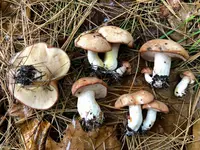
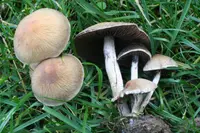
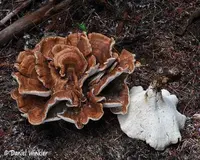
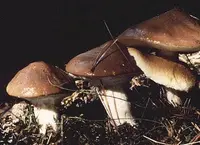
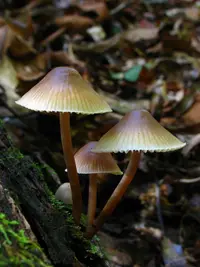
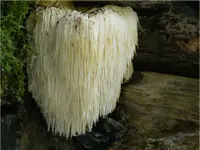
Cortinarius smithii is not a plant but a woodland mushroom in the large Cortinarius genus. It forms fruiting bodies on the forest floor rather than true roots, stems, and leaves.
This species typically grows in damp, shaded forests, often in association with trees, where it helps decompose organic matter. Its appearance can vary, but like many Cortinarius fungi, it usually has a cap and gills with earthy colors.
Growth depends strongly on suitable forest soil, moisture, and partnership with tree roots, so it cannot be reliably cultivated at home. Gardeners generally cannot control or predict how to care for Cortinarius smithii in a typical yard or indoor setting.

Care Difficulty
Hard Care

Light Preference
Partial Shade

Water Requirements
Keep Soil Moist

Temperature Preference
Cool Climate

Hardiness Zone
Unknown

Soil Texture
Loamy, Silty, Organic-rich

Soil pH
Acidic (5.5–6.5)

Soil Drainage
Moist but well-drained

Fertilization
Minimal (feed rarely)
Scan your plant to receive care tips personalized for your specific plant
Available on iOS and Android
This ectomycorrhizal fungus depends on suitable light conditions for its tree hosts rather than direct sun on the fruiting bodies.
Moisture management focuses on maintaining a consistently damp forest-floor environment around the host tree roots.
This forest fungus performs best in cool to mild climates with moderate seasonal variation.
Humidity is not a practical care lever for Cortinarius smithii, which is a wild ectomycorrhizal fungus rather than a cultivated houseplant.
This species associates with tree roots in natural woodland soils, so direct soil preparation for home cultivation is generally not practical.
This species is not suitable for container growing, as it depends on complex root partnerships with living trees in the ground.
This mycorrhizal fungus relies on its tree partners, so Cortinarius smithii does not benefit from routine fertilization.
As a wild, ground-dwelling fungus, Cortinarius smithii is not pruned in the horticultural sense and needs no shaping.
This species grows in natural soil with host tree roots, so transplanting Cortinarius smithii is generally unsuccessful and not recommended.
Reproducing Cortinarius smithii is complex and rarely attempted outside research settings because it depends on specific mycorrhizal relationships with trees.
In its native range this fungus is fully adapted to local winters and requires no targeted seasonal care from gardeners.

Plant Health Check
Not sure what's wrong with your plant? Check your plant's health inside the app.
This species forms a cortina, a fine cobweb-like partial veil, that often leaves rusty-orange fibrils on the stem as the cap expands and spores are released.
The spores of this mushroom are rusty to cinnamon brown in mass, a key diagnostic feature used by mycologists to separate it from superficially similar pale or lilac-spored species.
Cortinarius smithii forms ectomycorrhizal partnerships with conifer trees, exchanging mineral nutrients from the soil for sugars produced by its host through photosynthesis.
This species is considered poisonous or at least strongly suspect. It must never be eaten, even in small amounts. Identification within Cortinarius is difficult, so all similar mushrooms should be treated as inedible and left uncollected for food.
Keep your plants happy and healthy with plant identification, disease detection, and easy care guidance.