bearded tooth Care (Hericium erinaceus)

Also known as: lion's-mane mushroom, hedgehog mushroom
bearded tooth

About bearded tooth

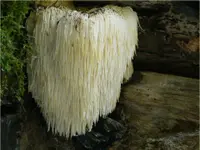
Bearded tooth, Hericium erinaceus, is a wood-decay fungus often grown in cultivation like a specialty crop rather than a traditional garden plant. It forms cascading white spines that hang like icicles from a compact mass, giving it a distinctive, ornamental appearance.

In nature, it grows on dead or dying hardwood trees in temperate forests across North America, Europe, and Asia. It tends to prefer cool, humid conditions and stable moisture, which influences how easy it is to cultivate.

For home growers, indoor kits or controlled outdoor logs simplify care for bearded tooth. It usually does well with indirect light, good air movement, and consistently moist but not waterlogged substrate.

Main Plant Requirements

Care Difficulty

Hard Care

Light Preference

Partial Shade

Water Requirements

Keep Soil Moist

Temperature Preference

Cool Climate

Hardiness Zone

4–9

Soil Texture

Loamy, Silty, Organic-rich

Soil pH

Strongly acidic (4.5–5.5), Acidic (5.5–6.5)

Soil Drainage

Moist but well-drained

Fertilization

Minimal (feed rarely)

Get Personalized Care Plan

Scan your plant to receive care tips personalized for your specific plant

Available on iOS and Android

How to Care for the bearded tooth

This fungus prefers soft, forest-like light rather than direct, intense sun.

  • Provide bright, indirect light or dappled shade, similar to a north-facing edge of woodland; 1–3 hours of gentle morning sun is acceptable, but avoid strong midday and afternoon sun.
  • Bearded tooth grows best in shaded sites under trees or on shaded logs; 70–90% shade helps maintain surface moisture for fruiting.
  • In summer, shield from direct sun to prevent drying and heat stress; in cooler seasons, allow a bit more indirect light while keeping the substrate moist.

Moist, not soggy, conditions are essential for reliable fruiting of this wood-decaying fungus.

  • Keep the substrate or log evenly moist; allow only the outer surface to dry slightly before misting or watering again, avoiding standing water around the base.
  • During active growth and fruiting, increase misting frequency so surfaces feel lightly damp to the touch, especially in warm or windy weather that speeds evaporation.
  • Reduce watering in cooler seasons when evaporation slows; signs of underwatering include shriveled, dry spines, while overwatering leads to sour odor and soft, decaying tissue in Hericium erinaceus.

Stable, cool to mild temperatures support strong mycelial growth and quality fruiting bodies.

  • Aim for an optimal range of 60–75°F (16–24°C) during active growth; many strains initiate fruiting best around 60–68°F (16–20°C).
  • Protect from frost; growth slows sharply below about 40°F (4°C), and repeated freezing can damage developing fruiting bodies, though dormant mycelium in wood may survive brief light frosts.
  • Limit exposure above 80°F (27°C); high heat combined with low humidity causes drying and deformation, so provide shade and moisture in hot summers and expect better performance in cooler seasons.

This fungus needs consistently high humidity to form dense, healthy fruiting bodies.

  • Aim for 85–95% humidity during active growth and pinning, with only brief drops tolerated.
  • Dry air causes shriveling tips, cracked surfaces, and prematurely small clusters that stop expanding.
  • Use a humidity tent, greenhouse cabinet, or misting inside a fruiting chamber, avoiding direct spray on forming spines.

This wood-decay fungus is cultivated on prepared substrates rather than typical garden soil.

  • Use a sterilized, organic-rich mix such as hardwood sawdust with 10–30% wheat bran or soybean hulls for nutrients.
  • Maintain a loose, crumbly substrate structure that drains freely but still holds moisture like a wrung-out sponge.
  • Keep pH slightly acidic to neutral, around 5.5–7.0, by using hardwood-based materials and avoiding heavy lime additions.
  • Avoid dense garden soil, clay, or manure-rich mixes that compact, stay waterlogged, or encourage contaminant molds instead of Hericium erinaceus.

This species can be grown in containers or bags when moisture and gas exchange are carefully controlled.

  • Choose a container or grow bag that allows gas exchange (filter patch or drilled holes) without large openings that dry the substrate.
  • Select a depth that holds at least 10–15 cm of compacted substrate so clusters can develop without drying at the base.
  • Use a rigid outer tub or crate around soft bags to keep the substrate block stable as fruiting bodies enlarge and become heavy.

This fungus grows on nutrient-rich wood and usually needs little added fertilizer when cultivated at home.

  • For sawdust or supplemented substrate blocks, use a pre-mixed mushroom grow kit or a sterilized hardwood sawdust mix with balanced nutrients instead of garden fertilizer.
  • If supplementing, keep total nitrogen modest; high-n substrates can cause contamination and poor fruiting.
  • During active fruiting, mist with clean water only; avoid foliar feeding or strong liquid fertilizers, which can damage the mycelium.
  • Do not feed during substrate rest or between flushes; allow the block to dry slightly, then rehydrate with plain water only.

Hericium erinaceus does not need true pruning, but careful harvesting maintains clean growth and reduces disease issues.

  • Harvest fruiting bodies when spines elongate but are still firm, cutting at the base with a clean, sharp knife.
  • Remove any discolored, slimy, or moldy tissue promptly to limit spread of contaminants in the grow space.
  • Trim away crowded or fused clusters to improve air circulation and reduce excess surface moisture.
  • Avoid tearing or twisting mushrooms off the block, which can damage underlying mycelium and reduce future flushes.

Cultivated lion’s mane is grown on prepared substrates rather than soil, so care focuses on renewing or moving the colonized block instead of classic repotting.

  • Plan to replace or move the substrate block when fruiting flushes weaken, surfaces dry out rapidly, or contamination spots appear.
  • Best timing for moving a block between containers or fruiting chambers is after a flush, once harvesting is complete.
  • Handle the colonized block gently, supporting it from below to avoid cracking and internal mycelium damage.
  • If shifting to an outdoor shaded log or protected bed, nest the block against fresh hardwood and keep consistently moist to reduce transplant stress.

Multiplying Hericium erinaceus for home production is usually done via spawn on sterilized substrate rather than traditional plant-style cuttings or seeds.

  • Use commercial grain or sawdust spawn and mix it thoroughly into sterilized hardwood sawdust or supplemented blocks.
  • Inoculate in late winter to early spring so colonization finishes before warm, unstable summer conditions.
  • Maintain incubation at 65–75°F with high humidity and minimal light until the substrate turns fully white with mycelium.
  • Advanced growers can create new cultures from clean inner tissue in sterile conditions or by using agar plates and liquid culture techniques.

Lion’s mane is relatively cold tolerant outdoors on logs but indoor cultivation blocks need stable, frost-free conditions in winter.

  • Outdoor logs can stay outside in most temperate climates; add 5–8 cm of leaf mulch around the base to buffer root-zone moisture and temperature.
  • Avoid letting logs or blocks freeze solid for long periods, which can slow or halt fruiting.
  • For container-style indoor blocks, keep in a cool room at 40–55°F, with high humidity and no direct drafts.
  • If severe freezes are expected, move small fruiting setups into an unheated garage, shed, or enclosed porch to moderate temperature swings.

Care Tips

Dial in fresh air

Provide gentle, intermittent fresh air exchange 1–3 times per day in the fruiting area to prevent CO₂ buildup and promote well-formed spines, but avoid direct drafts that visibly dry the blocks or substrate surface.

Fine-tune misting

Use a fine mister or ultrasonic humidifier aimed past, not directly at, the developing clusters so surfaces stay moist but not dripping, which reduces bacterial blotch and keeps spines from matting together.

Harvest at right stage

Cut clusters when the spines are fully elongated but still firm and white, using a clean knife close to the substrate and leaving the base intact to encourage a second flush.

Clean between flushes

After each harvest, remove loose debris and any discolored tissue, lightly scrape off slimy spots, and allow the surface to dry slightly before resuming heavy misting to reduce contamination pressure.

Monitor CO₂ with shape

Watch the cluster shape as a low-tech CO₂ indicator; long dense “pom-pom” forms signal excess CO₂, so increase fresh air exchange gradually until you see more defined, hanging spines typical for healthy Hericium erinaceus care.

Common Pests and Diseases

Green mold

This disease is caused mainly by Trichoderma species that invade the substrate or colonized blocks, outcompeting the mycelium and suppressing fruiting. Symptoms include dense green patches on the surface of the substrate or on the block, often starting as white, fast-growing mold that turns bright to dark green.

Solution

Remove and discard heavily contaminated blocks and any visibly green substrate to prevent spore spread. For remaining blocks, improve air exchange, reduce excess moisture, clean the grow area with diluted 3–10% hydrogen peroxide or 70% isopropyl alcohol, and in future batches use properly sterilized substrate and strict hygiene during inoculation for more reliable Hericium erinaceus care.

Cobweb mold

This disease is usually caused by Cladobotryum species that create very fine, greyish, spiderweb-like growth over pins or fruiting bodies. Symptoms include rapid spreading of the wispy mold that can collapse and rot young mushroom clusters.

Solution

Immediately isolate or remove affected blocks and gently mist the cobweb with 3% hydrogen peroxide from a spray bottle to kill surface mycelium. Improve fresh air exchange, reduce high humidity above 95%, and avoid stagnant, still air, which strongly favors cobweb mold development.

Bacterial blotch

This disease is caused by opportunistic bacteria thriving on overly wet surfaces, leading to soft, water-soaked spots on the spines and surface of the fruiting body. Symptoms include yellow to brown slimy patches, unpleasant odor, and rapid tissue breakdown in wet or poorly ventilated conditions.

Solution

Trim off affected tissue with a clean knife and discard any severely slimy clusters. Reduce surface wetness by avoiding direct spraying on fruits, increase gentle airflow, keep humidity around 85–95% rather than constantly saturated, and disinfect surfaces and tools between harvests to lower bacterial load.

Fungus gnats

These insects are small, dark flies whose larvae thrive in moist substrate and can tunnel through mycelium, reducing vigor and yield. This pest also spreads mold spores and bacteria between blocks in indoor grow rooms.

Solution

Use yellow sticky traps to capture adults, reduce standing water and overly wet surfaces, and cover or seal filter patches and vents with fine mesh to block entry. For persistent infestations, apply a biological control such as Bacillus thuringiensis israelensis (Bti) drench to the substrate surface, following label directions and avoiding over-saturation.

Phorid flies

These insects, sometimes called scuttle flies, are attracted to decomposing organic matter and mushroom tissue, laying eggs in the substrate or fruiting bodies. This pest causes tunneling damage, deforms clusters, and can introduce secondary infections by bacteria and molds.

Solution

Remove and dispose of infested blocks and any decaying mushroom material promptly to deny breeding sites. Improve room sealing, use fine-mesh screening on air inlets, run sticky traps near exhaust or entry points, and maintain strict sanitation, including cleaning spills and organic debris, to prevent population buildup.

Interesting Facts

Unique spore print

This species produces a white spore print, which helps distinguish it from many other toothed fungi that have darker spores and aids mycologists in accurate field identification.

Specialist wood decomposer

It is a white-rot fungus that selectively breaks down lignin in hardwoods such as oak and beech, playing a key role in nutrient cycling in temperate forests.

Distinct growth form

Instead of caps and gills, it forms a compact mass of cascading, unbranched spines that can exceed 1 cm in length, giving it the characteristic shaggy appearance often compared to a lion’s mane.

Botan icon

Did you know?

Laboratory studies have shown that this species can be cultivated on a range of agricultural and forestry by-products, such as sawdust and supplemented straw, making it a model organism for sustainable gourmet mushroom production and research on how to take care of bearded tooth in controlled conditions.

FAQs about bearded tooth

This fungus is considered edible when young, firm, and white, and is widely cultivated as a gourmet mushroom. Always avoid specimens that are old, yellowing, waterlogged, or growing in heavily polluted areas where contaminants may accumulate.

Grow Healthy Plants with Botan Care

Keep your plants happy and healthy with plant identification, disease detection, and easy care guidance.

Botan plant care app — identify plants on mobile

Explore More Plants