

Rotate Host Logs
If cultivating this bracket fungus on cut hardwood logs, rotate and slightly re-stack the logs every 3–4 months to maintain even airflow and moisture exposure across the bark surface, which promotes uniform fruiting.

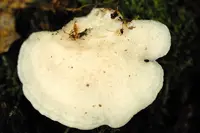
Blueing bracket (Cyanosporus subcaesius) is a wood-decaying bracket fungus rather than a leafy houseplant. It forms tough, shelf-like fruiting bodies on dead or dying hardwood, often in overlapping tiers. The surface typically shows pale to grayish tones that may develop bluish shades when bruised or aging.
This species is naturally found in temperate forests, especially on fallen branches and logs. It plays an important role in breaking down lignin and cellulose, helping recycle nutrients in woodland ecosystems.
For those who want to observe or care for Blueing Bracket on decorative logs outdoors, it prefers consistently moist, shaded, and cool conditions and stable, undisturbed wood.

Care Difficulty
Moderate Care

Light Preference
Partial Shade

Water Requirements
Moderate Water

Temperature Preference
Warm Climate

Hardiness Zone
Unknown

Soil Texture
Loamy

Soil pH
Slightly acidic (6.5–7.0)

Soil Drainage
Well-drained

Fertilization
Minimal (feed rarely)
Scan your plant to receive care tips personalized for your specific plant
Available on iOS and Android
This wood-decaying fungus prefers low to moderate light typical of shaded forest habitats.
This bracket fungus depends on consistently moist, but not waterlogged, host wood rather than direct watering.
This species fruits best in cool to mild conditions typical of temperate forests.
Humidity is not a meaningful care factor, as this fungus fruits on outdoor wood in ambient conditions.
This wood-decaying fungus does not grow in typical potting soil but on dead or dying wood.
This species is not naturally suited to conventional container culture, but sections of colonized wood can be held in trays or boxes for observation.
This wood-decaying fungus typically grows on nutrient-rich dead wood and does not need fertilization in cultivation.
Cyanosporus subcaesius does not require pruning because the fruiting bodies are seasonal fungal structures, not branches or stems that need shaping.
As a bracket fungus growing on dead or decaying wood, this species is not suited to standard container culture or garden transplanting.
Practical propagation of this wood-decaying fungus is specialized and not a routine task for home growers.
This outdoor, wood-inhabiting fungus is naturally cold hardy and usually needs no dedicated winter care in typical temperate climates.

Plant Health Check
Not sure what's wrong with your plant? Check your plant's health inside the app.
When the fresh pore surface or flesh is damaged, it can slowly stain bluish, a reaction linked to pigment oxidation that helps separate it from similar brown polypore fungi.
This species is a saprotroph on dead hardwoods, causing a white rot by breaking down both lignin and cellulose and playing a key role in nutrient recycling in temperate forests.
Molecular studies moved this species from the large catch‑all genus Trametes into the smaller genus Cyanosporus, reflecting its distinct genetic and microscopic features.
This species is a wood-decaying bracket fungus that develops best outdoors on dead or dying hardwood. It needs natural logs or stumps, stable moisture, and fresh air, so indoor cultivation is rarely successful or practical.
Keep your plants happy and healthy with plant identification, disease detection, and easy care guidance.

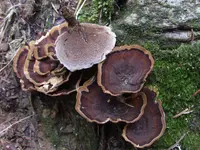
Brown Funnel Polypore
Coltricia perennis
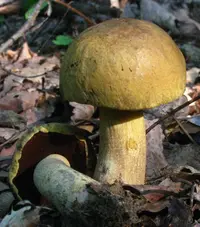
Boletus vermiculosoides
Boletus vermiculosoides
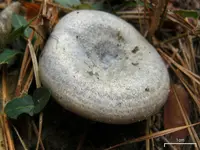
Silver-blue Milkcap
Lactarius paradoxus
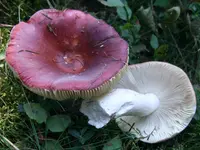
Darkening Brittlegill
Russula vinosa
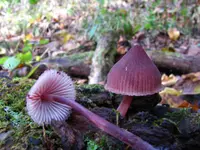
Bleeding Fairy Helmet
Mycena haematopus
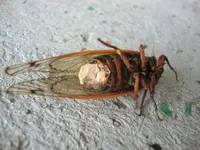
Massospora cicadina
Massospora cicadina
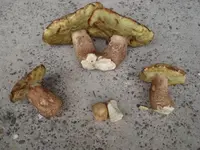
Boletus subcaerulescens
Boletus subcaerulescens
Club Foot
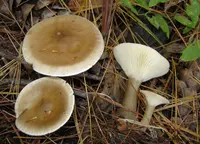
Ampulloclitocybe clavipes