


Use hardwood debris
Place small, partially decayed hardwood sticks or chips on the substrate surface, as this species fruits more reliably when it can colonize and bridge between multiple woody pieces rather than a single log.

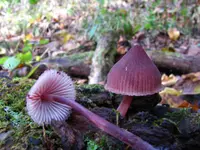
Bleeding fairy helmet, Mycena haematopus, is a small saprophytic fungus that grows on decaying hardwood, especially fallen branches and stumps. It forms clusters of delicate, bell-shaped caps with pale pink to brown tones and a distinctive dark, blood-red juice that seeps from damaged stems.
This fungus is native to temperate forests of North America and Europe and appears mostly in cool, moist seasons. It relies on consistently damp, shaded woodland conditions, so attempting to care for Bleeding Fairy Helmet indoors or in gardens is challenging.
It favors decaying wood, high humidity, and stable moisture rather than typical potting soil. These specialized needs make it interesting to observe in nature but difficult to cultivate reliably.

Care Difficulty
Hard Care

Light Preference
Shade

Water Requirements
Keep Soil Moist

Temperature Preference
Cool Climate

Hardiness Zone
Unknown

Soil Texture
Loamy, Organic-rich, Peaty

Soil pH
Acidic (5.5–6.5)

Soil Drainage
Moist but well-drained

Fertilization
Minimal (feed rarely)
Scan your plant to receive care tips personalized for your specific plant
Available on iOS and Android
This small saprophytic fungus prefers low, indirect light similar to a shaded woodland floor.
This fungus needs consistently moist but not waterlogged conditions around its decaying wood substrate.
This species favors cool to mild conditions typical of shaded forest floors.
This wood-dwelling fungus needs consistently moist, humid air around its substrate to fruit well.
This species grows on decaying wood, so the focus is on a woody, moisture-retentive substrate rather than true soil.
This fungus can be grown in containers if the setup mimics a shaded, decaying log environment.
Mycena haematopus grows on decaying wood and usually needs no added fertilizer when moisture and substrate are adequate.
Pruning is not a standard practice for Mycena haematopus, as mushroom fruiting bodies are short-lived and naturally replaced.
This fungus is best managed by providing fresh woody substrate rather than traditional repotting.
Propagation of Mycena haematopus is specialized and usually left to experienced growers or natural spread in the landscape.
Bleeding Fairy Helmet in outdoor settings generally needs no special winter care in temperate climates.

Plant Health Check
Not sure what's wrong with your plant? Check your plant's health inside the app.
When the fresh fruiting body is cut or damaged, it exudes a dark red, blood-like latex from the stem and cap, a trait that is unusual but characteristic of this species and a few close relatives.
This fungus is saprotrophic, meaning it obtains nutrients by decomposing dead organic matter, and it grows almost exclusively on decaying hardwood logs and stumps, especially beech and other broadleaf trees.
Reports of faint bioluminescence in this species are controversial; some observations suggest only the mycelium might glow very weakly, unlike strongly bioluminescent relatives where caps and stems are visibly luminous.

The deep reddish pigments in this species, responsible for the wine-colored latex and cap tones, have been studied as unique fungal colorants and help distinguish it from similar small brown Mycena species in field mycology research.
This fungus establishes best outdoors on decaying wood in cool, moist, shaded sites. Indoors it is difficult to maintain long-term because it depends on a constant supply of suitable wood substrate and stable high humidity.
Keep your plants happy and healthy with plant identification, disease detection, and easy care guidance.

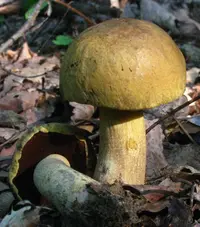
Boletus vermiculosoides
Boletus vermiculosoides
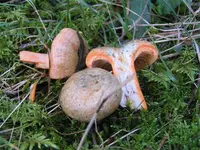
Orange-latex Milky
Lactarius deterrimus
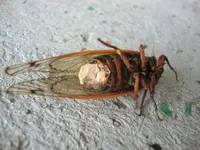
Massospora cicadina
Massospora cicadina
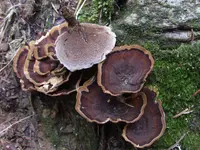
Brown Funnel Polypore
Coltricia perennis
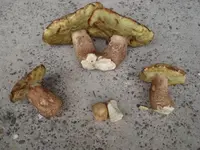
Boletus subcaerulescens
Boletus subcaerulescens
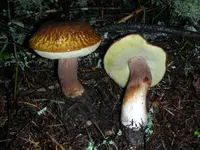
Boletus fibrillosus
Boletus fibrillosus
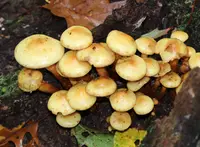
alder scalycap
Flammula alnicola
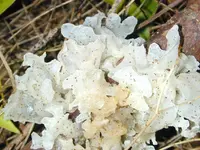
snow fungus
Tremella fuciformis