Brown Funnel Polypore Care (Coltricia perennis)

Also known as: Tiger's Eye
Brown Funnel Polypore

About Brown Funnel Polypore

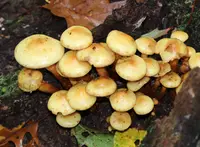
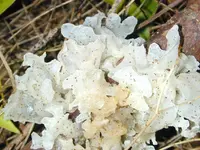
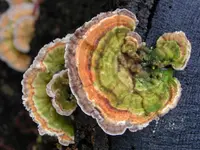
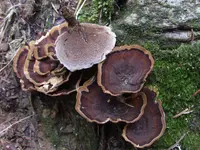
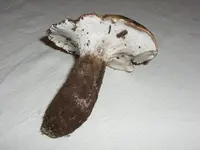
Brown funnel polypore, Coltricia perennis, is a small, tough bracket fungus rather than a typical leafy plant. It forms shallow, funnel-shaped caps with distinct concentric brown bands and a velvety surface.

This species usually grows on poor, sandy or acidic soils, often in open pine woods, heaths, or along paths across North America, Europe, and other temperate regions. The fruiting bodies are slow to decay and can persist for a long time, which can help beginners care for Brown Funnel Polypore as an ornamental curiosity in suitable outdoor spots.

It prefers well-drained, nutrient-poor substrates, moderate light, and stable, not waterlogged, moisture levels.

Main Plant Requirements

Care Difficulty

Moderate Care

Light Preference

Partial Shade

Water Requirements

Moderate Water

Temperature Preference

Cool Climate

Hardiness Zone

4–9

Soil Texture

Sandy, Loamy, Organic-rich

Soil pH

Acidic (5.5–6.5)

Soil Drainage

Well-drained

Fertilization

Minimal (feed rarely)

Get Personalized Care Plan

Scan your plant to receive care tips personalized for your specific plant

Available on iOS and Android

How to Care for the Brown Funnel Polypore

This fungus prefers stable light conditions similar to those on open, sandy forest paths.

  • Provide 3–6 hours of dappled or filtered sun, ideally morning sun with light afternoon shade to prevent drying of the substrate.
  • Tolerates bright, open shade under sparse pine or heathland vegetation; dense shade can reduce fruiting of Brown Funnel Polypore.
  • Avoid full, intense afternoon sun in hot summers, which can desiccate the host soil; in cooler seasons, slightly more direct light is usually tolerated.

This species grows on dry to moderately moist, well-drained, sandy or acidic soils rather than consistently wet ground.

  • Allow the top 2–5 cm of soil or substrate to dry between natural rain events or any supplemental watering to mimic its dry heathland habitat.
  • Watch for overwatering signs such as soft, collapsing caps or persistent surface wetness; reduce added water and improve drainage immediately.
  • In hot, dry periods, occasional deep soaking followed by full drainage is preferable to frequent light sprinkling, which encourages shallow, weak surface growth of Coltricia perennis.

This fungus is adapted to temperate climates with cool to warm seasons and moderate thermal swings.

  • Optimal active growth and fruiting usually occur around 55–75°F (13–24°C), typical of spring and fall in many temperate forests and heathlands.
  • It tolerates cool conditions down to about 32°F (0°C); fruiting bodies may be damaged by hard frosts below 28°F (-2°C), though the mycelium often survives in soil or litter.
  • Heat tolerance is moderate; short periods up to 86°F (30°C) are manageable if soil does not dry completely, but prolonged hot, dry spells can halt fruiting and desiccate caps.

This fungus tolerates low atmospheric humidity because it primarily relies on moisture in its substrate rather than air humidity.

  • Ambient humidity around 30–60% is generally acceptable if the soil or wood substrate remains evenly moist, not soggy.
  • Dry indoor air is tolerated, but the fruiting body may crack or dry prematurely if the substrate is allowed to desiccate.
  • Signs of humidity or moisture stress include brittle, cracked caps and rapid shriveling; lightly mist the substrate, not the caps, to improve local moisture.

Coltricia perennis is adapted to poor, acidic, sandy soils and is difficult to cultivate but can be supported with carefully prepared substrates.

  • Use a very sandy, loose medium with fine bark or conifer duff to mimic its natural, nutrient-poor forest soils.
  • Ensure extremely sharp drainage; aim for a mix such as 60–70% coarse sand plus 30–40% fine pine bark or needle litter.
  • Maintain an acidic pH around 4.0–5.5, avoiding lime, ash, or other alkaline amendments that reduce suitability.
  • Avoid rich composts or heavy loam that hold water and nutrients, as these conditions encourage competing fungi and reduce establishment.

This species is generally unsuitable for standard container growing and is rarely maintained successfully in pots.

Coltricia perennis is a wood-decaying fungus that relies on native soil nutrients and host material, so added fertilizer is generally unnecessary and can be harmful.

Coltricia perennis does not require conventional pruning, but fruiting bodies can be managed for appearance or spore reduction.

  • Remove old, decayed, or damaged brackets by gently twisting or cutting at the base with a clean knife or pruning scissors.
  • Carry out removal during dry weather to lower the chance of spreading fungal spores to unwanted areas.
  • Avoid disturbing the underlying wood or soil mycelium, which is the main living part of the fungus.
  • Discard removed tissue in household trash if limiting spread is a priority.

This fungus is seldom grown in containers; management focuses on where it colonizes wood or soil rather than classic repotting.

  • Transplanting is generally unnecessary; instead, monitor sites where fruiting brackets appear around stumps, roots, or sandy soil.
  • If removal is desired, reduce woody debris and improve site hygiene rather than attempting to dig and move the fungus.
  • Container experiments should use well-drained, woody, low-nutrient substrate and avoid frequent disturbance of the mycelium.
  • Any relocation attempts are best done in cool, moist weather to minimize desiccation stress on colonized wood or soil.

Propagation of Coltricia perennis is specialized and not usually attempted by typical home growers.

  • The fungus spreads mainly via spores that colonize suitable acidic, sandy, or nutrient-poor substrates outdoors.
  • Intentional propagation relies on leaving colonized wood or soil undisturbed so the mycelium can expand naturally.
  • Laboratory propagation uses sterile culture techniques, which require specialist equipment and are beyond home conditions.
  • For observational purposes, allow fruiting bodies to mature and release spores in situ instead of moving them.

This wood-inhabiting fungus is naturally cold hardy in temperate climates and needs no special winter care.

  • Fruiting bodies may persist, fade, or collapse after freeze-thaw cycles without harming the underlying mycelium.
  • Avoid scraping or digging frozen soil or wood where the fungus is established to prevent mechanical damage.
  • In containers or experimental setups, maintain some moisture but do not waterlog the substrate during cold periods.

Care Tips

Spore-friendly placement

Install fruiting logs or compacted sandy patches in a quiet, undisturbed corner of the garden so the fungus can complete its life cycle and spread spores without being trampled or raked away.

Host partner support

Maintain a diversity of nearby shallow-rooted trees or shrubs, such as young pines or other ectomycorrhizal hosts, and avoid complete root-zone sterilization so the fungus can form stable symbiotic associations.

Surface disturbance control

Limit raking, hoeing, or deep mulching directly around existing caps, as Coltricia perennis often fruits from a thin organic layer on poor, compacted mineral soil that is easily disrupted.

Low-nutrient management

Reserve a small, deliberately low-fertility area by avoiding compost and high-nitrogen fertilizers there, since this species competes best in nutrient-poor, acidic substrates.

Targeted relocation technique

To help grow Brown Funnel Polypore in a new spot, move a small plug of colonized soil or woody debris to a similar low-nutrient, acidic site and keep it only lightly moist until new fruiting bodies appear in a later season.

Common Pests and Diseases

Fungal parasitism

This disease occurs when other saprotrophic or parasitic fungi colonize the fruiting bodies and slowly consume the tissue. Symptoms include distortion, surface overgrowth with different-colored mycelium, and premature drying or collapse of the caps.

Solution

Remove and discard affected fruiting bodies as soon as foreign fungal growth is seen, and reduce dense organic debris around the base to limit competition. If growing Brown Funnel Polypore in a controlled setting, renew the substrate from clean, pasteurized material and avoid reusing contaminated wood or soil nearby.

Mycophagous springtails

These insects feed on fungal mycelium and spores inside the substrate, sometimes reducing vigor and longevity of the fruiting bodies. Symptoms include poor or patchy emergence of caps and visible tiny, jumping white or gray insects in very moist substrate.

Solution

Allow the substrate surface to dry slightly between waterings, and improve ventilation to lower constant surface moisture. In container or lab culture, use fine mesh or tight-fitting lids with filtered air inlets, and refresh heavily infested substrate with clean, well-pasteurized material.

Fungus gnat larvae

This pest uses the moist, organic substrate and fungal tissue as a food source, and heavy feeding can weaken or deform young fruiting bodies. Symptoms include thinning or collapse of small caps, tiny black adult gnats flying around, and pale tunnels in the substrate or lower tissue.

Solution

Reduce excess moisture, avoid standing water in trays, and use yellow sticky traps to capture adults and break the life cycle. For cultivated setups, cover vents with fine mesh and, if needed, drench only the substrate (not the fruiting bodies) with a biological control such as Bacillus thuringiensis israelensis according to label directions.

Mite grazing

These pests are microscopic arthropods that graze on fungal tissue and spores, leading to rough, pitted surfaces and weakened caps. Symptoms include fine speckling or scarring on the upper and lower cap surfaces and, under magnification, slow-moving pale mites on the tissue or substrate.

Solution

Lower excessive humidity, increase airflow, and remove heavily damaged fruiting bodies. In controlled culture, discard infested blocks or trays, thoroughly clean containers and shelves, and, where permitted, introduce predatory mites as a biological control rather than using broad-spectrum chemicals.

Interesting Facts

Long‑lived fruiting bodies

Individual fruiting bodies of Coltricia perennis are tough, leathery, and can persist on sandy soil for many months, gradually darkening and cracking rather than rotting quickly like typical mushrooms.

Ectomycorrhizal partner

This fungus forms ectomycorrhizal associations with the roots of pines and other conifers, exchanging mineral nutrients from poor, sandy substrates for sugars produced by the host tree.

Concentric zoning pattern

The caps often show striking, sharply zoned bands of brown, yellow, and rust tones caused by differences in pigment deposition as growth slows and accelerates over time.

Botan icon

Did you know?

Coltricia perennis is one of the relatively few polypore fungi that fruit directly on nutrient‑poor, sandy or gravelly soil rather than on wood, reflecting a strong adaptation to dry, open, fire‑prone habitats such as heaths and pine barrens.

FAQs about Brown Funnel Polypore

This fungus spreads slowly through spores on suitable soil, usually in nutrient-poor, sandy or disturbed ground. It does not form dense, smothering colonies and is not considered aggressive compared with many lawn or wood-decay fungi.

Grow Healthy Plants with Botan Care

Keep your plants happy and healthy with plant identification, disease detection, and easy care guidance.

Botan plant care app — identify plants on mobile

Explore More Plants