Boletopsis leucomelaena Care

Boletopsis leucomelaena

About Boletopsis leucomelaena

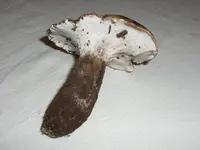
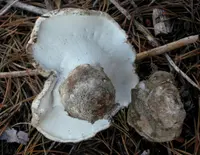
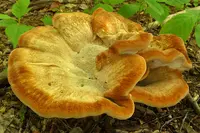
Boletopsis leucomelaena is a terrestrial fungus, not a typical leafy plant. It forms thick, irregular, gray to black caps with a lighter underside covered in tiny pores instead of gills.

This species usually grows on nutrient-poor, sandy soils in association with conifers, especially pines, in temperate forests of Europe and parts of North America. It is considered rare and quite specialized in its habitat needs, which makes it challenging to cultivate.

Because it depends on a close root partnership with trees, attempts to care for Boletopsis leucomelaena at home are usually unsuccessful. It prefers cool conditions, stable moisture, and undisturbed, acidic forest soil.


Main Plant Requirements

Care Difficulty

Hard Care

Light Preference

Partial Shade

Water Requirements

Moderate Water

Temperature Preference

Cool Climate

Hardiness Zone

Unknown

Soil Texture

Sandy, Loamy, Organic-rich

Soil pH

Strongly acidic (4.5–5.5)

Soil Drainage

Well-drained

Fertilization

Minimal (feed rarely)

Get Personalized Care Plan

Scan your plant to receive care tips personalized for your specific plant

Available on iOS and Android

How to Care for the Boletopsis leucomelaena

This ectomycorrhizal fungus prefers cool, lightly shaded forest conditions rather than direct open sun.

  • Boletopsis leucomelaena grows best under light to moderate shade, such as beneath pine canopies with dappled light for 2–4 hours per day.
  • Avoid strong midday and afternoon sun; prolonged exposure can dry the soil surface quickly and damage the delicate mycelium near the top layer.
  • In summer, choose north- or east-facing woodland edges; in cooler months, slightly more open canopy still filtered by trees is acceptable.

Moist but not waterlogged soil is essential for sustained mycelial health in this forest fungus.

  • Aim for consistently moist mineral soil; allow only the top 1–2 cm to dry slightly before the next natural or supplemental watering if conditions are very dry.
  • Prioritize excellent drainage; avoid compacted or puddling sites, since persistent saturation and standing water promote rot and loss of fungal partners.
  • During hot, dry periods, increased needle or leaf litter helps conserve moisture, while shriveling or disappearing fruiting bodies often indicate prolonged drought stress.

This species is adapted to cool, temperate forests and handles cold better than heat.

  • Optimal active growth and fruiting generally occur around 45–65°F (7–18°C), typical of cool late summer to autumn woodland conditions.
  • The fungus tolerates near-freezing temperatures down to about 25°F (-4°C) in soil, but repeated freeze–thaw at the surface can damage exposed fruiting bodies.
  • Sustained heat above 75°F (24°C), especially with dry soil, reduces fruiting; shaded, north-facing slopes or conifer stands help buffer summer temperature extremes.

Humidity plays a minor role for Boletopsis leucomelaena compared with host tree association and soil conditions.

Boletopsis leucomelaena relies on specific soil conditions that mimic its natural association with conifers.

  • Use a sandy to sandy-loam substrate with plenty of coarse structure to prevent compaction and allow fine roots to breathe.
  • Aim for slightly acidic soil, around pH 4.5–6, using conifer needle litter, peat, or sulfur to lower pH if needed.
  • Incorporate well-decomposed conifer duff, fine bark, and a little sharp sand to increase organic matter without making the mix dense.
  • Avoid heavy clay, waterlogged sites, or strongly alkaline substrates, which disrupt mycorrhizal formation and limit fruiting.

This species is generally unsuitable for conventional container growing because it depends on stable mycorrhizal association with conifer roots in the ground.

This mycorrhizal fungus is adapted to nutrient-poor forest soils and usually does best with no added fertilizer.

Pruning is not applicable, as this species is a wild, mycorrhizal mushroom rather than a garden shrub or tree.

Transplanting is rarely appropriate because this fungus depends on a stable mycorrhizal partnership with host trees.

  • Avoid disturbing established colonies; moving soil or fruiting bodies usually breaks the tree–fungus connection and prevents re-establishment.
  • If research or conservation work requires relocation, move a generous plug of intact soil including fine tree roots, keeping it cool and moist.
  • Time any necessary disturbance for the tree’s dormant season, when root activity is lower and stress may be reduced.
  • Minimize compaction and maintain similar soil type, drainage, and associated tree species at the new site to support growing Boletopsis leucomelaena.

Propagation of Boletopsis leucomelaena is specialized and generally not practical for home growers.

This species is naturally cold hardy in its native range and requires no deliberate winter care in the landscape.

Care Tips

Maintain mycorrhizal partners

When collecting or relocating this fungus, always move it together with a small plug of the original pine-rooted soil (10–15 cm wide and deep) to preserve its mycorrhizal connection, which is essential for long-term persistence.

Avoid soil disturbance

Mark the fruiting area and keep it free from digging, raking, or repeated foot traffic so the fine mycelial network in the upper soil layer remains intact and capable of producing future fruiting bodies.

Limit competing litter

In managed pine stands, remove only thick, matted leaf or needle layers directly over the fruiting zone while leaving some loose litter, which balances gas exchange at the soil surface without fully exposing and drying the mycelium.

Use gentle harvesting

Cut fruiting bodies at the base with a clean knife instead of pulling them out, and lightly replace any disturbed duff so the remaining mycelium and mycorrhizal root tips stay protected.

Monitor stand maturity

Prioritize conserving or establishing plantings in older, relatively open pine stands rather than dense young plantations, since stable, mature hosts and moderate ground shade support more reliable fruiting when growing Boletopsis leucomelaena.

Common Pests and Diseases

Parasitic fungi

This disease involves other fungal species colonizing the fruiting bodies, often visible as moldy coatings or deformities on the caps and pores. Symptoms include reduced spore production and premature decay of the basidiocarps.

Solution

Remove and discard affected fruiting bodies to limit spread, avoid disturbing infected material, and keep surrounding forest floor litter in place to support stable moisture and airflow around the mycelium. When recording or foraging, mark infected patches and minimize traffic over the area so the underlying mycelial network experiences less stress.

Mycophagous insects

These insects, such as fungus gnats and beetle larvae, tunnel through the caps and pore surface, leaving holes, frass, and softened, collapsing tissue. This pest pressure mainly affects the visible fruiting bodies rather than the underground mycelium.

Solution

Gently remove heavily infested fruiting bodies and avoid breaking them apart on site, which can spread larvae. If studying or photographing, handle mushrooms minimally and leave the core mycelium undisturbed, as this is the best long‑term strategy for Boletopsis leucomelaena care instructions in natural forest conditions.

Interesting Facts

Specialist pine associate

This fungus forms ectomycorrhizal partnerships mainly with 2‑needled pines such as Scots pine, exchanging mineral nutrients from poor, sandy soils for sugars from the tree.

Preference for acidic sands

It is typically found in dry, nutrient‑poor, acidic sandy soils, often in open or sparse pine woods, which makes its habitat relatively restricted and sensitive to disturbance.

Unusual blackish flesh

The fruiting bodies have pale to grey upper surfaces but dark grey to almost black flesh and pore layer beneath, giving a distinctive two‑tone appearance that helps separate it from related species.

Botan icon

Did you know?

Molecular studies have shown that this species is part of a small and evolutionarily distinct lineage within the order Thelephorales, and its scattered, often declining populations in Europe have led some regional Red Lists to classify it as near threatened or vulnerable due to habitat loss and changes in pine forest management.

FAQs about Boletopsis leucomelaena

This species is generally regarded as inedible due to its tough, fibrous texture and poor taste. It is not known to be a desirable culinary mushroom and should not be collected for food purposes.

Grow Healthy Plants with Botan Care

Keep your plants happy and healthy with plant identification, disease detection, and easy care guidance.

Botan plant care app — identify plants on mobile

Explore More Plants