Host tree selection
Establish the fungus with suitable host trees such as pine species (Pinus spp.), since this mycorrhizal mushroom relies on forming root partnerships rather than growing in isolated beds.

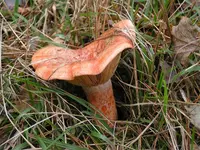
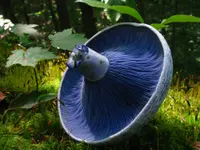
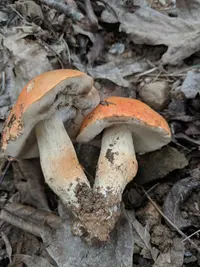
The saffron milkcap, Lactarius deliciosus, is a mycorrhizal mushroom that grows in association with conifer tree roots, especially pines. It forms fleshy, orange caps with concentric rings and releases orange “milk” when cut.
This species is native to Europe but has been introduced to other regions with pine plantations, including parts of North America and Australia. It usually appears in loose groups on the forest floor during cooler, moist seasons.
Because it depends on living trees, it is not grown like typical garden plants and is considered challenging to cultivate. Gardeners who want to care for saffron milkcap must usually focus on supporting suitable host trees, well-drained soil, and stable moisture around the root zone.

Care Difficulty
Hard Care

Light Preference
Partial Shade

Water Requirements
Keep Soil Moist

Temperature Preference
Cool Climate

Hardiness Zone
Unknown

Soil Texture
Loamy, Sandy, Organic-rich

Soil pH
Acidic (5.5–6.5)

Soil Drainage
Moist but well-drained

Fertilization
Minimal (feed rarely)
Scan your plant to receive care tips personalized for your specific plant
Available on iOS and Android
This ectomycorrhizal mushroom relies on suitable light conditions for its pine hosts rather than direct sun on the fruiting bodies.
Water management should focus on maintaining suitable soil moisture for the host pine roots and associated mycelium.
This species fruits best in cool to mild conditions typical of autumn in many pine-growing regions.
This mycorrhizal mushroom prefers moderately moist air but is more sensitive to soil moisture than to ambient humidity.
Lactarius deliciosus needs a specific outdoor soil environment rather than a typical potting medium.
This species is generally unsuitable for container growing because it relies on forming mycorrhizal associations with tree roots in open ground.
This mycorrhizal fungus relies mainly on its pine host for nutrients, so direct fertilization is usually unnecessary.
Lactarius deliciosus forms mushrooms seasonally and does not need true pruning, only basic hygiene around its host trees.
This fungus grows in symbiosis with pine roots, so management focuses on careful transplanting of young host trees rather than moving the fungus itself.
Reproduction of this species is mainly handled through spore dispersal and specialized mycorrhizal inoculation rather than home propagation.
This pine-associated fungus is naturally cold hardy in temperate climates and usually needs minimal winter care once established outdoors.

Plant Health Check
Not sure what's wrong with your plant? Check your plant's health inside the app.
When the gills or flesh are cut, this mushroom exudes an orange latex that slowly turns green on exposure to air due to enzymatic oxidation of pigment compounds.
This species forms ectomycorrhizal associations with pines, exchanging mineral nutrients and water from the soil for sugars produced by the tree, and is most often found in pine woodlands and plantations.
The caps and gills frequently develop green stains where handled or with age, a natural color change that helps distinguish it from some toxic orange-capped look-alike species.

This species has been collected and eaten across Europe for centuries and remains a culturally valued edible mushroom in countries such as Spain and Russia, where it is traditionally sold in markets and preserved by pickling, salting, or frying.
This mushroom is considered choice edible when correctly identified and cooked. It must never be eaten raw. Accurate identification is critical, as some orange milkcaps are inedible or upsetting. Always discard old, waterlogged, or bug-infested specimens.
Keep your plants happy and healthy with plant identification, disease detection, and easy care guidance.