Mycelium Protection
Mark the productive patch and avoid raking, deep digging, or heavy foot traffic over it so the underground mycelium remains intact and can fruit reliably for many seasons.

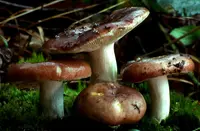
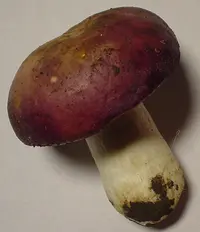
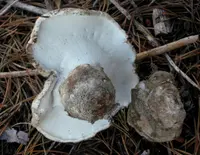
The Flirt is a common edible mushroom, not a leafy houseplant. Russula vesca forms sturdy, medium-sized caps with pale pink to reddish tones and white, brittle gills. It grows on the ground in mixed and deciduous woodlands, often near beech and oak, mainly in temperate regions of Europe and parts of North America.
The species forms a mycorrhizal partnership with tree roots, which means it cannot be cultivated easily in typical home or garden conditions. For this reason, most people encounter it through foraging rather than cultivation, and it is difficult to care for The Flirt in a controlled setting.
In nature it favors well-drained, humus-rich forest soils with consistent moisture and dappled light under a tree canopy.

Care Difficulty
Moderate Care

Light Preference
Partial Shade

Water Requirements
Regular Water

Temperature Preference
Cool Climate

Hardiness Zone
Unknown

Soil Texture
Loamy, Sandy, Organic-rich

Soil pH
Acidic (5.5–6.5), Slightly acidic (6.5–7.0)

Soil Drainage
Moist but well-drained

Fertilization
Minimal (feed rarely)
Scan your plant to receive care tips personalized for your specific plant
Available on iOS and Android
This mycorrhizal mushroom prefers stable, woodland-style light conditions on the forest floor.
Russula vesca depends on naturally moist, well-drained woodland soil rather than frequent surface watering.
This species fruits best in cool to mild forest conditions with moderate seasonal variation.
Humidity is not a meaningful factor for this wild ectomycorrhizal mushroom, so no special humidity management is practical or necessary for The Flirt in typical outdoor conditions.
This ectomycorrhizal mushroom does not grow in conventional potting soil but in undisturbed forest ground around host tree roots.
This forest-dwelling mycorrhizal mushroom is not suitable for true container growing, because it relies on complex, long-range associations with living tree roots in natural soil profiles.
Russula vesca, a wild mycorrhizal mushroom, does not need fertilization in typical garden or woodland settings.
Russula vesca does not require pruning, since each mushroom is a short-lived fruiting body rather than a woody plant or long-lived clump.
This species is a mycorrhizal woodland fungus, so direct repotting or transplanting is not practical in the usual garden sense.
Practical home propagation of Russula vesca is challenging, because it depends on complex mycorrhizal relationships with host tree roots.
This woodland fungus is naturally cold hardy in its native range and needs no specific winter care from gardeners.

Plant Health Check
Not sure what's wrong with your plant? Check your plant's health inside the app.
This species is considered a good edible mushroom in much of Europe and is known for its mild, nutty flavor when properly cooked, unlike many other Russula species that are hot or bitter.
Mature specimens often develop a characteristic pale, almost white margin around the pinkish to reddish-brown cap, which helps distinguish it from similar brittle gills in the field.
It forms ectomycorrhizal associations with broadleaf trees, especially beech and oak, exchanging mineral nutrients for sugars and playing an important role in temperate forest nutrient cycling.

Despite its fairly widespread distribution in European broadleaf forests, this species is rarely found in large troops and more often appears as scattered individuals or small groups, so it is usually collected in modest numbers compared with some other common edible Russula species.
This mushroom is considered a good edible when correctly identified, with firm, mild-tasting flesh. Only harvest fresh, undamaged specimens from unpolluted areas, and always confirm identification, as some similar russulas can cause digestive upset.
Keep your plants happy and healthy with plant identification, disease detection, and easy care guidance.