Agave marmorata Care

Agave marmorata

About Agave marmorata

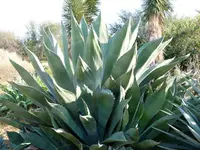
Agave marmorata is a slow-growing succulent native to arid regions of central Mexico. It forms a large, solitary rosette with thick, blue-green leaves and strong marginal teeth. Over time, it can become an impressive architectural specimen in dry gardens or large containers.

This species thrives in hot, sunny, well-drained sites and tolerates drought but resents prolonged moisture around the roots. It is generally robust if kept dry and bright, though its slow growth means damage can take a long time to recover. Many gardeners find it straightforward to care for Agave marmorata when its need for sun and sharp drainage is respected.

Main Plant Requirements

Care Difficulty

Easy Care

Light Preference

Full Sun

Water Requirements

Low Water

Temperature Preference

Warm Climate

Hardiness Zone

9–11

Soil Texture

Sandy, Loamy, Rocky

Soil pH

Slightly acidic (6.5–7.0), Neutral (7.0)

Soil Drainage

Well-drained

Fertilization

Minimal (feed rarely)

Get Personalized Care Plan

Scan your plant to receive care tips personalized for your specific plant

Available on iOS and Android

How to Care for the Agave marmorata

This desert succulent needs abundant direct sun to form a compact, healthy rosette.

  • Provide 6–8 hours of direct sun daily; full sun is ideal in most arid and semi-arid climates for Agave marmorata.
  • In very hot regions, give full morning sun with light afternoon shade to reduce scorch on outer leaves, especially for young plants.
  • In cooler or coastal climates, position in unobstructed full sun year-round, but watch for etiolation if nearby trees or buildings increase shade over time.

This species is highly drought-tolerant and prefers infrequent, deep watering.

  • Water only when the soil is completely dry at least in the top 5–10 cm; in hot dry weather this may mean every 2–4 weeks, often less in the ground.
  • Use fast-draining, gritty soil; standing water or heavy clay greatly increases rot risk at the roots and crown.
  • Signs of overwatering include soft, yellowing, or collapsing leaves, while prolonged underwatering shows as shriveled, rigid leaves that lose fullness but remain firm.

This agave prefers warm, dry conditions and is sensitive to hard frost.

  • Optimal growing temperatures are 70–90°F (21–32°C) with low to moderate humidity, typical of arid or semi-arid regions.
  • Mature plants may tolerate brief dips to about 25°F (−4°C), but leaf damage begins near 28°F (−2°C) and prolonged freezing can kill the growing point.
  • The plant handles dry heat up to 100–105°F (38–41°C) if soil drains well; avoid combined heat and high moisture, which encourages rot and fungal problems.

This desert species tolerates low household humidity and rarely needs special adjustment.

  • Aim for 30–40% humidity, similar to typical indoor air in heated or air-conditioned homes.
  • Dry air is usually harmless; problems arise more from overwatering than from low humidity.
  • If leaf tips brown while soil stays wet, reduce watering and improve air movement rather than raising humidity.

This species needs very fast-draining, mineral-rich soil that dries quickly between waterings.

  • Use a gritty mix such as 50–70% mineral material (pumice, coarse sand, gravel) with 30–50% cactus potting mix for Agave marmorata.
  • Keep pH slightly acidic to neutral, around 6.0–7.0, which suits most cactus and succulent mixes.
  • Increase aeration by adding extra pumice or perlite until water drains through within seconds and the pot feels noticeably lighter after watering.
  • Avoid dense peat-heavy or clay-based soils that stay wet, as these promote root and crown rot and shorten plant lifespan.

This species is well suited to container growing when the pot supports its heavy rosette and fast drainage.

  • Choose a wide, low, heavy container to prevent tipping as the rosette becomes large and top-heavy.
  • Use unglazed clay if possible, as it allows moisture to evaporate faster and keeps roots drier between waterings.
  • Raise the pot slightly on feet or bricks so drainage holes stay clear and water cannot pool under the container.

This slow-growing succulent needs only light, occasional feeding to stay healthy.

  • Use a diluted balanced liquid fertilizer (around 10-10-10) at 1/4–1/2 strength during active growth in spring–summer.
  • Feed every 6–8 weeks at most; many mature plants in the ground need no routine fertilizer.
  • Choose slow-release granules or very well-aged compost for outdoor Agave marmorata in lean soils.
  • Stop feeding in fall–winter to avoid soft, cold-sensitive growth and root stress.

Pruning needs for Agave marmorata are minimal and focus on sanitation and safety.

  • Best timing is late spring or early summer in dry weather to reduce rot risk.
  • Remove only dead, damaged, pest-infested, or badly crossing leaves at the base.
  • Use long-handled, sharp pruners and thick gloves to avoid injury from stiff spines.
  • Moderate removal of lower leaves improves air circulation and access without altering the natural rosette form.

Container-grown plants need infrequent repotting, while in-ground Agave marmorata is usually transplanted only once to a permanent site.

  • Repot when roots circle the pot, drainage slows, or growth stalls, typically every 3–5 years.
  • Plan repotting or transplanting in late spring, allowing warm, dry weather for fast root recovery.
  • Use a slightly larger container or hole with gritty, fast-draining cactus mix to limit waterlogging.
  • Handle by the root ball, keep roots as intact as possible, and withhold water for 3–5 days after moving to reduce rot.

Propagation of Agave marmorata is usually done by offsets, with seed reserved for patient growers.

  • Detach offsets in late spring–summer when each pup has several leaves and its own root nubs.
  • Cut pups cleanly from the base, let the cut surfaces dry and callus for 3–7 days in shade.
  • Plant in a shallow pot of sterile, gritty cactus mix and keep barely moist with bright light.
  • Seed can be sown in warm (70–80°F), bright conditions in a well-draining mix, though growth remains slow.

This agave is moderately cold tolerant but benefits from targeted winter protection in cooler climates.

  • Mature plants handle brief drops near 20–25°F if soil is very well drained and dry.
  • Mulch lightly with coarse gravel around the base; avoid moisture-holding organic mulches against the crown.
  • In wet-winter regions, use a simple rain shelter to keep the rosette dry and limit fungal issues.
  • Move container plants indoors or to a bright, frost-free space around 40–55°F with very sparse watering.

Care Tips

Establish gravel collar

Create a 5–10 cm wide gravel or coarse sand ring around the base to keep leaves off constantly wet soil and reduce collar rot risk when caring for Agave marmorata.

Orient rosette correctly

Position the plant so the broadest side of the rosette faces the strongest sun to encourage symmetrical growth and reduce leaning that can destabilize the shallow root system.

Use mineral mulch

Top-dress the soil with 2–5 cm of pumice, lava rock, or crushed granite to keep the crown dry, limit weed competition, and maintain better root aeration over time.

Control offset density

Remove or thin crowded pups at the base with a clean, sharp tool so the main rosette has enough space and resources, which also improves airflow and reduces fungal issues.

Stage for safe handling

When repotting or inspecting roots, wrap the leaves with a thick towel or folded newspaper and work with long-handled tongs to avoid injury from the stiff terminal spines.

Common Pests and Diseases

Agave snout weevil

This pest bores into the base of the rosette, causing internal damage, collapse of leaves, and eventual death of the plant. Symptoms include wilting despite dry conditions and a foul smell at the crown.

Solution

Remove and destroy any heavily infested plants, including roots, to prevent spread, and discard soil from the immediate root zone. For nearby plants, use a systemic insecticide labeled for weevils in succulents in early spring, keep the crown area dry, and avoid fresh wounds at the base that attract egg‑laying adults.

Agave mite

These insects are microscopic eriophyid mites that distort new growth and often cause corky, scabby patches or streaks on leaves. Symptoms include deformed emerging leaves, stunted growth, and sometimes secondary fungal spotting in damaged tissue.

Solution

Isolate any suspect plants, remove and discard the most deformed leaves, and avoid overhead watering that can spread mites between rosettes. For valuable plants, use a miticide specifically labeled for eriophyid mites and maintain good spacing and airflow as part of long‑term Agave marmorata care instructions.

Soft scale

These insects attach to leaves and the leaf bases, sucking sap and excreting sticky honeydew that can lead to sooty mold. Symptoms include sticky surfaces, small dome‑shaped bumps, and patches of black mold on the leaves.

Solution

Wipe or gently scrub affected areas with a soft brush dipped in diluted insecticidal soap or 70% isopropyl alcohol, taking care not to tear the leaf surface. In outdoor plantings, encourage natural predators such as lady beetles, and repeat targeted treatments every 7–10 days until no new scale appear.

Leaf spot

This disease causes localized brown, tan, or dark water‑soaked lesions on the leaves, often starting where water collects or where mechanical injury occurred. Symptoms include expanding spots that may coalesce and create weak, cracked areas in the thick leaves.

Solution

Remove and discard affected leaves or cut out the worst sections with a sterile knife, keeping wounds small and clean. Improve drainage and airflow, avoid water sitting in the rosette, and if spots continue to spread, apply a copper‑based or other labeled fungicide according to directions.

Crown and heart rot

This disease typically develops when water sits for long periods in the rosette, leading to soft, mushy tissue at the base and inner leaves that pull out easily and smell sour. Symptoms include sudden collapse of the central growth point while outer leaves may still appear green at first.

Solution

At early stages, remove all soft inner tissue and affected leaves with a sterile tool, then keep the plant in very dry, well‑drained conditions to allow remaining tissue to dry and callus. Severely affected rosettes should be discarded to protect nearby plants, and future watering should be directed to the soil, not into the crown, especially in cool weather.

Interesting Facts

Massive solitary rosette

This species forms a single, very large rosette that can reach several meters across, with thick, rigid leaves marked by pale marbling that gives it the name marmorata, meaning marbled.

Distinctive leaf armature

Its broad gray‑green leaves often carry large, irregular marginal teeth and a strong terminal spine, creating a notable defensive structure adapted to arid, rocky habitats in central Mexico.

Traditional mezcal source

In parts of Oaxaca and neighboring regions, this species is one of the wild agaves harvested to produce specific regional mezcals, valued for slow growth and high sugar content at maturity.

Botan icon

Did you know?

Agave marmorata is considered a long‑lived, slow‑maturing monocarpic species, meaning the rosette flowers only once after many years or decades, producing a towering inflorescence before the main plant dies, which makes overharvesting in the wild a conservation concern.

FAQs about Agave marmorata

This species is monocarpic, meaning it flowers once at the end of its life, often after several decades. Lack of bloom is normal for many years and does not usually indicate a care problem.

Grow Healthy Plants with Botan Care

Keep your plants happy and healthy with plant identification, disease detection, and easy care guidance.

Botan plant care app — identify plants on mobile

Explore More Plants