Ruby Bolete Care (Hortiboletus rubellus)

Ruby Bolete

About Ruby Bolete

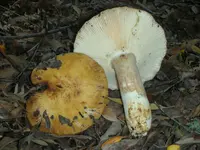
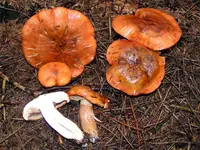
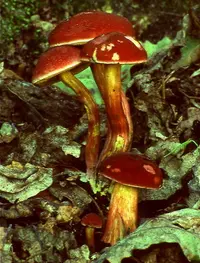
The ruby bolete, Hortiboletus rubellus, is a small, fleshy mushroom-forming fungus rather than a leafy plant. It produces vivid red to pink caps with yellow pores and a slender yellowish stem that may show red tones. Caps often fade or crack in strong sun.

This species grows on soil, usually near broadleaf trees such as oaks, in parks, lawns, and light woodlands across parts of Europe and North America. It can be locally common but is sensitive to soil disturbance and pollution, which makes it unpredictable in gardens.

For those who want to observe and care for Ruby Bolete in managed spaces, it generally prefers well-drained, undisturbed soils, consistent moisture, and access to suitable host trees for its root partnership.

Main Plant Requirements

Care Difficulty

Moderate Care

Light Preference

Partial Shade

Water Requirements

Regular Water

Temperature Preference

Cool Climate

Hardiness Zone

5–9

Soil Texture

Loamy, Sandy, Organic-rich

Soil pH

Acidic (5.5–6.5), Slightly acidic (6.5–7.0)

Soil Drainage

Moist but well-drained

Fertilization

Minimal (feed rarely)

Get Personalized Care Plan

Scan your plant to receive care tips personalized for your specific plant

Available on iOS and Android

How to Care for the Ruby Bolete

Hortiboletus rubellus is a mycorrhizal mushroom that fruits best in bright, dappled woodland light rather than full exposure.

  • Provide 2–4 hours of gentle morning sun with light shade or filtered light for the rest of the day, especially under deciduous trees or near woodland edges.
  • Allow partial shade (50–70% canopy cover); dense, deep shade often reduces fruiting, while intense midday sun can dry the soil surface too quickly.
  • In summer, protect from prolonged direct afternoon sun, but in spring and early autumn ensure more open light so the soil warms enough to trigger Ruby Bolete fruiting.

Hortiboletus rubellus depends on steady soil moisture around tree roots rather than frequent surface watering.

  • Aim for evenly moist, not saturated, soil; when the top 2–4 cm feel barely damp instead of wet, a deep soak is appropriate if there is no recent rainfall.
  • Use well‑drained, humus‑rich ground; standing water, sour smell, or slimy soil indicate overwatering and can suppress or rot the underground mycelium.
  • In dry, hot periods, irrigate trees slowly 1–2 times per week, while in cool or rainy seasons rely mostly on natural rainfall and avoid extra watering.

This species fruits in mild conditions and slows or disappears when temperatures are too hot or cold.

  • Optimal fruiting usually occurs around 55–70°F (13–21°C), often from late spring to early autumn depending on local climate and soil warmth.
  • The underground mycelium tolerates down to about 25–30°F (-4 to -1°C), but visible mushrooms are damaged by frost and collapse quickly after freezing.
  • Sustained heat above 80°F (27°C) with dry soil sharply reduces fruiting; partial shade and mulch help keep the upper soil layer cooler in hot summers.

Humidity is not a major factor for Hortiboletus rubellus outdoors in temperate climates.

This species prefers moist, aerated, organic-rich mineral soil associated with suitable host trees.

  • Aim for a loose, humus-rich loam or sandy loam that stays evenly moist but never waterlogged.
  • Ensure rapid drainage by avoiding compacted clay and by incorporating leaf mold or well-rotted compost into the upper 10–15 cm.
  • Maintain a slightly acidic pH around 5.0–6.5, similar to woodland soils where Hortiboletus rubellus naturally occurs.
  • Avoid heavily fertilized, disturbed, or sterile substrates, which can disrupt the fungal partnership with tree roots.

This species is generally unsuitable for container growing because it relies on complex mycorrhizal associations with tree roots that are hard to maintain in pots.

This ectomycorrhizal fungus relies mainly on its tree partners and soil nutrients, so added fertilizer is usually unnecessary for Ruby Bolete.

Hortiboletus rubellus does not require pruning, as it is a wild mycorrhizal fungus rather than a conventional garden or container plant.

This species is not suited to typical container culture, so focus on careful transplanting of associated host trees rather than the fungus itself.

  • Avoid disturbing soil where fruiting bodies appear, since the main fungal network (mycelium) lives below ground and is sensitive to disruption.
  • If a young host tree must be moved, do so in early spring or fall, keeping as much native soil around the roots as possible.
  • Limit transplanting frequency; repeated soil disturbance can reduce or eliminate existing mycorrhizal connections.
  • Water the transplanted tree thoroughly and maintain even soil moisture to reduce root stress and support fungal recovery.

Hortiboletus rubellus propagation is specialized and usually left to natural spore dispersal and mycorrhizal formation in suitable habitats.

This fungus is naturally cold hardy in temperate climates and typically needs no deliberate winter care from gardeners.

Care Tips

Mycorrhizal partner trees

Establish this fungus near compatible host trees such as oak, beech, or birch, since fruiting bodies develop best where the fine feeder roots of these trees are dense and undisturbed.

Minimal ground disturbance

Mark the fruiting area and avoid raking, digging, or heavy foot traffic there so the underground mycelium network stays intact and can continue to produce mushrooms over many seasons.

Targeted organic mulching

Apply a very thin layer (0.5–1 in) of leaf litter or fine wood chips from the host tree species around the dripline to buffer soil moisture without smothering the fungal mycelium.

Fruiting body harvesting

Cut mushrooms at the base with a clean knife instead of pulling them out, and leave a few healthy specimens to mature and release spores to maintain the population when growing Ruby Bolete.

Seasonal moisture management

During extended dry spells in the main fruiting season, water the host tree root zone slowly and deeply in the early morning so the soil profile is evenly moist but not waterlogged where the fungus is active.

Common Pests and Diseases

Mycophagous slugs

This pest feeds on the fruiting bodies, scraping off the cap surface and gills and sometimes hollowing out the stem. Symptoms include irregular holes, slime trails on caps, and rapid destruction of young mushrooms.

Solution

Hand-pick slugs in the evening or early morning and use physical barriers such as copper tape, sand, or sharp grit around the fruiting area. Reduce nearby hiding places like dense groundcover and moist debris, and, if needed, use iron phosphate slug pellets placed away from where mushrooms are harvested for food.

Fungus gnat larvae

These insects develop in moist, organic-rich soil and can tunnel into developing mushroom stems and bases. Symptoms include weakened or toppled fruiting bodies, small entry holes, and presence of tiny black flying adults around the mushroom patch.

Solution

Allow the upper soil layer to dry slightly between waterings if the fungus is being cultivated, and improve drainage to reduce excess moisture. Use yellow sticky traps to reduce adult gnats and, in managed beds, consider a biological control such as Bacillus thuringiensis israelensis (BTI) applied according to label directions to target larvae in the substrate.

Maggot infestation

These insects, usually fly larvae, bore into caps and stems, turning the tissue soft and discolored. Symptoms include small puncture marks on the cap surface, internal tunnels, and rapid decay of the affected fruiting bodies.

Solution

Harvest mushrooms as soon as they reach usable size to limit the time available for egg‑laying. Remove and dispose of infested fruiting bodies promptly, and, for intentional growing Ruby Bolete in garden beds, use fine mesh or row covers to reduce access of adult flies to developing mushrooms.

Bacterial blotch

This disease affects exposed surfaces of the caps, causing greasy yellow to brown spots that may become sunken and slimy in wet conditions. Symptoms include localized discoloration and softening of the cap, often following prolonged surface moisture.

Solution

Reduce overhead watering and avoid splashing soil onto mushroom caps; water the surrounding soil rather than the fruiting bodies. Improve air movement around the patch so surface moisture dries quickly, and remove badly spotted mushrooms to limit spread of bacteria in crowded beds.

Parasitic mold

This disease is caused by opportunistic fungi that colonize damaged or aging fruiting bodies, covering them with white, gray, or green mold. Symptoms include fuzzy or powdery growth on caps and stems and rapid collapse of affected mushrooms, especially in stagnant, humid conditions.

Solution

Maintain good airflow and avoid overcrowding if the fungus is being cultivated in a bed or container. Remove and discard any moldy fruiting bodies immediately, and adjust moisture so the substrate stays evenly damp but not saturated, which helps limit mold development on developing mushrooms.

Interesting Facts

Color-changing pore surface

When bruised or pressed, the yellow to orange pore surface of this species slowly turns blue-green, a reaction caused by oxidation of specific pigment compounds in the flesh.

Preference for urban lawns

This bolete is often found in mowed lawns, parks, and roadside grass in addition to light woodlands, reflecting an unusual tolerance for disturbed, human-managed habitats.

Specialized tree partnership

It forms ectomycorrhizal associations with deciduous trees, especially oaks, meaning its underground mycelium closely wraps around roots and helps the tree absorb water and nutrients in exchange for sugars.

Botan icon

Did you know?

This species was previously placed in the large genus Boletus but was moved to Hortiboletus after DNA-based studies showed it belongs to a distinct evolutionary lineage within the bolete group.

FAQs about Ruby Bolete

This mushroom is considered edible but is not highly regarded culinarily. Accurate identification is essential, since red-capped boletes can be confused with toxic species. Beginners should consult a local mycologist or mushroom club before consuming any wild specimens.

Grow Healthy Plants with Botan Care

Keep your plants happy and healthy with plant identification, disease detection, and easy care guidance.

Botan plant care app — identify plants on mobile

Explore More Plants