rose myrtle Care (Rhodomyrtus tomentosa)

Also known as: Downy rose myrtle
rose myrtle

About rose myrtle

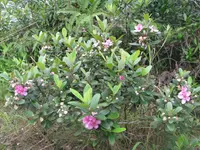
Rose myrtle, Rhodomyrtus tomentosa, is an evergreen shrub known for its dense foliage, pink flowers, and purple edible berries. It usually forms a compact, rounded shape with many small leaves.

This species is native to Southeast Asia and southern China, where it grows in open woodlands, scrub, and coastal areas. It adapts to a range of warm, mild climates and can naturalize easily.

The plant is generally hardy, tolerates pruning well, and copes with periods of dryness once established. Understanding how to care for rose myrtle is mainly about giving it sun, well-drained soil, and avoiding prolonged waterlogging.

Main Plant Requirements

Care Difficulty

Moderate Care

Light Preference

Full Sun

Water Requirements

Moderate Water

Temperature Preference

Warm Climate

Hardiness Zone

9–11

Soil Texture

Sandy, Loamy, Organic-rich

Soil pH

Acidic (5.5–6.5), Slightly acidic (6.5–7.0)

Soil Drainage

Moist but well-drained

Fertilization

Minimal (feed rarely)

Get Personalized Care Plan

Scan your plant to receive care tips personalized for your specific plant

Available on iOS and Android

How to Care for the rose myrtle

This shrub prefers bright, direct sun but tolerates some light shade, especially in hot climates.

  • Aim for 6–8 hours of sun daily, with morning sun and light afternoon shade ideal to support dense growth and heavy flowering in rose myrtle.
  • In hotter regions, protect from harsh western afternoon sun with partial shade or filtered light to prevent leaf scorch and soil from drying too fast.
  • In cooler climates, choose the sunniest, south-facing spot available, and avoid deep shade, which causes leggy growth and fewer flowers.

Rhodomyrtus tomentosa prefers evenly moist, well-drained soil and does not like waterlogged roots.

  • Water when the top 3–5 cm of soil feels dry, applying enough to moisten the full root zone, then let excess drain away completely.
  • During hot, dry weather, expect to water more often, while in cool or rainy seasons reduce watering and rely more on natural rainfall.
  • Watch for yellowing, soft leaves as a sign of overwatering, and dry, crispy leaf edges or drooping stems as indicators of underwatering.

This species prefers mild, frost-free conditions and handles moderate summer heat if soil moisture is maintained.

  • Optimal growth occurs around 65–80°F (18–27°C), where new shoots, flowers, and fruit set develop steadily without stress.
  • It tolerates brief dips to about 30–32°F (-1–0°C), but hard frost below this can damage young growth and may kill unprotected plants.
  • In hotter areas with summer highs above 90°F (32°C), provide mulch and some afternoon shade to reduce root stress and leaf scorch risk for Rhodomyrtus tomentosa plant care.

This species prefers moderate ambient humidity but usually adapts to typical indoor and outdoor conditions.

  • Aim for 40–60% humidity; prolonged levels below 30% can dry leaf edges over time.
  • Crisping tips, dull leaves, and slowed new growth often indicate humidity stress rather than watering problems.
  • Raise humidity locally with a nearby tray of water and pebbles or by grouping rose myrtle with other plants.

This shrub does best in slightly acidic, well‑drained, moderately fertile soil with a loose structure.

  • Use a mix of 50–60% loam or peat-based potting soil, 20–30% coarse sand, and 10–20% perlite or fine bark for structure and drainage.
  • Target pH around 5.5–6.5; avoid strongly alkaline substrates that can cause nutrient lockout and chlorotic leaves.
  • Ensure the mix crumbles easily in the hand; compacted or clay-heavy soil restricts roots, holds excess water, and risks root rot.
  • In heavy native ground, raise the planting area or use a mound, blending in coarse sand and bark to improve aeration and runoff.

This species adapts well to container growing when given stable, well-drained conditions.

  • Choose a pot wider than it is deep to balance the plant’s bushy, spreading habit and reduce tipping in wind.
  • Use a heavy terracotta or ceramic container outdoors to limit moisture swings and improve stability as the plant gains height.
  • Place the pot on low risers so drainage holes stay clear, allowing rapid runoff after heavy rain or deep watering.

This shrub benefits from light, structured feeding to support flowering and fruiting without forcing weak growth.

  • Apply a balanced slow-release fertilizer (around 10-10-10) in early spring at label rates for rose myrtle in-ground or container plants.
  • Use a dilute liquid balanced NPK feed at 1/2 strength every 4–6 weeks during the main growing season.
  • Supplement with a thin layer of compost over the root zone once a year to improve soil structure and microbial activity.
  • Avoid feeding in late fall and winter to prevent tender, frost-prone growth and allow natural dormancy.

Thoughtful pruning keeps Rhodomyrtus tomentosa dense, flowering well, and within bounds.

  • Prune in late winter or just after main flowering, so flower buds for the next season are not removed.
  • Cut out dead, diseased, or storm-damaged wood first, using clean, sharp hand pruners or loppers.
  • Thin congested interior branches to improve light and air, encouraging more blooms and reducing fungal issues.
  • Lightly shape the outer canopy, shortening overly long shoots to maintain compact, bushy growth.

This shrub handles both container growing and garden planting if moved at the right stage and season.

  • Look for roots circling the pot, water running straight through, or slowed growth as signs that a container plant needs more space.
  • Plan repotting or transplanting for early spring or early fall, avoiding extreme heat or hard-freeze periods.
  • Shift container plants to a pot 1–2 in wider with well-drained, slightly acidic mix, disturbing roots as little as possible.
  • Water deeply after moving, shade temporarily from harsh sun, and keep soil evenly moist to limit transplant shock.

Rhodomyrtus tomentosa is most often propagated from semi-hardwood cuttings or seeds under controlled conditions.

  • Take semi-hardwood cuttings in late summer, 8–10 cm long, and remove lower leaves before sticking in a moist, free-draining medium.
  • Use a rooting hormone on cut ends and maintain high humidity and bottom warmth around 70–75°F for better rooting.
  • Sow fresh seed in spring on the surface of acidic, well-drained mix, keeping it lightly covered and consistently moist.
  • Provide bright, indirect light and good air movement for both cuttings and seedlings to reduce rot and encourage sturdy growth.

This species is only moderately cold tolerant and needs protection in colder climates.

  • In USDA zones warmer than 9, established plants usually overwinter outdoors with minimal intervention.
  • Apply a 5–8 cm mulch layer over the root zone in late fall to buffer soil temperature and moisture swings.
  • In cooler regions, grow Rhodomyrtus tomentosa in containers and move indoors or into a frost-free greenhouse before hard freezes.
  • Avoid heavy pruning or high-nitrogen feeding late in the season, which can promote tender growth that is more vulnerable to frost damage.

Care Tips

Encourage Bushy Form

Pinch or lightly tip-prune soft new shoots in late spring to early summer to stimulate branching and create a denser, more floriferous shrub when growing rose myrtle.

Use Windbreaks Early

In exposed sites, install a temporary windbreak (such as shade cloth or mesh fencing) on the windward side for the first 1–2 years to reduce leaf scorch and stem rocking while roots establish.

Mulch for Root Protection

Apply a 5–8 cm layer of coarse organic mulch around the root zone, keeping it 5 cm away from stems, to stabilize soil moisture, protect shallow feeder roots, and reduce weed competition.

Monitor Suckering Spread

Inspect surrounding soil 2–3 times per year and promptly remove any unwanted suckers by cutting them at the point of origin below soil level to prevent unplanned thickets.

Fruit Load Management

If branches bend under heavy fruit, thin some developing berries or provide discreet twig supports to prevent breakage and maintain a strong, balanced framework.

Common Pests and Diseases

Myrtle rust

This disease causes yellow spots and powdery orange-yellow pustules on young leaves, shoots, and sometimes flowers, leading to distortion and dieback. Symptoms include premature leaf drop and thinning of the canopy in severe cases.

Solution

Remove and destroy affected shoots and leaves promptly, and avoid overhead watering to keep foliage dry. Improve spacing and airflow around plants, disinfect pruning tools, and in high-risk areas consider using a labeled systemic fungicide as part of broader Rhodomyrtus tomentosa care instructions.

Leaf spot

This disease produces small dark brown to black spots on leaves that may merge into larger blotches, sometimes with a yellow halo. Symptoms include premature leaf yellowing and drop under prolonged wet or humid conditions.

Solution

Prune out and discard heavily affected foliage, and keep the plant canopy dry by watering at the base and avoiding late-day irrigation. Improve airflow, reduce overcrowding, and if spotting continues, apply a suitable copper-based or other labeled fungicide according to local guidelines.

Scale insects

These insects attach along stems and leaf veins as small brown or gray bumps, sucking sap and weakening the plant. Symptoms include sticky honeydew, sooty mold growth, and general decline of new growth.

Solution

Physically remove scale with a soft brush or cloth, and prune heavily infested twigs. For ongoing infestations, use horticultural oil or insecticidal soap, applied thoroughly to stems and leaf undersides, repeating as needed to target newly hatched crawlers.

Myrtle psyllids

This pest feeds on young shoots and leaves, causing cupping, puckering, and distorted new growth. These insects may also produce honeydew, which encourages sooty mold on affected foliage.

Solution

Trim and dispose of distorted shoot tips to remove eggs and nymphs, and encourage natural predators by avoiding broad-spectrum insecticides. If populations remain high, use targeted applications of insecticidal soap or horticultural oil, ensuring complete coverage of new shoots and leaf undersides.

Sooty mold

This disease appears as a black, soot-like coating on leaves and stems that grows on the sugary honeydew from sap-feeding insects such as scale or psyllids. Symptoms include reduced photosynthesis and a dull, dirty look to the foliage.

Solution

Control the underlying honeydew-producing insects first, then gently wash affected leaves with water to remove the fungal coating. Improve light and airflow around the plant to help foliage dry quickly and discourage further fungal growth.

Interesting Facts

Velvety leaf surface

The leaves are covered in dense, fine hairs that give them a velvety texture and help reduce water loss and sun damage in its native subtropical habitats.

Purple berries with many seeds

Its fruits are small, purple berries that contain numerous tiny seeds, which birds disperse widely after eating the sweet pulp.

Serious invasive shrub

This species is a major invasive plant in parts of Florida and Hawaii, where it forms dense thickets that outcompete native vegetation and alter natural ecosystems.

Botan icon

Did you know?

In some coastal areas of South China and Southeast Asia, this shrub naturally colonizes poor, sandy or degraded soils, where its dense root system helps stabilize the ground and slow erosion along exposed slopes and shorelines.

FAQs about rose myrtle

Lack of flowers usually comes from insufficient light, heavy pruning at the wrong time, or excess nitrogen fertilizer. Older, unpruned wood often flowers best. Ensure good sun exposure and avoid cutting new buds formed on the previous season’s growth.

Grow Healthy Plants with Botan Care

Keep your plants happy and healthy with plant identification, disease detection, and easy care guidance.

Botan plant care app — identify plants on mobile

Explore More Plants