Hemionitis calomelanos Care

Hemionitis calomelanos

About Hemionitis calomelanos

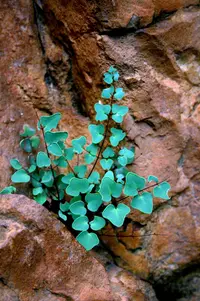
Hemionitis calomelanos is a small tropical fern valued for its delicate, often heart-shaped fronds and fine, wiry black stems. It typically forms low, airy clumps that suit terrariums, small pots, and shaded indoor displays.

This species occurs naturally in humid forests of tropical regions, often growing on rocks or in leaf litter where air and soil moisture stay consistently high. It is moderately demanding because it dislikes drying out, sudden temperature swings, and very bright or direct sun.

Those conditions mean it suits growers who can offer stable humidity, gentle indirect light, and a loose, well-drained but moisture-retentive substrate, and who wish to learn how to care for Hemionitis calomelanos.

Main Plant Requirements

Care Difficulty

Moderate Care

Light Preference

Partial Shade

Water Requirements

Keep Soil Moist

Temperature Preference

Tropical / Frost Sensitive

Hardiness Zone

10–11

Soil Texture

Loamy, Peaty, Organic-rich

Soil pH

Acidic (5.5–6.5), Slightly acidic (6.5–7.0)

Soil Drainage

Moist but well-drained

Fertilization

Light (every 4–6 weeks)

Get Personalized Care Plan

Scan your plant to receive care tips personalized for your specific plant

Available on iOS and Android

How to Care for the Hemionitis calomelanos

This fern prefers soft, forest-like light and is sensitive to harsh direct sun.

  • Provide bright, filtered light or dappled shade, such as under taller plants or through a sheer curtain, for about 4–6 hours of indirect light daily.
  • Tolerates partial shade, but in very dim conditions fronds stretch, lose density, and new growth emerges slowly.
  • Avoid strong midday and afternoon sun, which scorches fronds; in summer, give morning sun only or move slightly deeper into shade, especially in hotter regions.

Watering should keep the root zone consistently moist but never stagnant.

  • Allow only the top 1–2 cm of soil to begin drying before watering, as Hemionitis calomelanos dislikes drying out fully.
  • Use a loose, humus-rich mix that drains well; water slowly until moisture seeps from drainage, then empty any catchment to prevent root rot.
  • In cooler months, let the surface stay lightly moist a bit longer between waterings; watch for drooping, crisp tips from underwatering or black, mushy bases from excess moisture.

This fern thrives in stable, warm conditions without temperature extremes.

  • Aim for 65–80°F (18–27°C) for best growth, with steady humidity, avoiding sudden temperature swings from open windows or vents.
  • Short dips to about 55°F (13°C) are usually tolerated, but growth slows; below 50°F (10°C) tissue damage becomes likely.
  • Protect from frost at all times and from hot, dry air above 86°F (30°C); in heat waves, increase shade and humidity to limit stress and frond scorch.

This fern needs consistently high humidity to maintain healthy fronds and prevent crisping.

  • Aim for 60–80% humidity; dry central heating air is usually too low for Hemionitis calomelanos.
  • Crisping frond tips, curling edges, and stalled new growth indicate humidity stress rather than underwatering.
  • Use a room humidifier, grouped plants, and a pebble tray beneath the pot, and avoid placing the plant near drafts or vents.

This species prefers a loose, moisture-retentive but fast-draining mix similar to many epiphytic ferns.

  • Use a base of peat or coco coir with added compost for organic matter and stable moisture.
  • Improve drainage and aeration with perlite and fine bark, aiming for a light, crumbly structure that does not compact.
  • Keep pH slightly acidic to neutral, around 5.5–7.0, avoiding chalky or strongly alkaline mixes that can limit nutrient uptake.
  • Avoid heavy garden soil, pure potting compost, or constantly waterlogged substrates, which promote root rot and suffocation.

This fern is very suitable for container growing due to its compact, shallow root system.

  • Choose a wide, shallow pot so the rhizomes can spread horizontally without sitting deep in wet mix.
  • Use a container material that moderates moisture, such as glazed ceramic or plastic, to reduce rapid drying between waterings.
  • Ensure the pot drains freely into a saucer that is emptied quickly, preventing prolonged contact between the base of the rootball and standing water.

Light, consistent feeding supports steady growth of Hemionitis calomelanos in containers.

  • Use a balanced liquid fertilizer (such as 10-10-10 or 20-20-20) diluted to 1/4–1/2 strength for indoor fern care.
  • Feed every 4–6 weeks during spring and summer when new fronds are actively forming.
  • Skip or reduce feeding to 1 application in midwinter if growth slows and light is low.
  • Avoid manure-heavy compost and never apply strong fertilizer to dry soil to prevent root burn.

Pruning is mainly hygienic for this fern and helps maintain a tidy, compact clump.

  • Best timing is late winter to early spring, before strong new growth begins.
  • Remove dead, yellowing, or damaged fronds at the base using clean, sharp scissors or small pruners.
  • Thin out a few old or crowded fronds to improve air movement around the plant center.
  • Avoid cutting healthy frond tips, as this reduces photosynthesis and can weaken Hemionitis calomelanos over time.

This fern prefers stable conditions and benefits from careful, infrequent repotting.

  • Plan to repot every 2–3 years in spring when roots circle the pot, water drains quickly, or growth becomes stunted.
  • Choose a container 2–3 cm wider with good drainage and fill with a loose, humus-rich, slightly acidic mix.
  • Slide the root ball out gently, tease circling roots lightly, and avoid breaking the rhizome or central crown.
  • Water thoroughly after repotting, then keep in shaded, draft-free conditions for 1–2 weeks to reduce transplant stress.

Propagation of this fern is possible but slower and more advanced than many common houseplants.

  • Division of mature clumps in spring is the most practical method for home growers.
  • Lift the plant, then separate the rhizome into sections, each with several healthy fronds and a good root portion.
  • Plant divisions into small pots with moist, fine-textured fern mix and maintain high humidity and gentle shade.
  • Spore sowing is possible for growing Hemionitis calomelanos but requires sterile conditions and patience for germination.

This species is frost-tender and needs mild, protected conditions during winter in most climates.

  • Keep indoor plants at 60–75°F and away from cold drafts, radiators, and single-glazed windows.
  • In regions with frost, grow in containers and move indoors or into a heated greenhouse before temperatures drop below 50°F.
  • Outdoors in very mild climates, maintain a thick organic mulch around the root zone to buffer temperature swings.
  • Reduce watering slightly in winter, keeping the mix barely moist but never fully dry, since cold wet soil increases rot risk.

Care Tips

Cool root zone

Use a heavier, clay or ceramic pot and place a thin layer of sphagnum moss over the soil surface to keep the root zone slightly cooler and more stable than the room air, which reduces stress in warm indoor conditions.

Frond grooming

Inspect fronds every 1–2 weeks and gently remove yellowing or congested older fronds at the base with sterilized scissors to improve airflow through the foliage and reduce fungal spotting.

Water quality control

If tap water is hard or heavily chlorinated, alternate with rainwater, distilled, or filtered water to minimize mineral buildup that can cause leaf-edge burn on the fine, heart-shaped fronds.

High-humidity placement

Site the plant in naturally humid microclimates such as on a bathroom shelf with good indirect light or near (not on) a kitchen sink, which often provides more stable humidity than relying only on pebble trays.

Quarantine and monitoring

When adding new houseplants, keep this fern at least 1–2 m away for 3–4 weeks and check fronds and petioles closely for scale or spider mites, since early isolation and treatment make caring for Hemionitis calomelanos much easier long term.

Common Pests and Diseases

Scale insects

This pest attaches to the fronds and stems as small brown or tan bumps, sucking sap and causing yellowing, weak growth, and sticky honeydew on nearby surfaces.

Solution

Isolate the plant, then gently wipe fronds and stems with a cotton pad dipped in diluted insecticidal soap or neem oil, repeating every 7–10 days until no new scale appears; improve air movement and avoid overfertilizing, which can attract sap-feeding insects.

Mealybugs

These insects appear as white, cottony clusters in frond joints and on the rhizomes, leading to distorted new fronds and slow decline if not controlled.

Solution

Remove visible colonies with a cotton swab dipped in isopropyl alcohol, then treat the whole plant with a mild insecticidal soap spray, keeping the soil covered during treatment and repeating weekly until pests are gone; inspect regularly, as caring for Hemionitis calomelanos in warm, humid rooms can favor mealybug buildup if plants are crowded.

Aphids

This pest softens and curls young fronds, often clustering on tender growth and underside of leaves while leaving sticky honeydew that may promote sooty mold.

Solution

Rinse the plant gently under lukewarm running water to dislodge insects, then follow with a light application of insecticidal soap to all frond surfaces, repeating every 5–7 days as needed and avoiding harsh systemic insecticides that can injure sensitive fern foliage.

Bacterial leaf spot

This disease causes small, water-soaked lesions on fronds that enlarge into dark, sometimes translucent spots with yellow halos, often starting on lower, older fronds in warm, wet conditions.

Solution

Remove and discard affected fronds, avoid wetting the foliage, increase airflow around the plant, and water at the soil level; in persistent cases, reduce humidity slightly and space plants farther apart to limit splash and spread.

Fungal leaf blight

This disease leads to irregular brown or black patches on fronds that may merge and cause entire pinnae (leaf segments) to die back, especially when foliage stays wet for long periods in low air movement.

Solution

Prune out all severely affected fronds with clean tools, improve light and air circulation, and allow the surface of the foliage to dry quickly after any misting; in serious outbreaks, temporarily lower humidity and avoid overhead watering to stop new infections.

Interesting Facts

Velvety black fronds

This fern is known for its unusually dark, almost black fertile fronds, which contrast with its softer, greener sterile fronds, giving the clump a two-tone appearance that is uncommon among small terrestrial ferns.

Distinctive powdery spores

The species name calomelanos refers to the pale, powdery coating of spores on the undersides of fertile fronds, which can give them a slightly frosted look when sori (spore clusters) mature.

Rock- and crevice-dweller

In nature, this fern often grows in rocky crevices and thin soils on shaded slopes in tropical and subtropical regions, anchoring its roots into small pockets of organic matter rather than deep soil layers.

Botan icon

Did you know?

This species has been moved between several fern genera over time (including Hemionitis and Mickelopteris) because its combination of heart-shaped sterile fronds and narrow fertile fronds made it difficult for botanists to place within traditional fern classifications.

FAQs about Hemionitis calomelanos

Brown leaf edges usually result from low humidity, fertilizer burn, or a buildup of salts in the potting mix. Flush the soil with clean water, reduce fertilizer strength, and increase ambient humidity to prevent further browning.

Grow Healthy Plants with Botan Care

Keep your plants happy and healthy with plant identification, disease detection, and easy care guidance.

Botan plant care app — identify plants on mobile

Explore More Plants