


Secure Mounting
Use plastic-coated wire, nylon line, or soft plant ties to secure the plant to its mount without piercing the base, and retighten or adjust yearly as the plant thickens so it does not wobble or cut into the tissue.

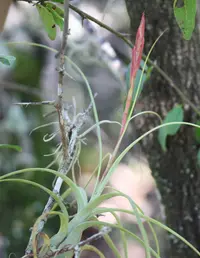
Northern needleleaf, Tillandsia balbisiana, is an epiphytic air plant native to Mexico, Central America, the Caribbean, and parts of northern South America. It usually grows on tree branches rather than in soil. Its long, narrow, curling leaves form loose rosettes, often with a bulbous base that stores water, giving it a distinctive, sculptural look. In the right conditions it produces a colorful flower spike followed by seed pods. This species relies on its leaves to absorb water and nutrients from the air, making it relatively adaptable indoors if humidity and airflow are adequate. Understanding how to care for northern needleleaf mainly involves providing bright, indirect light and regular moisture without staying wet for long periods.

Care Difficulty
Moderate Care

Light Preference
Partial Sun

Water Requirements
Low Water

Temperature Preference
Tropical / Frost Sensitive

Hardiness Zone
10–12

Soil Texture
Rocky, Sandy

Soil pH
Acidic (5.5–6.5)

Soil Drainage
Well-drained

Fertilization
Minimal (feed rarely)
Scan your plant to receive care tips personalized for your specific plant
Available on iOS and Android
Tillandsia balbisiana prefers bright, indirect light that mimics bright forest canopies or tree branches.
This air plant absorbs water through its leaves, so watering focuses on thorough wetting and full drying.
This species favors warm, frost-free conditions similar to tropical and subtropical climates.
This air plant prefers moderate to high humidity but copes with typical indoor levels if watering is adjusted.
Tillandsia balbisiana is epiphytic and does not grow in conventional potting soil.
This species can be grown in containers as a mounted or nestling air plant rather than potted in soil.
This epiphytic air plant needs only light feeding compared to rooted container plants, but responds well to modest nutrients.
Pruning needs for Tillandsia balbisiana are minimal and focus on hygiene rather than shaping.
This air plant is usually mounted rather than potted, so focus on remounting or repositioning rather than true repotting.
Propagation of this species is common through offsets rather than seed in home collections.
Cold sensitivity means this air plant benefits from structured winter care in most temperate climates.

Plant Health Check
Not sure what's wrong with your plant? Check your plant's health inside the app.
This bromeliad can grow as a slender, mostly caulescent air plant on tree branches in exposed sites, but in more humid, sheltered habitats it develops a much larger, bulbous base and longer, more pendent leaves, showing strong adaptation to local microclimates.
Its seeds are equipped with long, silky hairs that act like parachutes, allowing them to travel on air currents and colonize tree canopies far from the parent plant in tropical and subtropical forests.
In the wild it occurs on a wide range of host trees, from mangroves in coastal areas to hardwoods in drier inland forests, relying on bark texture and light rather than any strict tree-species preference.

Large wild specimens of this species can form dramatic, pendulous rosettes over 1 m long that hang from tree branches like green streamers, making them highly conspicuous epiphytes in parts of their native range.
Lack of flowering usually comes from insufficient light, inadequate air circulation, or the plant being immature. Flowers appear only once on each rosette. Good Tillandsia balbisiana care and patience are essential before expecting consistent blooms.
Keep your plants happy and healthy with plant identification, disease detection, and easy care guidance.

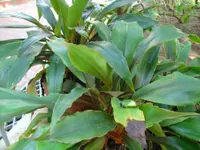
Chlorophytum orchidastrum
Chlorophytum orchidastrum
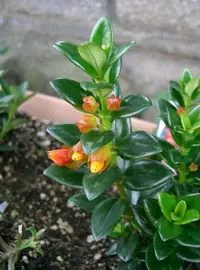
Goldfish Plant
Nematanthus gregarius
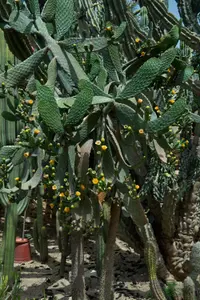
Road Kill Cactus
Consolea rubescens
 POPULAR
Southern Sword Fern
Nephrolepis exaltata
 POPULAR
Centipede tongavine
Epipremnum pinnatum
flamevine
Pyrostegia venusta
Dioscorides Arum
Arum dioscoridis
basket plant
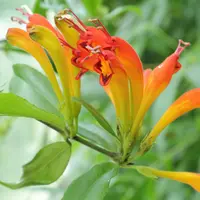
Aeschynanthus speciosus