Rotate For Symmetry
Rotate the pot 90° every 2–3 weeks so new leaves do not all lean toward the same light source, which keeps the plant compact and evenly filled out when growing Peperomia olivacea.

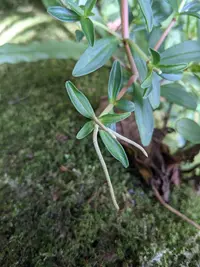
Peperomia olivacea is a compact tropical houseplant from South America, commonly found growing on the forest floor or on decaying wood in warm, humid habitats. It belongs to the pepper family (Piperaceae) and is grown mainly for its smooth, fleshy leaves and tidy, clumping habit.
The plant usually stays small and bushy, making it suitable for desks, shelves, and mixed indoor collections. Its succulent-like leaves store water, so it tolerates short dry spells better than many thin-leaved houseplants.
Because it adapts well to typical indoor conditions and stays manageable in size, many growers find it straightforward to care for Peperomia olivacea. It prefers bright, indirect light, a loose, well-drained potting mix, and moderate watering with time for the soil to partly dry between waterings.

Care Difficulty
Easy Care

Light Preference
Bright Indirect Light

Water Requirements
Moderate Water

Temperature Preference
Tropical / Frost Sensitive

Hardiness Zone
11–12

Soil Texture
Loamy, Peaty, Organic-rich

Soil pH
Acidic (5.5–6.5), Slightly acidic (6.5–7.0)

Soil Drainage
Well-drained

Fertilization
Light (every 4–6 weeks)
Scan your plant to receive care tips personalized for your specific plant
Available on iOS and Android
This species prefers soft, filtered light that mimics bright forest shade.
Watering should balance between avoiding drought stress and preventing root rot.
Steady, warm conditions support the healthiest growth for this plant.
This species prefers moderate household humidity but benefits from slightly raised levels in very dry homes.
Use a light, airy mix that drains quickly while holding slight, even moisture.
This compact species grows very well in containers for long-term display.
Light feeding keeps Peperomia olivacea compact and healthy in containers.
Pruning is mainly used to maintain shape and remove weak growth on Peperomia olivacea.
This species prefers snug pots and only occasional repotting.
Peperomia olivacea is commonly multiplied from cuttings rather than seed.
Indoor-grown plants need simple winter adjustments rather than heavy protection.

Plant Health Check
Not sure what's wrong with your plant? Check your plant's health inside the app.
This species is recognized for its muted olive-green foliage, which inspired the epithet olivacea, referring to its characteristic leaf color rather than fruit or scent.
In nature, this plant often grows as an epiphyte on tree trunks or in leaf litter, forming small, dense clumps that exploit pockets of organic matter and moisture instead of rooting in deep soil.
The leaves and stems have relatively succulent tissues that store water, an adaptation that allows the plant to tolerate brief dry periods between natural rain events in its native range.
This species performs best indoors in stable, warm rooms with bright, indirect light and protection from cold drafts. Outdoors it is only suitable in frost-free, very mild climates, sheltered from direct midday sun and heavy rain.
Keep your plants happy and healthy with plant identification, disease detection, and easy care guidance.