Stabilize Tall Rosettes
As the rosette becomes tall and top-heavy, backfill around the base with a gritty mix or use large surface stones to brace the stem and reduce the risk of the plant leaning or snapping in strong wind.

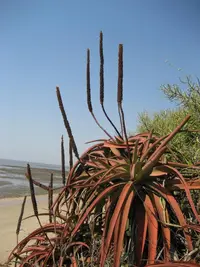
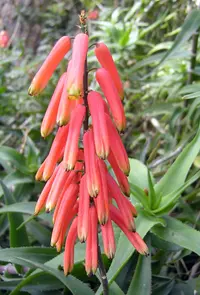
Lebombo aloe, Aloe spicata, is a stem-forming succulent from southern Africa, especially the Lebombo mountain region. It develops tall, upright stems topped with dense rosettes of narrow, stiff leaves. Mature plants produce long, cylindrical flower spikes with many small, tubular flowers, giving a striking architectural look in the landscape or a large container. This species is adapted to rocky, well-drained slopes and seasonal dry periods, which makes it relatively drought-tolerant in cultivation. It responds best to strong light, low to moderate moisture, and gritty soil with excellent drainage. These traits make it rewarding but better suited to growers who already know how to care for Lebombo Aloe.

Care Difficulty
Easy Care

Light Preference
Full Sun

Water Requirements
Low Water

Temperature Preference
Tropical / Frost Sensitive

Hardiness Zone
10–11

Soil Texture
Sandy, Loamy, Rocky

Soil pH
Slightly acidic (6.5–7.0), Neutral (7.0)

Soil Drainage
Well-drained

Fertilization
Minimal (feed rarely)
Scan your plant to receive care tips personalized for your specific plant
Available on iOS and Android
Aloe spicata prefers strong, direct light similar to its native rocky slopes, but benefits from gradual acclimation in cultivation.
Aloe spicata stores water in its leaves and needs thorough but infrequent watering in well-drained soil.
This species prefers warm, dry conditions and does best with stable temperatures and protection from frost.
This species prefers dry indoor air with low to moderate humidity around 30–50%.
Aloe spicata needs a very fast-draining, mineral-rich substrate to prevent root and crown rot.
This aloe is well suited to container growing when given a stable, free-draining setup.
Aloe spicata benefits from light, controlled feeding during the warm growing season, especially in containers.
Aloe spicata needs minimal pruning, mainly to keep the rosette clean and healthy.
This Aloe is slow-growing and does not need frequent repotting, but benefits from timely transplanting when rootbound.
Aloe spicata is most reliably propagated by offsets, with seed used mainly by experienced growers.
This Aloe is frost-sensitive and needs careful winter management in most temperate climates.

Plant Health Check
Not sure what's wrong with your plant? Check your plant's health inside the app.
This species forms tall, cylindrical rosettes made of many narrow, stiff leaves that are closely packed around the stem, giving the plant a distinctive columnar silhouette compared with broader-leaved aloes.
Despite the species name spicata, its bright orange-red flowers are not borne on a true simple spike but on a branched inflorescence, with multiple side branches carrying dense clusters of tubular flowers.
In its native range in southern Africa, this aloe typically grows on rocky hillsides and cliff slopes, anchoring in shallow, mineral-rich soils where drainage is extremely fast and competition from taller plants is limited.

Aloe spicata has sometimes been confused in the field and in older literature with closely related, tall-growing species such as Aloe marlothii, and its taxonomic interpretation has shifted over time as botanists compared flower structures, leaf arrangement, and habitat preferences across populations.
This species needs to be mature, usually several years old, before flowering. Lack of blooms often relates to insufficient light, cool winter rest, or nutrient-poor soil. Avoid frequent repotting, which can delay flower spike formation.
Keep your plants happy and healthy with plant identification, disease detection, and easy care guidance.