Early vine training
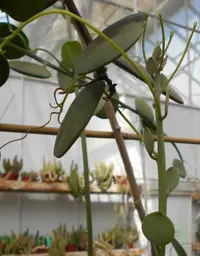
Install a narrow trellis or wire frame when the plant is still young, then loosely tie new shoots with soft plant ties so stems climb vertically instead of tangling and shading the lower leaves.

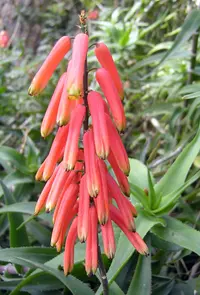
Common climbing aloe, Aloiampelos ciliaris, is a fast-growing succulent climber that forms long, slender stems able to scramble over supports or hang from containers. Its narrow, fleshy leaves have small soft teeth along the edges, and tubular orange-red flowers appear in clusters, attracting birds and pollinators in mild climates.
This species is native to South Africa, where it grows in scrub and along forest margins. It is generally easy to grow, as it tolerates some neglect, adapts to containers, and recovers well from pruning.
For those learning how to care for Common Climbing Aloe, it prefers bright light, well-draining gritty soil, and light, infrequent watering once the mix has mostly dried.

Care Difficulty
Easy Care

Light Preference
Full Sun

Water Requirements
Low Water

Temperature Preference
Tropical / Frost Sensitive

Hardiness Zone
10–11

Soil Texture
Sandy, Loamy, Rocky

Soil pH
Acidic (5.5–6.5), Slightly acidic (6.5–7.0)

Soil Drainage
Well-drained

Fertilization
Minimal (feed rarely)
Scan your plant to receive care tips personalized for your specific plant
Available on iOS and Android
This climbing aloe prefers bright, direct light but benefits from some protection at the hottest times of day.
This species is drought-tolerant and prefers infrequent, deep watering with fast drainage.
This aloe thrives in warm, frost-free conditions and reacts poorly to prolonged cold or extreme heat.
This species handles typical indoor humidity well and rarely needs special adjustments.
This climbing aloe needs sharply draining, mineral-lean soil to prevent root rot.
Aloiampelos ciliaris grows very well in containers when the pot is chosen for drainage and stability.
This climbing aloe responds well to light feeding during active growth but is sensitive to excess nutrients.
Pruning Aloiampelos ciliaris helps manage length, encourage branching, and maintain a tidy structure.
Container-grown plants benefit from occasional repotting to refresh soil and manage vigorous root growth.
This aloe is commonly propagated from stem cuttings, which root well under the right conditions.
Cold sensitivity means this aloe needs protection in climates with frost or freezing temperatures.

Plant Health Check
Not sure what's wrong with your plant? Check your plant's health inside the app.
This species is one of the few aloes that naturally climbs, using long, flexible, woody stems that lean on shrubs or fences for support rather than twining or using tendrils.
The leaf margins carry distinctive soft, white, hair-like teeth that form a visible fringe (ciliaris means fringed), which helps distinguish it from many other aloes with firmer, sharper spines.
In its native Eastern Cape habitats in South Africa, this species flowers repeatedly in warm months and is known as a reliable, fast-growing nectar source for sunbirds and other pollinators.

This species is thought to be the type plant that Carl Peter Thunberg used when first describing Aloe ciliaris in the late 18th century, and it was later reassigned to the genus Aloiampelos as botanists separated true aloes from climbing, shrubby relatives based on detailed morphological and genetic studies.
This species is a scrambling, climbing succulent with long flexible stems that lean on shrubs, fences, or trellises rather than twine tightly. Without support, stems arch and sprawl, forming a loose mound instead of a ground-hugging carpet.
Keep your plants happy and healthy with plant identification, disease detection, and easy care guidance.