American dodder Care (Cuscuta americana)

American dodder

About American dodder

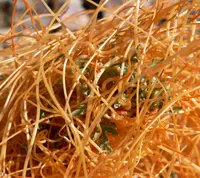
American dodder, Cuscuta americana, is a parasitic vine that lives on other plants instead of rooting in soil. It forms thin, leafless, yellow to orange threads that twine tightly around host stems.

The plant occurs naturally in warm parts of North, Central, and South America, often in wetlands, thickets, and along river margins. Once attached, it draws water and nutrients from its host, which makes it potentially damaging to nearby vegetation.

Because it depends on host plants, it is not a typical ornamental and is challenging to manage, especially in gardens or agricultural settings. Those who want to learn how to care for American dodder usually focus on studying its biology or controlling it, rather than cultivating it as a houseplant.

Main Plant Requirements

Care Difficulty

Hard Care

Light Preference

Full Sun

Water Requirements

Regular Water

Temperature Preference

Warm Climate

Hardiness Zone

5–9

Soil Texture

Sandy, Loamy, Organic-rich

Soil pH

Acidic (5.5–6.5), Slightly acidic (6.5–7.0)

Soil Drainage

Moist but well-drained

Fertilization

Minimal (feed rarely)

Get Personalized Care Plan

Scan your plant to receive care tips personalized for your specific plant

Available on iOS and Android

How to Care for the American dodder

This parasitic vine depends on strong light levels to support rapid growth on its host plants.

  • Provide 6–10 hours of direct sun daily in open fields, hedgerows, or other unshaded sites for best vigor in American dodder.
  • Tolerates light partial shade, such as brief morning or late-afternoon shade, but dense shade slows twining and reduces stem thickness.
  • In hot summers, prolonged dry heat with intense afternoon sun can scorch exposed hosts; plant performance often improves with slight afternoon shade in these conditions.

This species relies mostly on its host for moisture, so direct watering needs focus on site conditions rather than the dodder itself.

  • Establish hosts in soil that drains freely; avoid compacted or waterlogged ground, which promotes root rot in host plants supporting Cuscuta americana.
  • Use rainfall and host condition as guides: wilting, dull foliage, or dry, cracking soil around hosts suggests the need for a deep soak, then allow the surface to dry slightly.
  • In rainy seasons, watch for yellowing, soft, or collapsing host stems, which often indicate chronic excess moisture and poor aeration around roots rather than drought.

This annual vine prefers warm conditions and declines quickly in cold or freezing weather.

  • Optimal growth occurs around 70–90°F (21–32°C), when stems elongate rapidly and attachment to hosts is most successful.
  • Seeds usually germinate once soils warm reliably above about 60°F (16°C); sustained cold and wet conditions slow emergence and early growth.
  • The plant is highly frost-sensitive; temperatures near 32°F (0°C) can kill active vines, while brief heat spikes to 95–100°F (35–38°C) are tolerated if hosts are not drought-stressed.

This parasitic vine tolerates a wide humidity range but benefits from moderately moist air.

  • Aim for 40–60% humidity, similar to typical outdoor summer conditions in many regions.
  • The plant tolerates brief dry air but prolonged very low humidity can slow growth and reduce attachment success in American dodder.
  • Humidity stress appears as pale, weak, easily broken strands; increase local humidity by grouping host pots or placing trays of water and stones nearby.

This species anchors lightly in soil but depends mainly on host plants rather than soil nutrients.

  • Use a free-draining, sandy or sandy-loam substrate so host roots stay aerated and never waterlogged.
  • Aim for pH 6.0–7.5; most standard outdoor garden mixes or potting soils fall within this range without major adjustment for Cuscuta americana.
  • Create a base mix of 2 parts all-purpose potting mix, 1 part coarse sand, and 1 part perlite to improve drainage and oxygen availability around host roots.
  • Avoid compacted, heavy clay or peat-dense mixes that stay soggy, as these promote root rot in host plants and indirectly weaken the dodder.

This species can be grown in containers only when established on a potted host plant, and requires careful physical management.

  • Choose a wide, stable container so the twining stems can spread over the host without tipping the pot in wind or when moved.
  • Use relatively lightweight materials like plastic or resin only if the pot is broad-based, since vining mass on one side can destabilize narrow containers.
  • Position the pot so trailing stems cannot reach nearby plants unintentionally, for example by isolating the container on a stand or paved area.

This parasitic vine relies on host plants and usually does not benefit from direct fertilization.

Pruning Cuscuta americana focuses on containment and removal rather than shaping.

  • Cut back vigorous or spreading stems at any time during the growing season to limit smothering of host plants.
  • Remove dead, dried, or discolored strands using clean, sharp scissors or snips to reduce visual clutter and disease risk.
  • Thin overly dense tangles where necessary so light and air can still reach the host plant’s foliage.
  • Dispose of removed material in the trash, not compost, to prevent unwanted spread.

Transplanting is rarely appropriate, as this annual parasitic vine depends on its host rather than its own roots.

  • Treat any container use as temporary; once the host declines, the dodder usually dies back rather than needing repotting.
  • If moving a host plant carrying dodder, transplant in early warm weather to reduce shock and allow quick reattachment.
  • Water the host thoroughly before and after transplanting to limit stress, since dodder depends on vigorous host growth.
  • Avoid disturbing stems during moves; support tangles gently so haustoria, the feeding organs, remain attached to the host.

Propagation of this species is generally discouraged outside controlled research or restoration contexts due to its parasitic nature.

This annual vine is not frost hardy and normally dies back completely after cold weather, so it needs no dedicated winter care.

Care Tips

Host selection

Choose fast-growing, non-woody host plants with dense foliage, such as herbaceous perennials or annuals, so the dodder can anchor quickly and maintain a stable nutrient supply.

Timed establishment

Introduce strands only after host plants are well rooted and producing vigorous new growth, as weak or newly transplanted hosts are more likely to decline rapidly under parasitism.

Controlled confinement

Grow the plant and its hosts in a dedicated, contained bed or large container surrounded by a mowed or mulched buffer strip to prevent the vines from spreading into unwanted areas.

Regular boundary checks

Inspect nearby vegetation weekly during the growing season and cut or remove any new threads that cross your designated area before they twine firmly around off-limit plants.

End-of-season sanitation

At the end of the season, cut and bag all infested host material before seed capsules mature, then dispose of it in household trash rather than compost to reduce reseeding when caring for American dodder.

Common Pests and Diseases

Dodder smut

This disease is caused by the fungus Aciculosporium (formerly Ustilago) guaraniticum, which forms dark, swollen galls along the stems of the vine. Symptoms include thickened, discolored stem sections that lose vigor and may stop growing.

Solution

Prune out and destroy all galled stem sections before they release spores, and avoid moving contaminated plant fragments to new areas. In naturalized or field situations, reduce dense, humid growth by limiting excess irrigation and allow good air movement around host vegetation to lower infection pressure.

Stem rust

This disease is caused by rust fungi that infect dodder stems, producing orange to brown powdery pustules that weaken the vine. Symptoms include local stem dieback, reduced twining, and eventual collapse of affected strands.

Solution

Remove and discard infected stem portions as soon as rust pustules appear to limit spore spread. Avoid overhead watering on host vegetation where possible and maintain good spacing so the dodder canopy dries quickly, which reduces further infection.

Leafhopper feeding

These insects pierce the green stems and haustorial pads of the vine, sucking sap and sometimes transmitting plant pathogens between dodder strands and nearby hosts. Symptoms include pale stippling, minor stem distortion, and slowed growth in heavily infested patches.

Solution

Encourage natural predators by avoiding broad-spectrum insecticides on surrounding vegetation, and use a firm stream of water to knock leafhoppers off infested areas in small plantings. In larger infestations, apply a targeted, low-toxicity insecticidal soap or pyrethrin product directly to the dodder and adjacent host foliage, following label directions closely.

Spider mites

These pests feed on the thin, photosynthetic stems, especially during hot, dry conditions, causing fine speckling and loss of green color. Symptoms include delicate webbing between strands and a general faded, stressed appearance of the dodder mat.

Solution

Increase ambient humidity around affected host vegetation where feasible and regularly hose down dodder-covered areas to dislodge mites and break webs. For persistent infestations, apply insecticidal soap or horticultural oil thoroughly to the stems, repeating as needed while monitoring to avoid stressing nearby desirable plants.

Interesting Facts

Host-specific preference

This species shows a marked preference for certain herbaceous hosts in moist, coastal and riparian habitats of the southeastern US and Caribbean, rather than parasitizing a broad spectrum of plants like some other Cuscuta species.

Orange filamentous stems

Its stems are typically bright orange to yellow and very slender, forming dense, tangled mats that can visually dominate low vegetation in salt marsh edges and wet thickets.

Minute clustered flowers

The small whitish flowers are grouped in tight clusters, each with a relatively short corolla tube and distinct lobes, helping botanists distinguish it from closely related North American dodders.

FAQs about American dodder

This parasitic vine spreads very aggressively once established. Its threadlike stems quickly attach to nearby hosts, forming dense tangles. In gardens or natural areas it often requires strict monitoring and removal to protect surrounding vegetation.

Grow Healthy Plants with Botan Care

Keep your plants happy and healthy with plant identification, disease detection, and easy care guidance.

Botan plant care app — identify plants on mobile

Explore More Plants