Davidson's stonecrop Care (Sedum niveum)

Also known as: Pine City Sedum, snowy stonecrop
Davidson's stonecrop

About Davidson's stonecrop

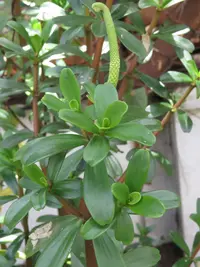
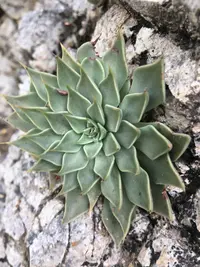
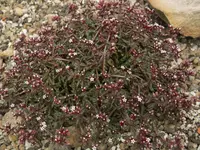
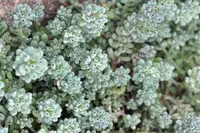
Davidson's stonecrop, Sedum niveum, is a small, mat-forming succulent native to rocky slopes and cliffs in parts of California and Baja California. It typically forms tight clusters of fleshy, bluish-green leaves often dusted with a pale, waxy coating.

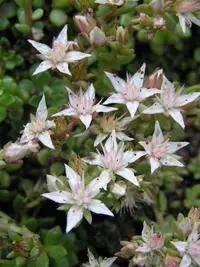
In spring to early summer it produces short flower stalks topped with starry white blooms, creating a bright contrast against the compact foliage. Its slow, low-growing habit makes it suitable for rock gardens, troughs, and shallow containers.

This species is adapted to bright light, sharp drainage, and low to moderate moisture, which helps explain how to care for Davidson's stonecrop successfully in cultivation.

Main Plant Requirements

Care Difficulty

Easy Care

Light Preference

Full Sun

Water Requirements

Low Water

Temperature Preference

Cold Hardy

Hardiness Zone

5–9

Soil Texture

Sandy, Loamy, Rocky

Soil pH

Slightly acidic (6.5–7.0), Neutral (7.0)

Soil Drainage

Well-drained

Fertilization

Minimal (feed rarely)

Get Personalized Care Plan

Scan your plant to receive care tips personalized for your specific plant

Available on iOS and Android

How to Care for the Davidson's stonecrop

Sedum niveum prefers bright, open conditions typical of high, rocky habitats with cool, strong light.

  • Provide 6–8 hours of full sun daily, with morning sun and light afternoon shade in very hot, low-altitude climates to prevent leaf scorch.
  • Davidson's stonecrop tolerates light partial shade (around 4–5 hours sun), but growth becomes looser and flowering may decrease.
  • In winter, full sun is ideal; in summer, monitor pale, stretched growth as a sign of insufficient light and brown, crispy leaf tips as a sign of excessive, reflected heat.

Sedum niveum needs infrequent, deep watering and dries quickly due to its succulent leaves.

  • Allow the top 3–5 cm of soil to dry completely before watering, then soak the root zone and let excess drain away quickly.
  • In spring and summer, watch the foliage: firm, plump leaves indicate enough moisture, while soft, yellowing, or translucent leaves suggest overwatering and possible rot.
  • During fall and winter, reduce watering sharply; shriveling leaves and slight wrinkling signal it is time to water again if the soil is dry and free-draining.

This mountain sedum prefers cool to moderate conditions but tolerates a fairly wide temperature range.

  • Aim for active growth in 55–75°F (13–24°C), where stems stay compact and leaves remain firm and colored.
  • Mature plants often survive brief drops to about 10–15°F (-12 to -9°C) if soil drains sharply and remains on the dry side in cold spells.
  • In hot periods above 90°F (32°C), provide afternoon shade and extra airflow, since prolonged extreme heat with high humidity can stress tissues and invite rot.

This species handles dry household air well, so humidity is rarely a concern for caring for Davidson's stonecrop.

Sedum niveum needs very lean, sharply drained soil to prevent root and crown rot.

  • Use a gritty, sandy mix such as 50–60% mineral material (coarse sand, fine gravel, pumice, or perlite) with the rest standard potting mix.
  • Aim for a slightly acidic to neutral pH around 6.0–7.0, avoiding strongly acidic or alkaline substrates.
  • Improve aeration by using large, coarse particles rather than peat-heavy mixes that compact and hold water.
  • Avoid clayey, poorly drained, or continuously moist soil, especially in cool weather, as this quickly damages roots and stems.

This compact alpine succulent is well suited to container growing outdoors.

  • Choose a wide, shallow pot that matches its shallow, spreading root system so the mix dries evenly between waterings.
  • Use a pot material such as unglazed terracotta if extra evaporation is needed in wetter or cooler climates.
  • Place the container where rain cannot pool around the base, ensuring excess water can escape and the pot does not sit in a saucer of runoff.

This drought-tolerant succulent needs only modest feeding, especially in lean, rocky soils where Davidson's stonecrop naturally grows.

  • Use a balanced, low-strength liquid fertilizer (for example 10-10-10) diluted to 25–50% during active growth in spring–early summer.
  • Apply every 4–6 weeks at most for container plants; in-ground plants in poor soil may need just 1 light feeding per year.
  • Slow-release granules or a thin layer of compost can be used sparingly, keeping fertilizer off stems and foliage.
  • Stop feeding in late summer and avoid fertilizing in fall and winter to prevent weak, cold-sensitive growth.

Sedum niveum needs only light pruning to stay compact and tidy.

  • Best timing is late winter to early spring before strong new growth starts.
  • Remove dead, damaged, or leggy stems with clean, sharp scissors or hand pruners.
  • Shear back spent flower stalks after blooming to keep rosettes visible and encourage denser growth.
  • Thin crowded clumps slightly to improve air flow and reduce risk of rot in wet conditions.

This small sedum prefers stable conditions and only infrequent repotting or transplanting.

  • Check containers every 2–3 years; repot when roots circle the pot, drainage slows, or growth declines despite good light.
  • Plan repotting or garden transplanting for spring, when temperatures are mild and new roots establish quickly.
  • Use a shallow, well-draining container or gritty bed with cactus/succulent mix to limit excess moisture around roots.
  • Handle the root ball gently, tease roots only lightly, and water sparingly for 1–2 weeks afterward to limit stress and rot.

This species is commonly propagated to expand low-growing mats or replace older clumps.

  • Take 3–6 in stem cuttings in late spring–summer, let cut ends callus 1–2 days, then place in barely moist gritty mix.
  • Divide mature clumps in spring, replanting firm rosettes at the same depth with well-draining soil.
  • Sow seeds on the surface of sandy mix in spring, keep bright and slightly moist until germination.
  • Provide bright, indirect light, good air movement, and minimal watering until new roots are well established.

This hardy succulent usually needs minimal winter care in temperate climates.

  • Established plants tolerate frost and light snow when grown in sharply drained soil.
  • In very cold or wet regions, add a thin gravel mulch around crowns to keep them drier in winter.
  • Move small containers under cover or indoors to a cold, bright spot if prolonged freezes or waterlogging are expected.

Care Tips

Rocky crevice planting

Tuck plants into shallow crevices between rocks or pavers so the roots stay cool and well-drained while the foliage forms tight, compact cushions instead of sprawling mats.

Grit mulch layer

Top-dress around the crowns with a 1–2 cm layer of fine gravel or poultry grit to keep foliage dry at the base, reduce rot, and highlight the white flowers visually.

Slight spring shearing

After flowering, lightly shear back spent stems by 1–2 cm to maintain a dense mound, encourage fresh growth, and prevent the center from thinning out over time.

Division for renewal

Every 3–4 years, lift and divide older clumps in early spring, replanting only the firm, non-woody outer sections to keep cushions vigorous and prevent die-out in the middle when growing Davidson's stonecrop.

Winter wet protection

In regions with cold, wet winters, place plants on a slight slope or raised berm so excess water drains away from the crowns and use a very thin gravel mulch instead of organic mulch to avoid crown rot.

Common Pests and Diseases

Aphids

This pest feeds on tender new growth and flower stems, sucking sap and causing distortion and sticky honeydew deposits on leaves and stems.

Solution

Rinse colonies off with a firm stream of water and remove heavily infested tips, then use insecticidal soap or a neem oil spray, ensuring full coverage of stems and leaf undersides; reduce excess nitrogen fertilization, which encourages soft, aphid-prone growth.

Mealybugs

These insects appear as small white cottony clusters in leaf axils or on stems, weakening the plant as they feed on sap.

Solution

Dab visible insects with cotton swabs dipped in 70% isopropyl alcohol and repeat weekly, then apply a light neem oil or insecticidal soap spray; isolate affected plants and avoid overfertilizing, which can favor mealybug buildup when growing Davidson's stonecrop in containers.

Spider mites

This pest thrives in hot, dry conditions and causes fine stippling, dull coloration, and delicate webbing on foliage, especially in container-grown plants.

Solution

Increase humidity around the plant slightly and hose down foliage to physically remove mites, then follow with insecticidal soap or a horticultural oil labeled for mites, repeating at 5–7 day intervals until new growth appears clean.

Powdery mildew

This disease shows as white to gray powdery patches on leaves and stems, most often when nights are cool and air circulation is poor.

Solution

Remove and discard affected leaves to reduce spore load, improve spacing and airflow, avoid overhead watering late in the day, and treat remaining foliage with a sulfur-based or potassium bicarbonate fungicide according to label directions.

Rust

This disease produces small yellow spots on the upper leaf surface and orange-brown pustules on the undersides, leading to premature leaf drop under prolonged moisture.

Solution

Prune and discard infected leaves, water at the soil level to keep foliage dry, and improve sun exposure and airflow; for persistent cases, use a registered ornamental fungicide labeled for rust, applied at the first signs of infection.

Interesting Facts

Sky Island specialist

This species is native to isolated high-elevation ranges in southern California and northern Baja California, often called sky islands, where it grows on exposed rocky slopes above roughly 1,500 m elevation.

White, waxy foliage

Its bluish-green leaves are covered with a fine, white, waxy bloom (epicuticular wax) that reflects intense mountain sunlight and reduces water loss in its dry, open habitats.

Cold-tolerant desert succulent

Unlike many lowland succulents, this plant routinely experiences freezing nights in its native range, showing an adaptation to both arid conditions and substantial temperature swings in montane desert climates.

FAQs about Davidson's stonecrop

Lack of blooms usually comes from insufficient light, excess shade from taller plants, or overly rich, moist soil. Improve sun exposure, keep soil lean and well-drained, and avoid high-nitrogen fertilizers to support flower formation.

Grow Healthy Plants with Botan Care

Keep your plants happy and healthy with plant identification, disease detection, and easy care guidance.

Botan plant care app — identify plants on mobile

Explore More Plants