Big Fataloe Care (Tulista pumila)

Big Fataloe

About Big Fataloe

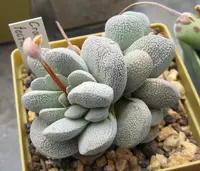
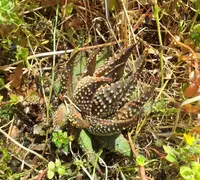
Big Fataloe, botanically known as Tulista pumila, is a compact, slow-growing succulent from South Africa. It forms tight rosettes of thick, pointed leaves covered with firm white tubercles, giving a patterned, textured look.

This species stays relatively small and usually grows as a single rosette or a small clump, which suits windowsills and desks. Its sturdy leaves and drought tolerance make it forgiving for indoor growers as long as it is not overwatered.

Tulista pumila prefers bright, indirect light, sparse watering, and a very free-draining, gritty soil mix. Once basic needs are understood, it is straightforward to care for Big Fataloe.

Main Plant Requirements

Care Difficulty

Easy Care

Light Preference

Bright Indirect Light

Water Requirements

Low Water

Temperature Preference

Tropical / Frost Sensitive

Hardiness Zone

10–11

Soil Texture

Sandy, Loamy, Rocky

Soil pH

Slightly acidic (6.5–7.0), Neutral (7.0)

Soil Drainage

Well-drained

Fertilization

Minimal (feed rarely)

Get Personalized Care Plan

Scan your plant to receive care tips personalized for your specific plant

Available on iOS and Android

How to Care for the Big Fataloe

Tulista pumila prefers bright, indirect light and adapts well to many home and garden situations.

  • Provide 4–6 hours of bright, filtered light daily, such as an east window or morning sun with light afternoon shade for Big Fataloe.
  • Tolerates partial shade, but in very low light growth becomes slow, leaves elongate, and markings fade, especially in winter at higher latitudes.
  • Avoid harsh midday summer sun, which can cause leaf scorch and hard, brown patches; acclimate gradually when moving outdoors in spring.

This succulent stores moisture in its leaves and needs infrequent, careful watering.

  • Water only when the top 2–4 cm of soil feel completely dry, then soak thoroughly and let all excess drain away.
  • In spring and summer, expect to water more often during active growth; in fall and winter, extend the dry period and water sparingly.
  • Watch for overwatering signs such as soft, yellowing, or translucent leaves and a sour soil smell in Tulista pumila, and improve drainage if seen.

This species prefers moderate, stable temperatures and does poorly in frost or extreme heat.

  • Aim for 65–80°F (18–27°C) for best growth, keeping it away from sudden temperature swings and cold drafts.
  • Protect from frost; sustained exposure below 32°F (0°C) can damage tissue, and prolonged periods under 40°F (4°C) may cause stress.
  • In hot spells above 90°F (32°C), give bright shade, good air movement, and avoid reflected heat from concrete or metal surfaces.

This succulent handles typical indoor humidity well, so humidity is usually not a critical factor.

  • Aim for 30–50% humidity, similar to most heated or air-conditioned homes.
  • It tolerates dry air, but very drafty heating vents can cause leaf tips to dry and brown.
  • If air is extremely dry, place the pot on a pebble tray with water below the pot base to slightly raise local humidity.

This species needs a very fast-draining, gritty mix that dries quickly between waterings.

  • Use a cactus/succulent mix amended with extra mineral grit, such as coarse sand, pumice, or perlite, for a loose structure.
  • Keep organic matter low to moderate; excess peat or compost holds too much water and increases rot risk.
  • Aim for slightly acidic to neutral pH, around 6.0–7.0, which suits Tulista pumila root function well.
  • Avoid dense, fine-textured garden soil or pots that stay wet longer than 2–3 days after watering.

This compact succulent is very suitable for container growing.

  • Choose a pot that is only slightly wider than the root ball to prevent large volumes of unused, wet mix around the roots.
  • Select unglazed terracotta if moisture needs to evaporate faster in cooler or dimmer locations.
  • Ensure the container is heavy or low and broad enough that the clustered rosettes of Big Fataloe do not become unstable and tip over.

Tulista pumila is a slow-growing succulent that benefits from light, controlled feeding in active growth.

  • Use a dilute balanced liquid fertilizer, such as 10-10-10 or 20-20-20 at 1/4–1/2 strength, during spring and summer.
  • Feed every 4–6 weeks while growth is visible; skip feeding if soil stays cold and wet.
  • Avoid organic compost mixes that stay heavy and damp, which increase rot risk for Big Fataloe.
  • Stop fertilizing in fall and winter, when growth slows, to prevent weak, elongated leaves.

Tulista pumila needs minimal pruning, mainly to maintain cleanliness and healthy rosette structure.

  • Best time to prune is late spring to early summer, when the plant is actively growing.
  • Remove dead, dried, or damaged leaves at the base using clean, sharp scissors or pruners.
  • Gently twist or cut away shriveled outer leaves to improve airflow and reduce rot risk.
  • Trim only spent flower stalks at the base to tidy the plant without altering its compact form.

This compact succulent prefers to stay slightly root-bound and only needs infrequent repotting.

  • Repot every 3–4 years, or when roots circle the pot or growth slows despite good light.
  • Choose late spring as the best time to shift Tulista pumila into a slightly larger pot with gritty, fast-draining mix.
  • Gently loosen circling roots and remove old, compacted soil, taking care not to break the thick roots.
  • After repotting, keep the plant dry for 3–5 days, then water lightly to reduce transplant stress and rot risk.

Tulista pumila is most often propagated by offsets, with seeds used mainly by specialists.

  • Detach offsets in late spring or early summer once they have their own root nubs.
  • Use a clean knife to separate pups, then let cut surfaces dry for 2–3 days before potting.
  • Plant in a gritty, well-draining succulent mix and keep slightly dry until new roots form.
  • Seed propagation requires warm temperatures, bright indirect light, and very coarse, sterile substrate.

This succulent dislikes hard frost and needs simple winter precautions in colder climates.

  • Keep temperatures above 40°F; prolonged freezing damages leaves and roots.
  • Move container plants indoors or into a bright, frost-free greenhouse before night frosts.
  • Water very sparingly in winter, allowing soil to dry fully between light waterings.
  • Avoid cold drafts and damp, dark spots to prevent rot during the low-light season.

Care Tips

Deep pot choice

Use a heavy, deep pot with wide drainage holes so the contractile roots have room to pull the rosette down while the plant stays stable and does not tip over as it matures.

Grit top-dressing

Add a 0.5–1 in layer of coarse grit or small gravel on the soil surface to keep the leaf bases dry, reduce fungus gnat breeding, and make spotting mealybugs at the crown easier.

Controlled offset removal

Detach offsets only when they have several roots of their own, then let the cut base callus for 3–5 days before potting, which greatly improves establishment and reduces rot risk.

Targeted pest checks

Inspect the tight leaf rosette and underside of lower leaves every 2–4 weeks with a hand lens, since mealybugs and scale often hide deep between tubercles where casual checks miss them.

Cool-season adjustment

In late fall and winter, give slightly cooler, brighter conditions and keep the plant on the drier side, which better matches its natural growth rhythm and supports long-term success when growing Big Fataloe.

Common Pests and Diseases

Aloe mite

This pest causes small, hard, distorted growths or tumor-like galls on leaves and at the leaf bases. Symptoms include clustered deformities that do not wipe off and slowly spread over time.

Solution

Immediately remove and discard all affected rosettes or leaves, cutting well into healthy tissue and disposing of waste in the trash, not compost. Isolate the plant, keep it in good light with low humidity, and use a miticide labeled for eriophyid mites if nearby aloes or other Tulista are present to limit further spread.

Aloe rust

This disease produces round orange-brown to black pustules or spots on the leaves, often more visible on the underside. Symptoms include dry, sunken lesions that may merge and weaken the plant if conditions stay humid.

Solution

Remove affected leaves or cut away heavily spotted sections, improving air circulation and keeping foliage dry, especially at night. Reduce overhead watering, space plants so leaves do not touch, and if the problem persists apply a sulfur- or copper-based fungicide labeled for ornamental succulents.

Mealybugs

These insects form white, cottony clusters in leaf axils, at the base of rosettes, and sometimes on the roots. Symptoms include sticky honeydew, distorted new growth, and slow decline of the plant.

Solution

Physically remove visible clusters with a cotton swab dipped in 70% isopropyl alcohol, and rinse the plant gently to dislodge hidden insects. For persistent infestations, treat the plant and soil with a systemic insecticide suitable for succulents and isolate the plant until no new mealybugs appear.

Aphids

These insects gather on young leaves and flower stalks, sucking sap and causing curling, yellowing, or stunted new growth. Symptoms include sticky honeydew and sometimes sooty mold developing on the leaf surface.

Solution

Spray the plant with a firm stream of water to knock off colonies, then treat tender areas with insecticidal soap or a light horticultural oil, ensuring full coverage of undersides and tight leaf areas. Repeat treatments every 5–7 days until no aphids remain and avoid excessive nitrogen fertilization, which encourages soft, aphid-prone growth.

Leaf spot

This disease causes small water-soaked marks that turn brown or gray, sometimes with a dark margin, on older leaves. Symptoms include localized lesions that can slowly expand under prolonged moisture and poor airflow.

Solution

Remove leaves with extensive spotting and allow the plant to dry between waterings, keeping moisture away from the rosette center. Improve ventilation, avoid crowding pots, and if spotting continues, use a broad-spectrum fungicide suitable for succulents as part of Tulista pumila care in humid conditions.

Interesting Facts

Former Haworthia species

This species was long known as Haworthia pumila but was reassigned to the genus Tulista after molecular and morphological studies showed it forms a distinct evolutionary lineage separate from true Haworthia.

Warty leaf armor

Its thick leaves are covered in hard, raised white tubercles that function like armor, helping to limit water loss and offering physical protection against abrasive sand and herbivores in its native South African habitat.

Winter rainfall specialist

Tulista pumila is adapted to the Western Cape’s winter-rainfall climate, growing mainly in the cooler, wetter months and slowing down during the hot, dry summer period when water is scarce.

Botan icon

Did you know?

Some wild populations of Tulista pumila form dense, long-lived clumps that can persist for many decades in the same rocky microsite, slowly enlarging as individual rosettes offset and pack together without spreading far from the original plant.

FAQs about Big Fataloe

Brown leaf tips or patches usually result from overwatering, salt buildup from fertilizer, or sun scorch. Check roots for rot, flush the potting mix occasionally, reduce fertilizer, and adjust light exposure to bright but indirect conditions.

Grow Healthy Plants with Botan Care

Keep your plants happy and healthy with plant identification, disease detection, and easy care guidance.

Botan plant care app — identify plants on mobile

Explore More Plants