widowscross Care (Sedum pulchellum)

widowscross

About widowscross

Widowscross (Sedum pulchellum) is a small, low-growing succulent native to rocky glades and thin, well-drained soils in parts of the central and southeastern United States. It often forms loose mats or small clumps, with fleshy, cylindrical leaves and airy clusters of star-shaped pink to pale rose flowers in late spring.

This species behaves as a short-lived perennial or biennial, often reseeding itself where conditions suit it. Its drought tolerance and modest nutrient needs make it relatively easy to grow in shallow, poor soils and rock gardens.

Sedum pulchellum prefers bright light, lean, sharply drained soil, and infrequent watering, which shapes how to care for widowscross in home landscapes or containers.

Main Plant Requirements

Care Difficulty

Easy Care

Light Preference

Full Sun

Water Requirements

Low Water

Temperature Preference

Cold Hardy

Hardiness Zone

5–9

Soil Texture

Sandy, Loamy, Rocky

Soil pH

Slightly acidic (6.5–7.0), Neutral (7.0)

Soil Drainage

Well-drained

Fertilization

Minimal (feed rarely)

Get Personalized Care Plan

Scan your plant to receive care tips personalized for your specific plant

Available on iOS and Android

How to Care for the widowscross

Sedum pulchellum thrives in bright, direct sun but tolerates some light shade, especially in hotter regions.

  • Provide 6–8 hours of direct sun daily; morning sun with light afternoon shade suits widowscross in warm climates.
  • In hot, exposed sites, protect from intense afternoon sun to prevent leaf scorch and excessive drying of shallow roots.
  • In cooler seasons, allow more direct sun to maintain compact growth and strong color; too much shade causes stretched, weak stems.

This shallow-rooted succulent prefers infrequent, light watering and very fast-draining soil.

  • Water only when the top 3–5 cm of soil are completely dry; in typical outdoor beds this may mean long gaps between waterings.
  • Use gritty, sharply draining soil or a rocky slope so water does not pool around the roots, which leads to rot and a sour smell.
  • Reduce or stop watering in cool or dormant periods; wrinkling, soft leaves suggest underwatering, while mushy, translucent leaves indicate overwatering in Sedum pulchellum.

This plant is adapted to seasonal temperature swings but grows best within a moderate range during its active period.

  • Active growth is strongest around 65–80°F (18–27°C); flowering is reliable when spring days stay in this range.
  • Established plants tolerate winter cold near 0°F (−18°C) in well-drained soil, but repeated freeze–thaw in wet sites increases crown damage.
  • In summer heat above 90°F (32°C), growth may pause; provide full soil drainage and avoid reflected heat from walls or rock to limit stress.

Sedum pulchellum handles a wide humidity range and rarely needs special humidity management.

  • Target 30–50% humidity, similar to most indoor and outdoor conditions in homes and gardens.
  • This widowscross tolerates dry air well and usually shows stress only when combined with heat and prolonged drought.
  • If foliage shrivels or tips crisp despite adequate watering, briefly group pots together or place near a pebble tray to slightly raise local humidity.

Sedum pulchellum prefers very well-drained, mineral-lean soil that dries quickly between waterings.

  • Use a sandy or gritty mix, such as 50–60% cactus mix blended with coarse sand or small gravel, to support its shallow roots.
  • Aim for slightly acidic to neutral pH around 6.0–7.0, which supports nutrient uptake without encouraging excess growth.
  • Improve aeration by adding perlite or pumice, especially in heavy bagged mixes that tend to compact over time.
  • Avoid dense clay, peat-heavy, or water-retentive mixes, which trap moisture around the roots and increase rot risk.

This species is well-suited to containers, especially shallow pots and troughs.

  • Choose a wide, shallow pot that matches the plant’s spreading habit and prevents overcrowded, heat-stressed roots in deeper soil columns.
  • Use unglazed terracotta or similarly porous materials to speed evaporation when using a gritty, succulent-style mix.
  • Elevate the container or use pot feet so drainage holes clear surfaces and excess water escapes quickly after rain or irrigation.

Sedum pulchellum is adapted to lean soils and needs only light feeding in cultivation.

  • Use a low-rate balanced fertilizer (such as 10-10-10) at half strength once in early to mid spring to support new growth.
  • Alternatively, top-dress with a thin layer of compost, keeping it off the stems and rosettes of widowscross.
  • Avoid feeding in late fall and winter, when growth is minimal or dormant.
  • Do not overapply nutrients, which can cause soft, leggy growth and reduce drought tolerance.

Sedum pulchellum benefits from light, periodic pruning to keep clumps compact and tidy.

  • Best time is after flowering in late spring or early summer, once seed display is no longer desired.
  • Shear or pinch back spent flower stalks and any leggy or flopping stems to encourage a denser mound.
  • Remove dead, damaged, or disease-affected material with clean, sharp scissors or pruning snips.
  • Avoid cutting into very woody bases; focus on soft, current-season growth for shaping.

This species is more often transplanted in the garden than repotted, since it thrives in poor, well-drained soil.

  • Transplant in early spring or early fall, when temperatures are mild and soil is workable.
  • Move plants only when clumps outgrow their space, decline in vigor, or show crowded, shading neighbors.
  • Lift the clump carefully, keeping roots intact, and replant at the same depth in gritty, free-draining soil.
  • Water lightly after transplanting, then allow soil to dry between waterings to limit root stress and rot.

Sedum pulchellum is commonly propagated to expand groundcover patches or refresh older clumps.

  • Divide established clumps in early spring, replanting small sections with healthy roots into well-drained soil.
  • Take short stem cuttings in late spring, let cut ends callus 1–2 days, then place on or in barely moist, gritty mix.
  • Sow fresh seeds on the surface of a sandy substrate in fall or early spring, keeping lightly moist until germination.
  • Provide bright light, good air circulation, and avoid overwatering to support quick rooting and establishment.

This cold-hardy perennial needs minimal winter care in most temperate climates.

  • Dormant foliage naturally dies back after hard frost; remove mushy or flattened stems in late winter if desired.
  • In colder zones, apply a light, dry mulch around the root zone to moderate freeze–thaw cycles.
  • Container plants in very cold or wet regions can be moved to a sheltered, unheated area with bright light and fast drainage.

Care Tips

Encourage Dense Mats

Lightly pinch back the longest stems after flowering to encourage branching and create a tighter, more uniform groundcover instead of a few sprawling stems.

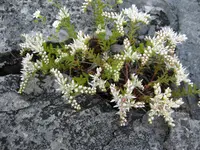
Controlled Self‑Seeding

After blooms fade, leave some seed heads on the plant for 2–3 weeks, then collect and sprinkle seed in nearby gravelly spots to slowly expand the colony without letting it take over unwanted areas.

Prevent Winter Rot

In cold, wet climates, top-dress around plants in late fall with a thin layer of coarse grit or small gravel to keep crowns dry and reduce freeze–thaw damage.

Rock Crevice Placement

Tuck small divisions into narrow rock crevices or between stepping stones where roots stay cool but drainage is rapid, which helps stabilize shallow soils and supports long-lived clumps.

Low‑Input Companioning

Combine this plant only with other shallow-rooted, drought-adapted species so heavier feeders do not outcompete it, which simplifies caring for widowscross in mixed plantings.

Common Pests and Diseases

Mealybugs

This pest feeds on succulent leaves and stems, leaving cottony white clusters in leaf crevices and at stem joints. Symptoms include stunted growth and sticky honeydew that can attract sooty mold.

Solution

Remove small colonies with a cotton swab dipped in 70% isopropyl alcohol, then rinse the plant gently with water and let it dry in bright, airy conditions. For larger infestations, repeat alcohol swabs weekly and use an insecticidal soap labeled for succulents, making sure the soil dries well between waterings to discourage reinfestation.

Aphids

These insects cluster on soft new growth and flower stalks, sucking sap and causing distortion, yellowing, and reduced flowering. Sticky honeydew may appear on nearby surfaces and can support fungal growth.

Solution

Spray the plant with a firm stream of water to knock aphids off, then treat remaining insects with insecticidal soap or a dilute neem oil spray, applied in the early morning or evening. Encourage natural predators outdoors by avoiding broad-spectrum insecticides and keeping the planting area diverse and chemical-light.

Scale insects

This pest appears as small, hard, brown or tan bumps along stems and leaf bases and does not move when disturbed. Symptoms include general decline, yellowing, and reduced vigor due to sap loss.

Solution

Gently scrape or peel off visible scale with a fingernail or soft brush, then dab remaining insects with 70% isopropyl alcohol. Follow up with 2–3 applications of insecticidal soap or horticultural oil at 7–10 day intervals, and avoid overfertilizing, which can promote soft, scale-susceptible growth.

Powdery mildew

This disease forms white to gray, powdery patches on leaves and stems, often during warm days and cool, humid nights. Symptoms include dull or distorted foliage and reduced vigor, especially where plants are crowded or shaded.

Solution

Increase sun exposure to the recommended level for Sedum pulchellum and space plants for good airflow, avoiding overhead watering late in the day. Remove and discard heavily affected stems and, if needed, apply a sulfur or potassium bicarbonate fungicide labeled for ornamentals, following label directions and keeping foliage as dry as possible.

Stem and crown rot

This disease causes lower stems and the plant crown to become soft, brown, and water-soaked, often starting where water or wet soil pools around the base. Symptoms include rapid collapse of sections of the mat, especially in poorly drained or overwatered sites.

Solution

Remove and discard all affected plant material and improve drainage by raising the planting area, using a gritty, fast-draining mix, and avoiding thick organic mulches against the stems. Allow the soil to dry thoroughly between waterings, and reestablish healthy plants from clean cuttings or offsets placed in well-drained, low-organic soil to support long-term Sedum pulchellum care.

Interesting Facts

Seasonal spring ephemeral

This species behaves as a spring ephemeral in much of its range, completing most of its growth and flowering in late spring and then often dying back or disappearing as summer heat intensifies.

Limestone glade specialist

It naturally occurs on thin, rocky soils over limestone and dolomite in glades and open outcrops, where many other plants struggle to survive due to drought and low nutrient availability.

Star-shaped pink blooms

The plant forms low, tufted mats of succulent foliage that send up wiry stems topped with clusters of small, star-shaped pink to rose flowers that are important early-season nectar sources for native bees and other pollinators.

Botan icon

Did you know?

This species is considered an annual or short-lived perennial in the wild, relying heavily on a persistent soil seed bank and frequent reseeding to maintain populations in its naturally harsh, shallow-soil habitats.

FAQs about widowscross

This species forms low, patchy mats but usually spreads slowly and stays fairly contained. It can self-seed in suitable, open, rocky soil, yet is not typically considered aggressive or difficult to control in home gardens.

Grow Healthy Plants with Botan Care

Keep your plants happy and healthy with plant identification, disease detection, and easy care guidance.

Botan plant care app — identify plants on mobile

Explore More Plants