Summer dormancy handling
During hot mid-summer, reduce disturbance and avoid repotting or taking cuttings, as the plant often goes semi-dormant and any major work is better scheduled for cooler active-growth periods in spring or early fall.

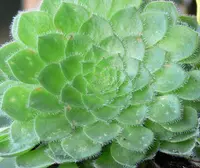
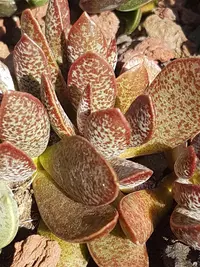
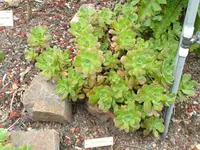
The saucer plant, Aeonium tabulaeforme, is a compact succulent forming a flat, tight rosette that looks almost like a green, living plate. Its leaves overlap in neat, geometric patterns, creating a low-growing, symmetrical form.
This species is native to the Canary Islands, where it grows in rocky, well-drained sites with mild, dry conditions. Its slow growth, drought tolerance, and minimal branching make it relatively straightforward for those learning how to care for saucer plant.
It prefers bright, indirect light, infrequent but thorough watering, and gritty soil that dries out between waterings, which suits many indoor and mild-climate outdoor settings.

Care Difficulty
Moderate Care

Light Preference
Partial Sun

Water Requirements
Low Water

Temperature Preference
Tropical / Frost Sensitive

Hardiness Zone
9–11

Soil Texture
Sandy, Loamy, Rocky

Soil pH
Slightly acidic (6.5–7.0), Neutral (7.0)

Soil Drainage
Well-drained

Fertilization
Minimal (feed rarely)
Scan your plant to receive care tips personalized for your specific plant
Available on iOS and Android
This compact rosette succulent prefers bright, gentle light that mimics coastal Mediterranean conditions.
This succulent stores water in its leaves and needs infrequent, careful watering to prevent rot.
This species prefers mild, frost-free conditions with cool nights and moderate daytime warmth.
Humidity is rarely a limiting factor for Aeonium tabulaeforme, which prefers dry to moderately dry air.
Aeonium tabulaeforme needs a sharply draining, mineral-rich substrate to prevent root and stem rot.
This species is well suited to container growing when drainage and root space are managed carefully.
Aeonium tabulaeforme benefits from modest feeding during its active growing season but is sensitive to excess salts.
Aeonium tabulaeforme needs only light, targeted pruning to stay neat and healthy.
This shallow-rooted succulent grows slowly and needs infrequent repotting or transplanting.
Aeonium tabulaeforme is most often propagated from stem or rosette cuttings rather than seed.
This succulent is frost-tender and needs protection in climates with freezing winters.

Plant Health Check
Not sure what's wrong with your plant? Check your plant's health inside the app.
This species forms almost perfectly flat, circular rosettes whose leaves are arranged in a clear Fibonacci-like spiral, making it a textbook example used in studies of phyllotaxis, the pattern of leaf arrangement in plants.
In the wild it grows on north-facing cliffs and rocky ledges in the Canary Islands, where it benefits from cool air, sea mists, and rapid drainage rather than hot, exposed slopes.
Unlike many common succulents, it is primarily active in the cool, moist winter months and often slows down or partially rests in summer, reflecting the mild, maritime climate of its native habitat.

This species has been cultivated in European gardens since at least the 18th–19th century and has long been valued by botanical collectors as one of the most geometrically precise rosette succulents known, often featured in historic alpine and rock garden designs as a living example of natural mathematical patterning.
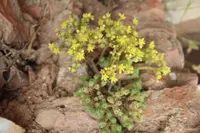
This species usually needs to reach several years of age and form a full, mature rosette before flowering. It also responds to seasonal cues such as day length and mild winter chill, so indoor plants may rarely bloom.
Keep your plants happy and healthy with plant identification, disease detection, and easy care guidance.