


Deep pot choice
Use a deep, heavy clay pot to accommodate the long taproot and prevent the plant from tipping over as the body enlarges over time.

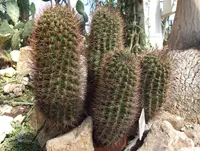
Eriosyce curvispina is a small, slow-growing cactus native to the arid regions of central Chile. It typically forms a single rounded stem covered with pronounced ribs and dense, curved spines. In maturity it produces showy funnel-shaped flowers, often in warm yellow to reddish tones, that emerge from the crown. This compact growth habit makes it suitable for containers and small spaces. Its natural habitat on rocky, well-drained slopes means it dislikes excess water and needs strong light and gritty soil. These traits make it robust once established, but beginners should learn how to care for Eriosyce curvispina to avoid overwatering and low-light problems.

Care Difficulty
Moderate Care

Light Preference
Full Sun

Water Requirements
Low Water

Temperature Preference
Warm Climate

Hardiness Zone
9–11

Soil Texture
Sandy, Rocky, Loamy

Soil pH
Slightly acidic (6.5–7.0), Neutral (7.0)

Soil Drainage
Well-drained

Fertilization
Minimal (feed rarely)
Scan your plant to receive care tips personalized for your specific plant
Available on iOS and Android
This cactus prefers bright, prolonged sun but benefits from some protection during the hottest hours.
Watering should mimic an arid, seasonal climate with thorough but infrequent soakings.
This species favors warm, dry air and pronounced seasonal temperature changes without hard frost.
This cactus handles dry air easily and rarely needs humidity adjustment indoors.
This species needs a very fast-draining, mineral-based substrate to avoid root rot.
This species is well suited to container growing when drainage and root-zone drying are tightly controlled.
This cactus needs only light feeding, as Eriosyce curvispina is adapted to nutrient-poor soils.
Pruning needs are minimal and focus on keeping the plant healthy rather than shaping Eriosyce curvispina.
This species prefers tight pots and infrequent disturbance, so repot only when clearly needed.
Propagation of Eriosyce curvispina is typically done from seed and requires patience and careful conditions.
Winter care is important, as this cactus is not reliably hardy in prolonged freezing conditions.

Plant Health Check
Not sure what's wrong with your plant? Check your plant's health inside the app.
This species is well known for its highly variable spines, which can be straight, curved, or hooked even within the same population, making it difficult for botanists to delimit subspecies and local forms with confidence.
Natural populations often grow in the coastal and pre-Andean zones of central Chile, where the plant benefits from camanchaca, a persistent Pacific fog that supplements scarce rainfall and reduces water loss.
In habitat it frequently anchors itself in rock crevices or between stones, where accumulated grit and slow-draining mineral soils protect the taproot from rot and buffer temperature extremes.

Field studies in central Chile have documented that this species can withstand full sun exposure on north-facing rocky slopes where summer soil temperatures and drought stress are high, indicating a strong evolutionary tolerance to thermal and water stress compared with many other sympatric cacti.
This cactus usually flowers in late spring to summer, once mature. Blooms open during warm, bright days and may last a few days to about a week, depending on temperature, light, and plant vigor.
Keep your plants happy and healthy with plant identification, disease detection, and easy care guidance.

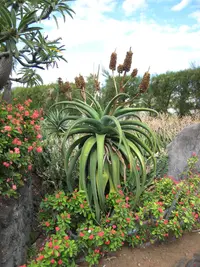
Malagasy Tree Aloe
Aloe vaombe
Old Lady Cactus
Mammillaria hahniana
 POPULAR
Cathedral Window Haworthia
Haworthia cymbiformis
 POPULAR
Splitrock Quaggafig
Pleiospilos nelii

Acanthocalycium spiniflorum
Acanthocalycium spiniflorum
 POPULAR
Burro's-tail
Sedum morganianum
Schlumbergera × buckleyi
Schlumbergera × buckleyi

Acanthocalycium leucanthum
Acanthocalycium leucanthum