Rock crevice planting
Tuck the plant into shallow rock crevices or between stacked stones so roots stay cool and well-drained while rosettes receive maximum light and airflow.

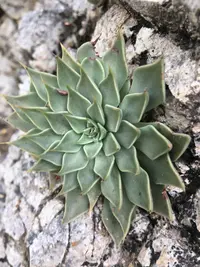
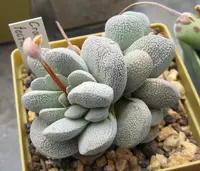
San Francisco River leatherpetal (Graptopetalum rusbyi) is a small, rosette-forming succulent native to rocky slopes and cliffs of the American Southwest. It often grows in tight clusters, with fleshy, pointed leaves that range from gray-green to pinkish tones depending on sun exposure.
This species has a compact, low-growing habit and produces star-shaped flowers on slender stalks, adding interest above the leaf rosettes. Graptopetalum rusbyi adapts well to containers and rock gardens due to its drought tolerance and slow to moderate growth.
Its ease of care depends mainly on avoiding overwatering and providing strong light with sharply draining soil. For those learning how to care for San Francisco River leatherpetal, understanding its desert origin is the key to keeping it healthy.

Care Difficulty
Easy Care

Light Preference
Full Sun

Water Requirements
Low Water

Temperature Preference
Warm Climate

Hardiness Zone
8–11

Soil Texture
Sandy, Loamy, Rocky

Soil pH
Slightly acidic (6.5–7.0), Neutral (7.0)

Soil Drainage
Well-drained

Fertilization
Minimal (feed rarely)
Scan your plant to receive care tips personalized for your specific plant
Available on iOS and Android
Graptopetalum rusbyi thrives in bright, direct light that mimics its native rocky habitat.
Watering for Graptopetalum rusbyi should follow a thorough soak and dry cycle suited to a drought-tolerant succulent.
This species prefers warm, dry conditions with cool, but not severe, winters.
This succulent prefers dry air and does not require special humidity management.
Use a very fast-draining, mineral-rich mix to prevent root rot.
This species is well suited to container growing when drainage and stability are controlled.
This drought-adapted succulent needs modest feeding in containers; in the ground, San Francisco River leatherpetal often manages with nutrient-poor soil.
Light pruning keeps Graptopetalum rusbyi compact and tidy without affecting its overall vigor.
Container-grown plants benefit from repotting only when clearly rootbound or the soil has broken down.
This species responds well to several simple propagation methods for expanding a collection or renewing older plants.
This succulent tolerates light frost when dry but benefits from simple winter precautions, especially in containers.

Plant Health Check
Not sure what's wrong with your plant? Check your plant's health inside the app.
This species naturally grows on steep cliffs and rocky outcrops in the southwestern United States, anchoring its roots in narrow rock crevices where soil is very shallow. Its compact rosettes and low profile help reduce water loss and protect it from strong winds at exposed sites.
Unlike many subtropical succulents, this plant tolerates relatively low temperatures and can survive brief light frosts in its native habitat. Its thick leaves store water and dissolved solutes, which help buffer cells against cold and drought stress.
In habitat, the inflorescences often hang or arch down over rock faces, displaying star-shaped flowers to pollinators flying along cliffs. The flowers are typically pale with darker spots, which act as nectar guides that help direct visiting insects toward the reproductive parts.
This species forms small rosettes that slowly cluster over time, but it is not aggressive. It stays low and contained, making it suitable for rock gardens, troughs, and tight spaces without overrunning neighbors.
Keep your plants happy and healthy with plant identification, disease detection, and easy care guidance.