Early trellis training
Install a sturdy trellis or netting before vines reach 20–30 cm, then gently weave young shoots through the support weekly to prevent tangling and to keep fruits hanging clean and well-shaped.

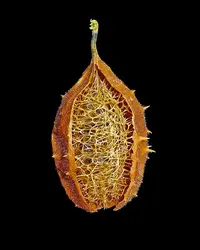
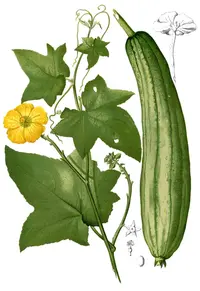
Luffa operculata is a fast-growing climbing vine in the cucumber family, known for its small, ridged, egg-shaped fruits that dry into a fibrous sponge-like structure. It is native to South and Central America but is now cultivated in warm regions worldwide, mainly for traditional uses and as a botanical curiosity.
The plant has tendrils that help it climb supports, and yellow flowers that develop into lightweight fruits with many seeds. It is generally considered more demanding than common garden vegetables, as it needs warmth, a long growing season, and stable moisture. Understanding how to care for luffa starts with providing sun, good air movement, and well-drained soil that does not stay waterlogged.

Care Difficulty
Moderate Care

Light Preference
Full Sun

Water Requirements
Regular Water

Temperature Preference
Tropical / Frost Sensitive

Hardiness Zone
10–12

Soil Texture
Sandy, Loamy, Organic-rich

Soil pH
Acidic (5.5–6.5), Slightly acidic (6.5–7.0)

Soil Drainage
Moist but well-drained

Fertilization
Moderate (every 2–4 weeks)
Scan your plant to receive care tips personalized for your specific plant
Available on iOS and Android
This vining crop needs strong, consistent light to flower and set usable fruits.
This plant prefers evenly moist, well-drained soil that never stays soggy for long periods.
This warm-season vine grows best in stable, frost-free conditions from late spring through summer.
This species tolerates a wide humidity range, so humidity management is rarely critical.
Luffa operculata prefers loose, well-drained, nutrient-rich soil that supports fast root growth and prevents waterlogging.
This vining species can be grown in large containers if given enough root volume and structural support.
Nutrient support helps Luffa operculata produce vigorous vines and full-sized fruits.
Thoughtful pruning keeps Luffa operculata manageable and improves light penetration and airflow.
This fast-growing vine is usually transplanted outdoors rather than maintained long term in containers.
New Luffa operculata plants are most reliably produced from seed.
This warm-season annual vine has poor frost tolerance and usually completes its life cycle before winter.

Plant Health Check
Not sure what's wrong with your plant? Check your plant's health inside the app.
The dry capsule fruit opens by a small lid-like cap at the apex, a septicidal dehiscence pattern that gives the species its name operculata, meaning with a little lid.
Inside the mature fruit is a dense, fibrous vascular network that forms a coarse, three-dimensional sponge, structurally similar to other luffa species but much smaller and more compact.
This species is native to parts of South America, where it grows as a twining annual vine in warm, frost-free habitats along disturbed sites, fences, and shrub edges.

Historically, the dried fruits of this species have been used in parts of South America as small, abrasive cleaning sponges, taking advantage of the tough internal fiber skeleton that remains after the soft tissues decay or are removed.
This species is a vigorous climbing vine that anchors itself using tendrils. It naturally grows upward and across structures rather than forming a ground-hugging mat, so it is best guided onto trellises, fences, or sturdy supports.
Keep your plants happy and healthy with plant identification, disease detection, and easy care guidance.