morning-glory begonia Care (Begonia convolvulacea)

morning-glory begonia

About morning-glory begonia

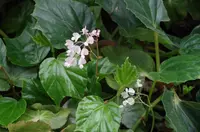
Morning-glory begonia, Begonia convolvulacea, is a climbing or trailing begonia with slender, twining stems and heart-shaped leaves that give a soft, cascading look. It is grown mainly as an ornamental foliage plant rather than for flowers.

In the wild, it comes from tropical regions of South America, where it scrambles through shrubs and small trees in warm, humid forests. This vining habit makes it suitable for hanging baskets, tall pots, or training on a small trellis indoors.

The plant tends to be moderately demanding, as it dislikes cold, dry air, and irregular watering. It usually prefers bright, filtered light, lightly moist but well-drained soil, and steady indoor conditions, which guides how to care for morning-glory begonia.

Main Plant Requirements

Care Difficulty

Moderate Care

Light Preference

Partial Shade

Water Requirements

Moderate Water

Temperature Preference

Tropical / Frost Sensitive

Hardiness Zone

11–12

Soil Texture

Loamy, Peaty, Organic-rich

Soil pH

Acidic (5.5–6.5), Slightly acidic (6.5–7.0)

Soil Drainage

Moist but well-drained

Fertilization

Light (every 4–6 weeks)

Get Personalized Care Plan

Scan your plant to receive care tips personalized for your specific plant

Available on iOS and Android

How to Care for the morning-glory begonia

This vining species prefers bright, gentle light similar to an open forest edge.

  • Provide 3–5 hours of soft morning sun with bright, filtered light the rest of the day; avoid harsh midday and late-afternoon sun that can scorch leaves.
  • Tolerates partial shade, but in very low light stems stretch, leaves shrink, and flowering in morning-glory begonia is reduced.
  • In summer, use dappled shade under taller plants or a sheer screen; in winter, shift to a brighter exposure to compensate for weaker sun.

This species prefers evenly moist but never waterlogged soil.

  • Water when the top 2–3 cm of soil feel dry, using a finger test rather than a fixed schedule, and soak thoroughly so moisture reaches the root zone.
  • Ensure sharply draining soil and open drainage holes; persistent wetness, yellowing, and limp, mushy stems suggest overwatering and possible root rot.
  • In spring and summer, drying intervals shorten; in cooler seasons extend them slightly, watching for curling, crisp leaves and light pot weight as signs of underwatering in Begonia convolvulacea.

This species thrives in consistently warm, frost-free conditions.

  • Aim for 65–80°F (18–27°C) for active growth; cooler nights within this range are acceptable if soil does not stay cold and wet.
  • Protect from temperatures below 50°F (10°C), as growth slows, leaves may drop, and light frost can kill stems and damage roots.
  • In hot weather above 85°F (29°C), provide shade, airflow, and slightly higher humidity to limit heat stress, leaf scorch, and wilting.

This species benefits from moderately high, stable humidity for best foliage and flower display.

  • Aim for 50–70% humidity; below 40% the leaves may curl, brown at the edges, or drop buds.
  • It tolerates short spells of drier air, but prolonged HVAC heating or cooling can cause crispy leaf margins.
  • Increase humidity with a pebble tray, nearby humidifier, or grouping plants, but avoid misting that keeps leaves wet for long.

Begonia convolvulacea prefers an airy, organic-rich substrate that drains quickly yet holds even moisture.

  • Use a mix of roughly 50% peat or coco coir, 30% fine bark, and 20% perlite or pumice to keep the root zone open and well-aerated.
  • Target a slightly acidic pH of about 5.8–6.5, which supports nutrient availability and healthy root development.
  • Avoid dense garden soil, heavy clay, or mixes that stay soggy, as these encourage root rot and stem collapse.
  • For containers, ensure excess water escapes freely and break up any compacted areas before planting to improve drainage pathways.

This vine is well suited to container growing on balconies, patios, or sheltered outdoor spots.

  • Choose a wide, moderately heavy pot to stabilize its trailing and climbing stems, reducing the risk of tipping in wind.
  • Select materials like terracotta for faster drying in cool, damp climates, or glazed/ plastic pots where moisture evaporates quickly.
  • Provide a low, sturdy support or rim to trail over so stems do not rest in pooled water along the container edge.

This vining species responds well to light, consistent feeding during its active season.

  • Use a balanced, water-soluble fertilizer (around 10-10-10 or 20-20-20) diluted to 1/4–1/2 strength for caring for morning-glory begonia.
  • Feed every 3–4 weeks in spring and summer, when growth is strongest.
  • Reduce feeding to once every 6–8 weeks in fall and stop in mid-winter if growth slows markedly.
  • Avoid heavy compost or strong slow-release pellets in small pots, which can burn roots; flush the mix with plain water every few months.

Pruning helps keep Begonia convolvulacea compact, leafy, and well-branched.

  • Plan the main pruning for late winter or very early spring, before strong new growth begins.
  • Remove dead, damaged, or weak stems with clean, sharp scissors or small pruning shears.
  • Shorten overly long vines to a leaf node to encourage bushier side shoots and denser foliage.
  • Pinch soft stem tips during the growing season to refine shape and prevent tangling.

This species prefers a lightly snug container but benefits from periodic repotting to refresh the growing medium.

  • Repot every 2–3 years in spring when roots circle the pot, emerge from drainage holes, or growth becomes stunted.
  • Choose a container only 2–3 cm wider than the old one and use a well-aerated mix designed for begonias or houseplants.
  • Gently loosen the outer root layer, trim dead or mushy roots, and keep the root ball as intact as possible.
  • Water thoroughly after repotting, then keep in bright, indirect light and slightly reduced watering for 1–2 weeks to limit transplant stress.

This begonia is most commonly propagated from stem cuttings taken during the active growing season.

  • Take 8–12 cm non-flowering stem cuttings in late spring or summer, each with 2–3 nodes.
  • Remove lower leaves and insert cuttings into a moist, airy mix of perlite and peat or coco coir.
  • Maintain 70–75°F, high humidity, and bright, indirect light to support rooting within several weeks.
  • Division of well-established clumps is possible in spring, keeping each section with healthy roots and multiple shoots.

This species is frost-sensitive and needs mild, protected conditions through winter in most climates.

  • In regions below 40°F, grow it in containers so plants can be overwintered indoors.
  • Before first frost, move pots to a bright, cool room kept around 55–65°F.
  • Reduce watering in winter, allowing the top layer of mix to dry more than in summer, but do not let the root ball fully dry out.
  • Outdoors in very mild climates, use a light mulch around the root zone to buffer against brief cool spells.

Care Tips

Early support training

Install a narrow trellis or taut horizontal wires while the plant is still young, then loosely tie new vines with soft ties so the stems harden in the desired direction without kinking or snapping.

Selective shoot pinching

Pinch only the very soft tips of overly long shoots at the start of the growing season to encourage branching while still allowing several vines to trail freely for a natural, cascading effect.

Stem layering propagation

Press a still-attached stem node onto moist substrate in a neighboring pot, secure it with a U-shaped wire, and only cut it free once roots are visible and new growth starts, which produces a genetically identical backup plant.

Regular internode inspection

Check the undersides of leaves and the spaces between nodes every 1–2 weeks for early signs of spider mites or mealybugs, and rinse foliage under a gentle lukewarm shower at the first sign of webbing or cottony spots.

Seasonal load adjustment

Before winter, reduce the number of active vines by lightly thinning the oldest, bare stems so the root system has enough resources to maintain a compact, leafy framework, which makes caring for morning-glory begonia more stable under lower light.

Common Pests and Diseases

Powdery mildew

This disease appears as a white, powdery coating on leaves and stems, often starting on older foliage and shaded areas of the plant. Symptoms include distorted new growth and a general decline in vigor if humidity is high and air is stagnant.

Solution

Remove heavily affected leaves and increase airflow around the plant by spacing and gentle pruning of dense growth. Keep foliage dry, avoid overhead watering, and use a neem oil or potassium bicarbonate spray labeled for powdery mildew, repeating according to label directions until new growth stays clean.

Botrytis blight

This disease causes soft, brown, water-soaked spots on leaves, flowers, and stems that quickly develop gray, fuzzy mold, especially in cool, damp conditions. Symptoms include collapsing stems and rotting leaf bases where debris is left on the soil surface.

Solution

Promptly remove and discard all infected tissue and any fallen leaves from the pot surface, then improve airflow and reduce excess humidity around the plant. Water at the base in the morning, avoid splashing foliage, and apply a labeled fungicide for Botrytis if new lesions continue to appear despite cultural corrections.

Mealybugs

These insects appear as small, white, cottony clusters in leaf axils, along stems, and sometimes on roots when the plant is kept in warm indoor conditions. This pest feeds on sap, leading to yellowing leaves, sticky honeydew, and stunted trailing growth.

Solution

Isolate the plant, then dab visible mealybugs with cotton swabs dipped in 70% isopropyl alcohol and wipe affected areas thoroughly. Follow up with repeated applications of insecticidal soap or neem oil every 7–10 days, and inspect regularly around nodes and hanging stems, which are favored hiding spots in Begonia convolvulacea care.

Spider mites

These pests are tiny and often go unnoticed until fine webbing appears along the undersides of leaves and between trailing stems. Symptoms include pale stippling, dulling of the foliage, and gradual leaf drop in warm, dry indoor conditions.

Solution

Rinse the plant thoroughly under a gentle stream of lukewarm water, focusing on the undersides of leaves to dislodge mites and webs. After washing, apply insecticidal soap or a horticultural oil labeled for spider mites every 5–7 days, and raise ambient humidity while avoiding direct blasts of hot, dry air.

Bacterial leaf spot

This disease produces small, water-soaked translucent spots on leaves that enlarge, turn brown, and may develop yellow halos, often starting on lower, more crowded foliage. Symptoms include irregular patches and premature leaf drop when leaves stay wet for long periods.

Solution

Remove and discard affected leaves, avoid overhead watering, and keep foliage as dry as possible, especially at night. Improve air circulation, sterilize tools between cuts, and if the problem persists, use a copper-based bactericide labeled for ornamental plants, applying carefully to avoid buildup in the soil.

Interesting Facts

Liana-like begonia

This species is unusual among begonias because it grows as a true climber with long, twining stems that can scramble several meters through surrounding vegetation in its native habitat.

Morning-glory leaf mimic

Its leaves closely resemble those of many morning glory vines (family Convolvulaceae), with a similar heart-shaped outline and venation pattern, which inspired its species name convolvulacea.

Forest edge specialist

In the wild, it naturally occurs on forest margins and in light gaps in southeastern Brazil, using shrubs and small trees as support while exploiting bright but filtered light conditions.

Botan icon

Did you know?

Begonia convolvulacea was one of the first climbing Brazilian begonias to attract attention from collectors and botanists in the late 20th century, helping to highlight the remarkable diversity of growth forms within the genus Begonia beyond the better-known shrub-like and rhizomatous types.

FAQs about morning-glory begonia

This species is a trailing and climbing vine-like begonia with twining stems. Given a support, it will climb several feet; without support, it tends to sprawl or cascade over the edge of pots, ledges, or baskets.

Grow Healthy Plants with Botan Care

Keep your plants happy and healthy with plant identification, disease detection, and easy care guidance.

Botan plant care app — identify plants on mobile

Explore More Plants