Cool root zone
Mulch the root area with 5–8 cm of shredded bark or leaf mold, keeping it 3–5 cm away from the stems, to keep roots cool and moist while the upper vine grows in brighter conditions.

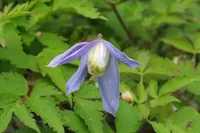
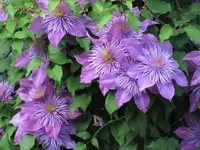
Alpine clematis, Clematis alpina, is a deciduous, spring-flowering climber valued for its delicate, nodding bell-shaped blooms and fine, divided leaves. It typically grows by twining through supports, shrubs, or small trees, creating a light, airy screen rather than a dense wall of foliage.
This species is native to mountainous regions of central and southern Europe, where it experiences cool summers and cold winters. It is generally considered one of the easier clematis for temperate gardens, as it is cold hardy and less prone to wilt than many large-flowered hybrids.
Gardeners who want to learn how to care for alpine clematis should know it prefers sun to light shade, evenly moist but well-drained soil, and protection from waterlogged conditions.

Care Difficulty
Moderate Care

Light Preference
Partial Sun

Water Requirements
Moderate Water

Temperature Preference
Cold Hardy

Hardiness Zone
3–9

Soil Texture
Loamy, Sandy, Organic-rich

Soil pH
Acidic (5.5–6.5), Slightly acidic (6.5–7.0)

Soil Drainage
Moist but well-drained

Fertilization
Light (every 4–6 weeks)
Scan your plant to receive care tips personalized for your specific plant
Available on iOS and Android
This mountain clematis prefers cool roots with its vines growing into bright, indirect light.
This climber prefers steadily moist, well-drained soil rather than extremes of dryness or saturation.
This hardy vine is adapted to cool to mild climates and tolerates significant winter cold once established.
This species tolerates a wide humidity range and usually does not need special humidity management outdoors.
Clematis alpina prefers cool, moisture-retentive but sharply drained soil to support deep, woody roots.
This species can be grown in containers if the pot is large, deep, and very stable.
This alpine clematis benefits from light feeding but dislikes heavy, rich soils.
Clematis alpina needs only light pruning to maintain a tidy, flowering framework.
This species is usually grown in the ground, so focus on careful transplanting rather than frequent repotting.
Clematis alpina is commonly propagated by layering and semi-ripe cuttings.
This clematis is quite cold hardy and usually needs only minimal winter care in most gardens.

Plant Health Check
Not sure what's wrong with your plant? Check your plant's health inside the app.
This species is native to montane and subalpine regions of central and southern Europe, where it naturally grows among rocks, open woodland, and forest margins and tolerates significant winter cold and late spring frosts.
Its nodding, four-tepaled flowers appear in early spring on old wood and are typically blue to violet, sometimes pink or white, with thick, leathery, slightly twisted segments adapted to cool, windy habitats.
After flowering, it develops persistent, silky, plume-like seed heads formed by elongated feathery styles, which provide ornamental interest for many weeks and aid in wind dispersal across rocky slopes.

In its native European range, Clematis alpina often hybridizes naturally with closely related species such as Clematis macropetala, and this tendency to form intermediate forms contributed historically to taxonomic confusion within the early-spring, bell-flowered clematis group.
Poor flowering usually comes from heavy pruning at the wrong time, excess shade, or nutrient imbalance. This species blooms on old wood, so only lightly trim after flowering and avoid high-nitrogen fertilizer that promotes leaves instead of buds.
Keep your plants happy and healthy with plant identification, disease detection, and easy care guidance.