Support With Netting
Install low pea netting or a simple string trellis 30–60 cm high so the stems can climb and stay upright, which improves air flow and reduces disease pressure in dense stands.

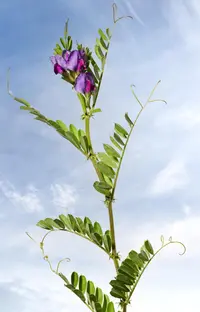
Common vetch, Vicia sativa, is an annual legume grown for cover cropping, forage, and soil improvement. It belongs to the pea family and fixes nitrogen in the soil.
The plant has slender climbing stems, paired leaflets, and tendrils that help it scramble through grasses or along supports. Pink to purple pea-like flowers develop into narrow pods containing small seeds.
Vicia sativa occurs widely in Europe, Asia, and North America, often in fields, roadsides, and pastures. It is generally easy to grow, provided it has full sun, moderate moisture, and well-drained soil.
Gardeners who learn how to care for Common Vetch often use it to build soil fertility, reduce erosion, and support more resilient cropping systems.

Care Difficulty
Easy Care

Light Preference
Full Sun

Water Requirements
Moderate Water

Temperature Preference
Cool Climate

Hardiness Zone
4–9

Soil Texture
Sandy, Loamy, Clay

Soil pH
Slightly acidic (6.5–7.0), Neutral (7.0)

Soil Drainage
Well-drained

Fertilization
Minimal (feed rarely)
Scan your plant to receive care tips personalized for your specific plant
Available on iOS and Android
This cool-season annual prefers long, bright days for strong growth and flowering.
This nitrogen-fixing annual prefers evenly moist, free-draining soil without prolonged saturation.
This species is a cool-season legume that grows best in mild conditions and declines in intense heat.
This species tolerates a wide humidity range and rarely needs special humidity management outdoors.
Vicia sativa prefers loose, well‑structured soil that drains freely but holds moderate moisture.
This species can be grown in containers if the pot is deep and stable enough for its vining habit.
This nitrogen-fixing annual usually needs little feeding, but light nutrition supports strong early growth when growing Common Vetch in poorer soils.
Vicia sativa needs only simple pruning to manage growth and keep plants healthy in the field or garden.
This annual legume is usually direct-sown, but young containers or plugs of Vicia sativa transplant well with gentle handling.
Vicia sativa is most commonly propagated from seed, which germinates reliably under cool, moist conditions.
This cool-season annual has good frost tolerance and usually needs minimal winter care in mild to moderate climates.

Plant Health Check
Not sure what's wrong with your plant? Check your plant's health inside the app.
This species forms root nodules with Rhizobium bacteria, which convert atmospheric nitrogen into forms the plant can use and leave extra nitrogen in the soil for subsequent crops.
Its seeds and herbage have relatively high protein content and are widely used as livestock fodder and as a green manure crop in temperate agriculture.
Common vetch grows well in cool conditions and is often sown in autumn or early spring to protect soil from erosion, suppress weeds, and improve soil structure in crop rotations.

Common vetch seeds have been found in archaeological sites across Europe and the Near East, indicating that this species was used as a fodder and minor food plant since ancient times alongside early cereal cultivation.
Poor flowering usually comes from late or very dense sowing, excessive nitrogen, shade, or drought stress. Sow in early spring or fall, thin crowded plants, maintain moderate moisture, and avoid heavy nitrogen fertilization to support reliable bloom.
Keep your plants happy and healthy with plant identification, disease detection, and easy care guidance.