Volunteer Control
Remove unwanted seedlings while they are still small, as mare's tail self-seeds aggressively and young plants are far easier to pull cleanly from the soil before roots toughen.

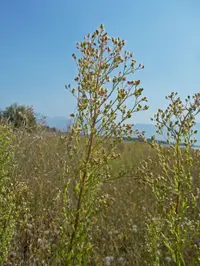
Mare's tail (Erigeron canadensis), also called Canadian horseweed, is an annual herb in the daisy family with tall, slender stems and many small, pale flower heads. It often forms upright, narrow columns of foliage that become densely branched near the top.
This species is native to North America and now naturalized in many temperate regions, commonly appearing in fields, roadsides, and disturbed soils. It is very adaptable, grows quickly, and produces abundant wind-dispersed seeds, which makes it easy to establish but sometimes weedy.
It prefers full sun, relatively dry to moderately moist conditions, and well-drained soil. Its resilient nature and low water needs influence how to care for mare's tail in gardens or naturalistic plantings.

Care Difficulty
Easy Care

Light Preference
Full Sun

Water Requirements
Low Water

Temperature Preference
Cold Hardy

Hardiness Zone
3–9

Soil Texture
Sandy, Loamy, Clay

Soil pH
Acidic (5.5–6.5), Slightly acidic (6.5–7.0)

Soil Drainage
Well-drained

Fertilization
Minimal (feed rarely)
Scan your plant to receive care tips personalized for your specific plant
Available on iOS and Android
This sun-loving North American wildflower thrives in open, bright sites with long daily exposure.
This species is drought-tolerant once established and prefers to dry between waterings.
This hardy species tolerates a wide temperature range and is adapted to outdoor conditions across many climates.
Humidity is rarely a concern, as this species thrives in dry, open air.
This species prefers lean, well-drained soil and tolerates poor sites if water does not stand.
This species can grow in containers if the pot is prepared to stay stable and drain very quickly.
Erigeron canadensis is a tough native that needs minimal feeding, especially in average garden soil.
Pruning Erigeron canadensis is mainly done to control spread, maintain tidiness, and limit self-seeding.
This species is usually grown in the ground, so transplanting young plants is more common than repotting mature ones.
Erigeron canadensis spreads mainly by seed, making propagation straightforward but sometimes aggressive in open soil.
This hardy species needs almost no special winter care in most temperate climates, especially when grown in the ground.

Plant Health Check
Not sure what's wrong with your plant? Check your plant's health inside the app.
This species is native to most of North America and only later spread to Europe, Asia, and other regions, where it is now widely naturalized and often considered a weed in disturbed habitats and farmland.
Populations of this plant have independently evolved resistance to several herbicides, including glyphosate, making it a well-studied model in agricultural weed science and resistance management.
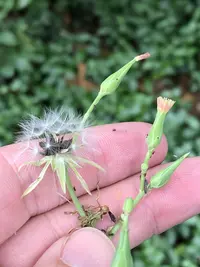
Each plant can produce large numbers of very small, tufted achenes that are carried long distances by wind, which explains its rapid colonization of roadsides, construction sites, and crop fields after disturbance.

This species was one of the earliest North American weeds recorded as rapidly spreading along railways and trade routes in the 19th century, helping scientists recognize how human transportation corridors accelerate plant dispersal across continents.
This species spreads very aggressively through wind-dispersed seed. Each plant can produce many thousands of seeds that colonize bare or disturbed soil. Regular pulling before flowering and mulching exposed soil help limit spread effectively.
Keep your plants happy and healthy with plant identification, disease detection, and easy care guidance.