Rhizome containment
Install a shallow root barrier 20–25 cm deep around planting areas to keep its spreading rhizomes from invading nearby beds while still allowing a natural colony look.

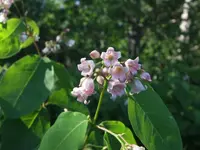
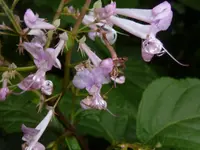
Spreading dogbane, Apocynum androsaemifolium, is a hardy, herbaceous perennial native to North America. It typically grows in open woods, roadsides, and dry, rocky habitats. It has slender, branching stems, paired oval leaves, and clusters of small, nodding, pink to white bell-shaped flowers that attract many pollinators. The plant spreads by rhizomes, forming loose colonies, and produces long, narrow seed pods. This species tolerates poor, sandy, or gravelly soils and is quite drought resistant once established, which can make it relatively low-maintenance in suitable sites. Those who want to care for spreading dogbane should know it prefers full sun to light shade and well-drained, low to moderately fertile soil.

Care Difficulty
Easy Care

Light Preference
Full Sun

Water Requirements
Low Water

Temperature Preference
Cold Hardy

Hardiness Zone
3–7

Soil Texture
Sandy, Loamy, Rocky

Soil pH
Acidic (5.5–6.5), Slightly acidic (6.5–7.0)

Soil Drainage
Well-drained

Fertilization
Minimal (feed rarely)
Scan your plant to receive care tips personalized for your specific plant
Available on iOS and Android
Apocynum androsaemifolium thrives in bright outdoor conditions with several hours of direct sun each day.
This species prefers dry to moderately moist soil and is quite drought tolerant once established.
This hardy perennial tolerates a wide temperature range but grows best in moderate warmth.
Apocynum androsaemifolium tolerates a wide humidity range, so humidity management is usually low priority.
Apocynum androsaemifolium prefers lean, well-drained mineral soils rather than rich, moisture-retentive mixes.
This species can be grown in containers outdoors if the potting setup mimics its naturally free-draining, spreading root environment.
Apocynum androsaemifolium is a tough native perennial that usually needs minimal feeding in garden soil.
Apocynum androsaemifolium benefits from minimal, well-timed pruning to keep clumps healthy and within bounds.
This species is usually grown in the ground, so care focuses on transplanting rather than frequent repotting.
Apocynum androsaemifolium can be propagated by seed, division, or root cuttings with straightforward techniques.
This perennial is cold hardy across much of its native range and usually needs little special winter care.

Plant Health Check
Not sure what's wrong with your plant? Check your plant's health inside the app.
This species is a key larval food plant for the dogbane tiger moth and several swallowtail and fritillary butterflies, which have evolved to tolerate its toxic milky latex.
Its narrow pods split open when mature to release numerous silky-haired seeds that are easily carried by wind, helping the plant colonize open, disturbed sites.
Although unrelated to true milkweeds, it produces similar white latex rich in cardiac glycosides, making the foliage distasteful and potentially poisonous to grazing animals.

Indigenous peoples in North America historically used the strong, fibrous stems of this species to make cordage, nets, and thread, taking advantage of its tough bast fibers much like those of flax or hemp.
This species spreads by creeping rhizomes and self-seeding, so it can form dense patches over time. Use root barriers, regular edging, or selective thinning if you want to limit its spread in smaller gardens.
Keep your plants happy and healthy with plant identification, disease detection, and easy care guidance.