golden columbine Care (Aquilegia chrysantha)

golden columbine

About golden columbine

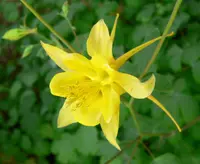
Golden columbine, Aquilegia chrysantha, is a clump-forming perennial known for its bright yellow, long-spurred flowers held above soft, blue-green foliage. It typically grows in a graceful, airy mound, sending up tall, branching flower stems that attract hummingbirds and pollinators.

This species is native to the southwestern United States and northern Mexico, where it occurs along streams, canyon walls, and moist mountain slopes. It is generally considered moderately easy to grow, as long as soil stays reasonably moist and summer heat is not extreme.

Gardeners who want to learn how to care for golden columbine should note its preference for partial sun, cooler roots, and well-drained but consistently damp soil.

Main Plant Requirements

Care Difficulty

Moderate Care

Light Preference

Partial Sun

Water Requirements

Moderate Water

Temperature Preference

Cold Hardy

Hardiness Zone

3–8

Soil Texture

Sandy, Loamy, Rocky

Soil pH

Acidic (5.5–6.5), Slightly acidic (6.5–7.0)

Soil Drainage

Moist but well-drained

Fertilization

Minimal (feed rarely)

Get Personalized Care Plan

Scan your plant to receive care tips personalized for your specific plant

Available on iOS and Android

How to Care for the golden columbine

This species prefers bright outdoor conditions with some protection from harsh midday sun.

  • Provide 4–6 hours of direct morning sun with light afternoon shade; dappled light under open trees suits golden columbine well.
  • In hot, arid climates, avoid full afternoon sun to reduce leaf scorch and premature flowering decline; use mulch to keep roots cooler.
  • In cooler regions, the plant tolerates near full sun; in summer, watch for pale, stretched growth as a sign of too little light.

Aquilegia chrysantha prefers evenly moist but not saturated soil, especially during active growth.

  • Water when the top 3–5 cm of soil feels dry; soil should feel cool and slightly damp below this depth, not soggy.
  • During spring and early summer, monitor weekly and adjust based on rainfall; in established plants, deeper, less frequent soakings encourage stronger roots.
  • Signs of overwatering include yellowing, limp foliage and blackened crowns; crisp, drooping leaves and dry, shrinking soil indicate underwatering or drought stress.

This columbine is a cool- to mild-climate perennial with good cold tolerance and moderate heat tolerance.

  • Optimal growth occurs around 55–75°F (13–24°C), especially in spring and early summer when days are mild and nights are cool.
  • Dormant crowns typically survive down to about -20°F (-29°C) with snow or mulch cover, though foliage is damaged by the first hard frosts.
  • In summer, plants tolerate short periods near 85–90°F (29–32°C) if soil is moist and roots are shaded; prolonged heat can shorten bloom time and stress foliage.

This species handles a wide humidity range and usually does not need special humidity management outdoors.

  • Ideal humidity is around 30–60%, similar to most temperate outdoor conditions.
  • Plants tolerate relatively dry air but may show leaf edge browning and faster wilting in hot, very arid weather.
  • In unusually dry, hot spells, light mulching and grouping golden columbine with other plants help maintain slightly higher leaf-level humidity.

Aquilegia chrysantha prefers loose, moist but well-drained soil that stays cool around the roots.

  • Use a loamy mix with 40–60% garden soil, 20–30% compost, and 20–30% coarse sand or fine grit to balance moisture retention and drainage.
  • Aim for slightly acidic to neutral pH, around 6.0–7.0, which supports nutrient availability and root health.
  • Improve aeration and prevent compaction by working in organic matter such as leaf mold or well-rotted compost to a depth of 20–25 cm.
  • Avoid heavy, waterlogged clay, unamended construction fill, or continuously saturated spots, which promote root rot and shorten plant lifespan.

This species can be grown in containers for several seasons if the pot setup supports its deep, fibrous roots.

  • Choose a container at least 25–30 cm deep to accommodate the taproot and prevent premature decline.
  • Use a heavier clay or ceramic pot in windy sites so the tall flowering stems do not tip the container.
  • Elevate the pot slightly on feet or bricks so drainage holes stay clear and excess water escapes quickly.

Aquilegia chrysantha grows well in moderately fertile soil and benefits from light feeding in the growing season.

  • Apply a balanced slow-release fertilizer (around 10-10-10) in early spring as new growth appears.
  • Supplement with a thin layer of compost around the root zone once per year for steady nutrients.
  • Use liquid balanced fertilizer at 1/2 strength every 4–6 weeks during active growth if soil is poor.
  • Stop feeding in late summer and do not fertilize in winter dormancy to avoid weak, soft growth.

Pruning supports neat growth and sustained flowering in Aquilegia chrysantha.

  • Deadhead spent flower stems in late spring to encourage a longer bloom period and reduce self-seeding.
  • Cut back yellowing or damaged foliage with clean hand pruners to limit disease and tidy the clump.
  • After flowering, lightly shear the plant to promote fresh foliage and a compact mound.
  • Remove crowded or crossing stems at the base to improve air flow and reduce fungal problems.

Golden columbine is usually grown in the ground, with transplanting more common than repotting.

  • Transplant in early spring or early fall when temperatures are mild and soil is workable.
  • Look for signs like roots circling a pot, slow growth, or drying out quickly if grown in containers.
  • Move plants with a generous soil root ball, disturbing roots as little as possible to limit transplant shock.
  • Water thoroughly after transplanting and shade lightly for a few days to reduce stress and support reestablishment.

Aquilegia chrysantha is most often propagated by seed, with some use of division in established clumps.

  • Sow fresh seed in late summer or fall outdoors; natural cold exposure aids germination in spring.
  • For indoor sowing, cold-stratify seeds in moist medium at 35–40°F for 3–4 weeks before warming.
  • Use a well-drained seed mix, keep evenly moist, and provide bright indirect light for seedlings.
  • Divide only older, vigorous clumps in early spring, replanting divisions promptly at the same depth.

Aquilegia chrysantha is generally cold hardy and needs minimal winter care in most temperate climates.

  • In late fall, cut back dead flower stems and tattered foliage to reduce overwintering pests and diseases.
  • Apply a 5–7 cm layer of mulch around, but not on, the crown to buffer freeze–thaw cycles.
  • Container plants in colder regions can be moved to a sheltered, unheated space to prevent root damage.

Care Tips

Encourage Self-Seeding

Leave a few spent flower stalks to mature and drop seed in late summer, then gently rake the soil surface so seed makes good contact and new plants appear naturally the following spring.

Rotate Plantings Regularly

Replant seedlings to a new nearby bed every 3–4 years to reduce buildup of soil-borne disease and maintain vigorous clumps with better flowering.

Use Light Mulch Only

Apply a thin 2–3 cm layer of fine mulch around but not against the crowns to keep roots cool while avoiding crown rot and allowing new basal shoots to emerge freely.

Deadhead Selectively

Cut back only the earliest spent flower stalks to encourage a second flush of bloom, but leave late-season stalks if growing golden columbine from self-sown seed is desired.

Monitor For Leaf Miners

Check leaves weekly in spring for pale winding tunnels and remove affected foliage promptly to limit spread, then dispose of it in the trash rather than composting.

Common Pests and Diseases

Columbine leafminer

This pest tunnels inside the leaves and creates pale, winding trails that cause the foliage to look blotchy and distorted.

Solution

Remove and discard mined leaves as soon as trails appear to break the insect life cycle, and keep fallen debris cleaned up around the plant. For heavy infestations, use a contact insecticide such as spinosad or insecticidal soap directed at the undersides of leaves when new growth emerges in spring, following label directions carefully.

Columbine sawfly

These insects chew along leaf edges and can quickly skeletonize foliage, leaving only the main veins on affected leaves.

Solution

Hand-pick and crush larvae or knock them into soapy water, inspecting plants every few days in late spring and early summer. If damage is extensive, apply insecticidal soap or a low-impact systemic product labeled for sawflies, targeting young larvae and avoiding treatment when beneficial insects are highly active.

Powdery mildew

This disease causes a white to gray, powder-like coating on leaves, often starting on older foliage and leading to yellowing and leaf drop in severe cases.

Solution

Improve airflow by spacing plants properly, thinning crowded stems, and avoiding overhead watering, especially in the evening. Remove and dispose of badly affected leaves and, if needed, apply a sulfur or potassium bicarbonate fungicide early in the infection period according to label directions as part of broader Aquilegia chrysantha care.

Rust

This disease produces small, orange to brown pustules on the undersides of leaves, sometimes with yellow spotting on the upper surface and premature leaf drop.

Solution

Promptly remove and dispose of infected leaves, including any that fall to the soil surface, and avoid wetting the foliage when irrigating. In recurring cases, use a copper-based or other labeled garden fungicide at the first sign of spots, and rotate planting locations over time to reduce buildup of spores in the soil.

Botrytis blight

This disease leads to soft, brown patches on flowers and leaves, often covered by fuzzy gray mold in cool, damp weather.

Solution

Increase air circulation, avoid crowding, and water at soil level to keep foliage and flowers as dry as possible. Remove and discard all affected tissue and surface debris, and in persistent cool, wet conditions consider a preventive fungicide labeled for Botrytis on ornamentals, applied before prolonged damp periods.

Interesting Facts

Long nectar spurs

This species has unusually long, backward-pointing nectar spurs that can exceed the length of the petals, an adaptation that favors pollination by long-tongued hawkmoths in its native range.

Southwestern canyon specialist

It is naturally found along seeps, streams, and canyon walls in the arid Southwestern US and northern Mexico, where its deep root system allows it to exploit permanently moist pockets in otherwise dry landscapes.

Hybridization influence

Golden columbine has been widely used in breeding ornamental columbines, contributing its clear yellow flower color and long spurs to many modern garden hybrids.

Botan icon

Did you know?

In regions of the Southwestern US, golden columbine is sometimes used in ecological restoration projects along riparian corridors because its fibrous roots help stabilize moist, eroding soils while providing nectar for native pollinators such as hawkmoths and bumblebees.

FAQs about golden columbine

This species is highly attractive to long-tongued bees, butterflies, hawk moths, and hummingbirds. The bright yellow, spurred flowers provide abundant nectar, making it a strong choice for wildlife-friendly gardens and pollinator-support plantings.

Grow Healthy Plants with Botan Care

Keep your plants happy and healthy with plant identification, disease detection, and easy care guidance.

Botan plant care app — identify plants on mobile

Explore More Plants