Deep establishment watering
During the first growing season, water less often but deeply so moisture reaches 15–20 cm down, which encourages a deep root system that will later tolerate heat and drought with minimal supplemental water.

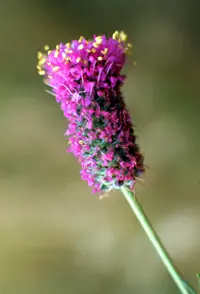
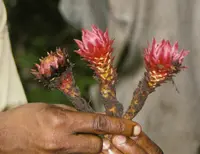
Purple prairie clover (Dalea purpurea) is a perennial wildflower in the legume family, native to North American prairies and open grasslands. It forms upright clumps with slender stems topped by dense, cylindrical spikes of small purple flowers. The fine, divided leaves and wiry stems give the plant a light, airy look in mixed plantings. As a nitrogen-fixing species, it supports soil health and attracts bees, butterflies, and other pollinators. This species adapts well to poor, dry soils and is quite drought-tolerant once established, which makes it relatively easy to maintain. To care for purple prairie clover, provide full sun, well-drained soil, and avoid excessive watering or fertilizing.

Care Difficulty
Easy Care

Light Preference
Full Sun

Water Requirements
Low Water

Temperature Preference
Cold Hardy

Hardiness Zone
3–8

Soil Texture
Sandy, Loamy, Rocky

Soil pH
Slightly acidic (6.5–7.0), Neutral (7.0)

Soil Drainage
Well-drained

Fertilization
Minimal (feed rarely)
Scan your plant to receive care tips personalized for your specific plant
Available on iOS and Android
This sun-loving prairie perennial performs best in open, bright conditions throughout the growing season.
This deep-rooted prairie species prefers dry to moderately dry soil once established.
This hardy North American prairie perennial is adapted to wide outdoor temperature swings.
Humidity is not a significant factor for Dalea purpurea, which is adapted to dry prairie air.
Dalea purpurea prefers lean, well-drained mineral soils that never stay waterlogged.
This species can grow in containers, but only if the setup mimics its deep, free-draining prairie root conditions.
This deep-rooted prairie legume fixes its own nitrogen and usually needs little or no fertilizer in typical garden or meadow soils.
Pruning Dalea purpurea is minimal and mainly supports a tidy shape and healthy flowering stands.
This species develops a long taproot, so it is better suited to in-ground planting than long-term container culture.
Dalea purpurea is most commonly propagated from seed, which suits its natural prairie growth habit.
This prairie perennial is cold hardy in much of the US and usually needs little winter care in the ground.

Plant Health Check
Not sure what's wrong with your plant? Check your plant's health inside the app.
This species forms root nodules with symbiotic bacteria that fix atmospheric nitrogen, enriching prairie soils and supporting neighboring grasses and forbs in native tallgrass and mixed-grass prairies.
Its dense cylindrical flower spikes bloom in mid to late summer and provide abundant nectar and pollen for native bees, small butterflies, and other pollinators when some other prairie species have finished flowering.
Mature plants develop a deep taproot that can extend well over 1 m into the soil, allowing them to persist on dry, well-drained prairie sites and contribute to long-term grassland stability.

This species is frequently used in North American prairie restoration and conservation seed mixes because it establishes relatively reliably from seed, supports pollinator diversity, and helps re-create the structure and function of degraded grassland ecosystems through its nitrogen-fixing ability and deep root system.
This species is highly attractive to native bees, honeybees, and many butterflies. Dense flower spikes provide nectar and pollen through summer, supporting pollinator populations and improving fruit set in nearby crops or ornamental plantings.
Keep your plants happy and healthy with plant identification, disease detection, and easy care guidance.